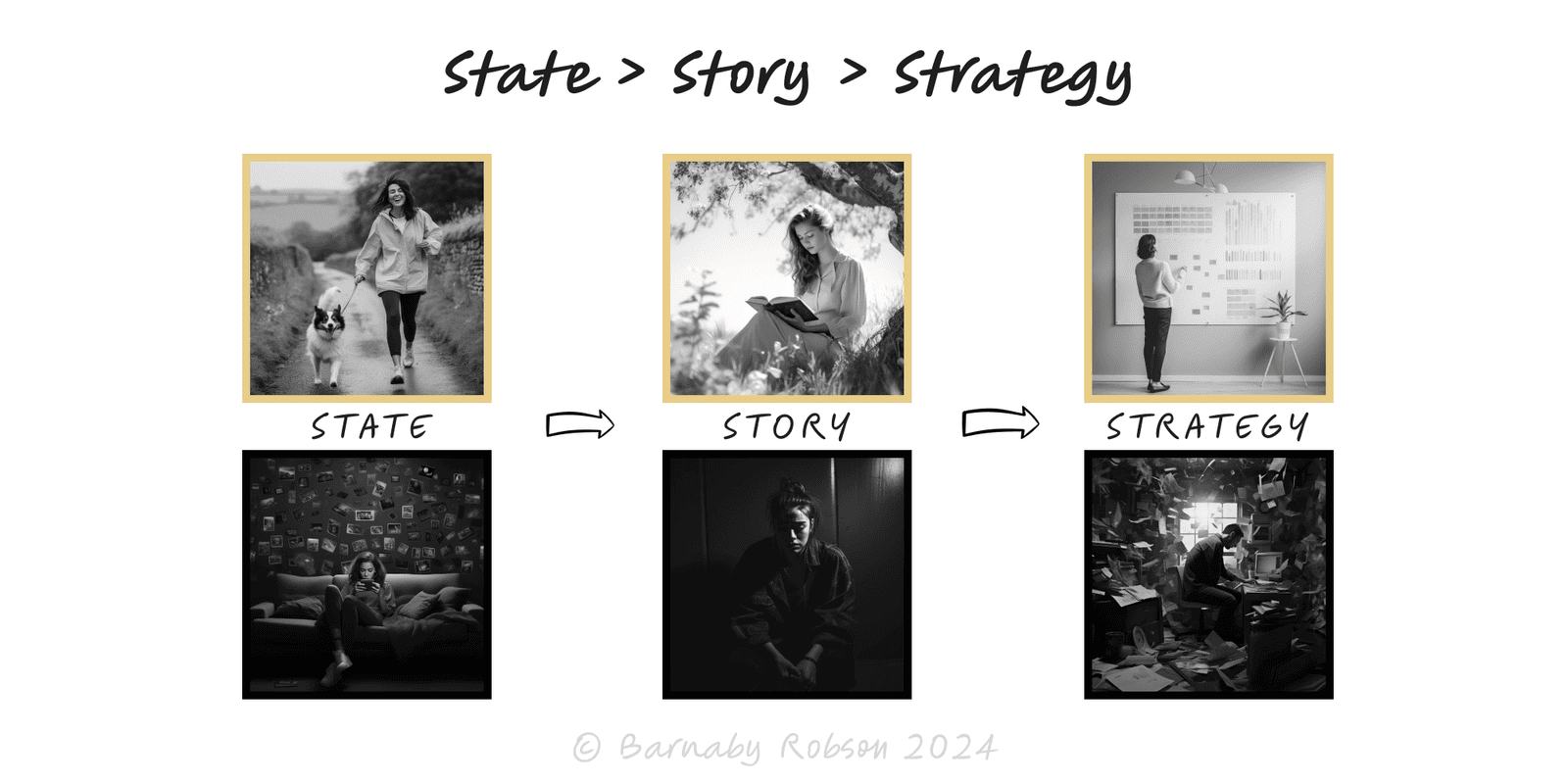
State → Story → Strategy
Align your state, story and strategy; order matters.
Author
Tony Robbins (popularised); antecedents in performance psychology and CBT; used by Tim Ferriss
Model type
Align your state, story and strategy; order matters.
Tony Robbins (popularised); antecedents in performance psychology and CBT; used by Tim Ferriss
This model says your state (physiology and emotion) shapes the story you tell yourself, which in turn governs the strategy you commit to. Start by shifting state, then rewrite the story, and only then pick tactics.
I’ve expanded on this in my article for context here: https://barnabyrobson.org/state-story-strategy/
State – your current physiological and emotional condition (sleep, movement, breathing, light, gut, music).
Story – the internal narrative that explains the situation.
Strategy – plans and actions. Same strategy fails in a bad state and weak story; it sticks when the first two are right.
Daily focus and productivity; leadership presence; negotiations and tough conversations; performance under pressure; training and rehab adherence.
Reset state (2–5 minutes) – stand up, breathe 4-7-8 or box breathing, step into daylight, quick mobility or a brisk walk; hydrate; music cue.
Rewrite the story (3 prompts) –
Facts I know: …
What I control now: …
Enabling story: “Because X is true, I will Y.”
Choose strategy – one high-leverage action that fits the story; timebox it (e.g., 25–50 minutes).
Journal cadence – write State → Story → Strategy at the top of the day (as you do); review at midday; close with a one-line retrospective.
Guardrails – if state drops (sleep debt, illness), shrink strategy (smaller reps, default tasks) and protect recovery.
Team version – open meetings with a quick “state check”, agree the enabling story (goal, constraints, control), then decide the strategy with owners and stop-rules.
Starting with strategy – tactics first locks you into narrow options shaped by a poor state.
Vague stories – motivational noise without what’s controllable leads to churn.
State theatre – rituals without sleep, light, movement and nutrition are brittle.
Overreach – powerful state → reckless plans; pair with pre-commitments and limits.
Identity traps – stories that protect ego over truth; invite disconfirming evidence.
Click below to learn other mental models
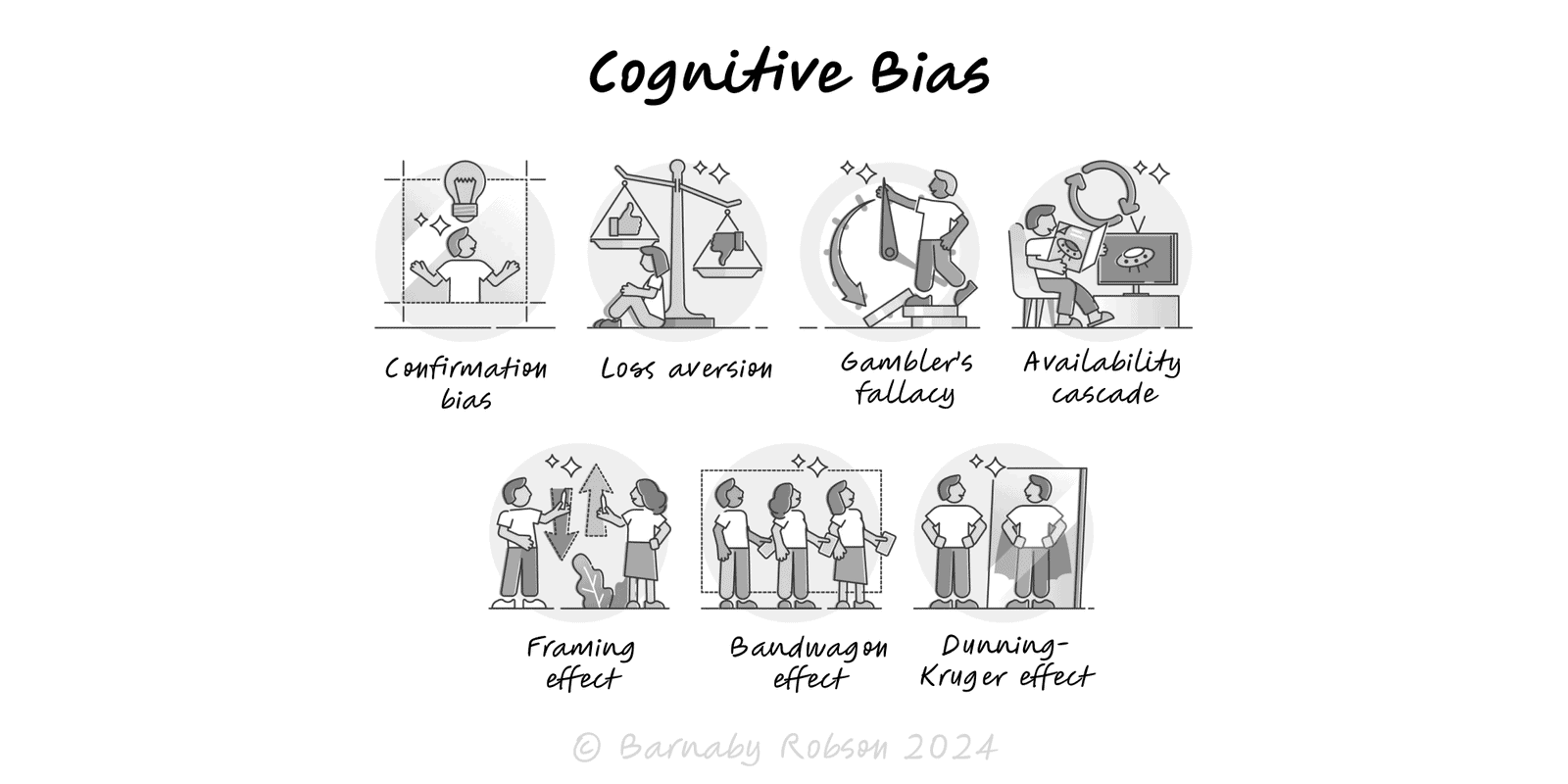
Systematic shortcuts in thinking that create predictable errors. Know the patterns; design decisions and communication to counter their effects.
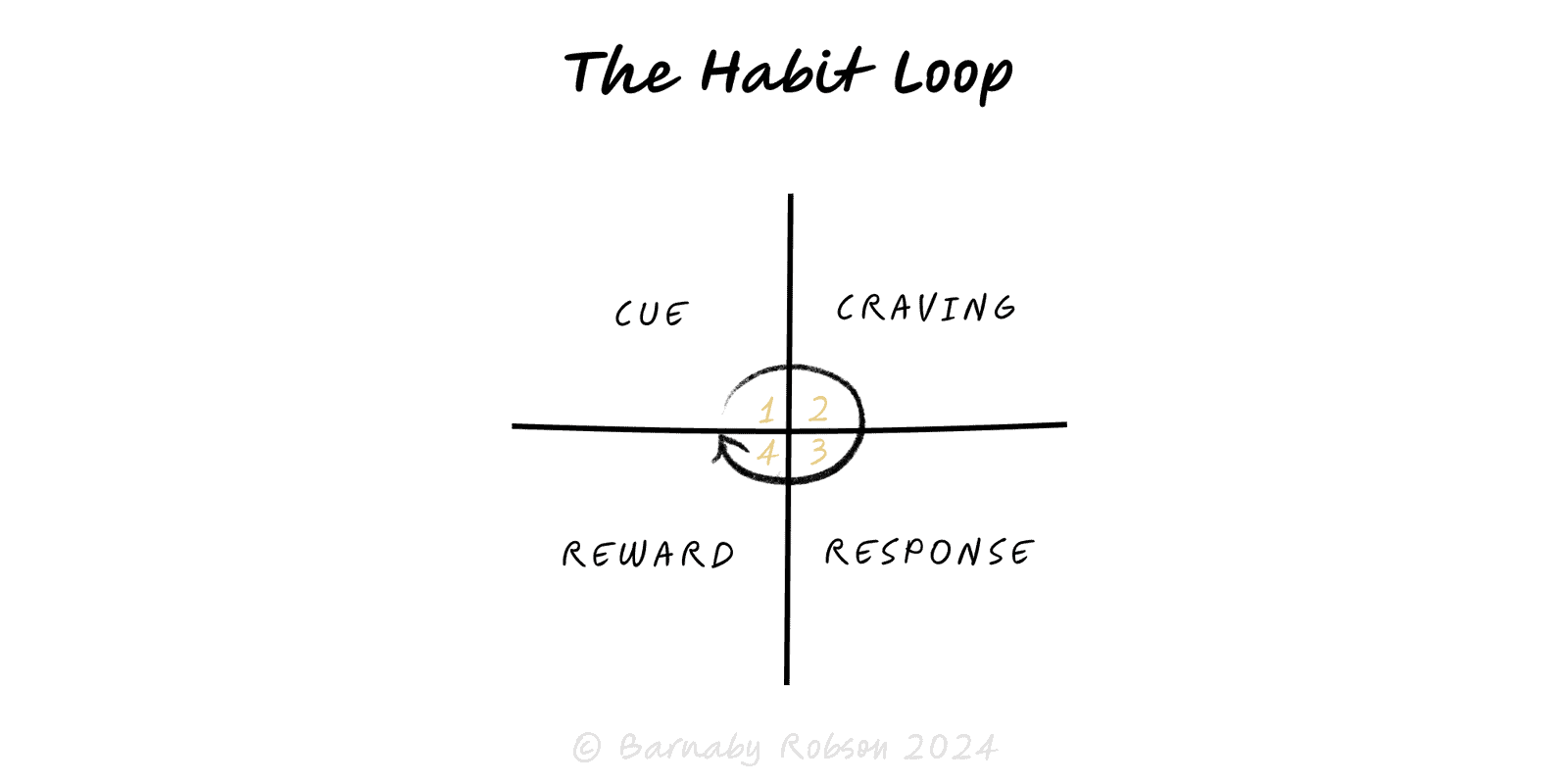
Habits run on a loop: cue → craving → response → reward. Make good loops easy and satisfying; break bad ones by keeping the cue and reward but changing the routine.
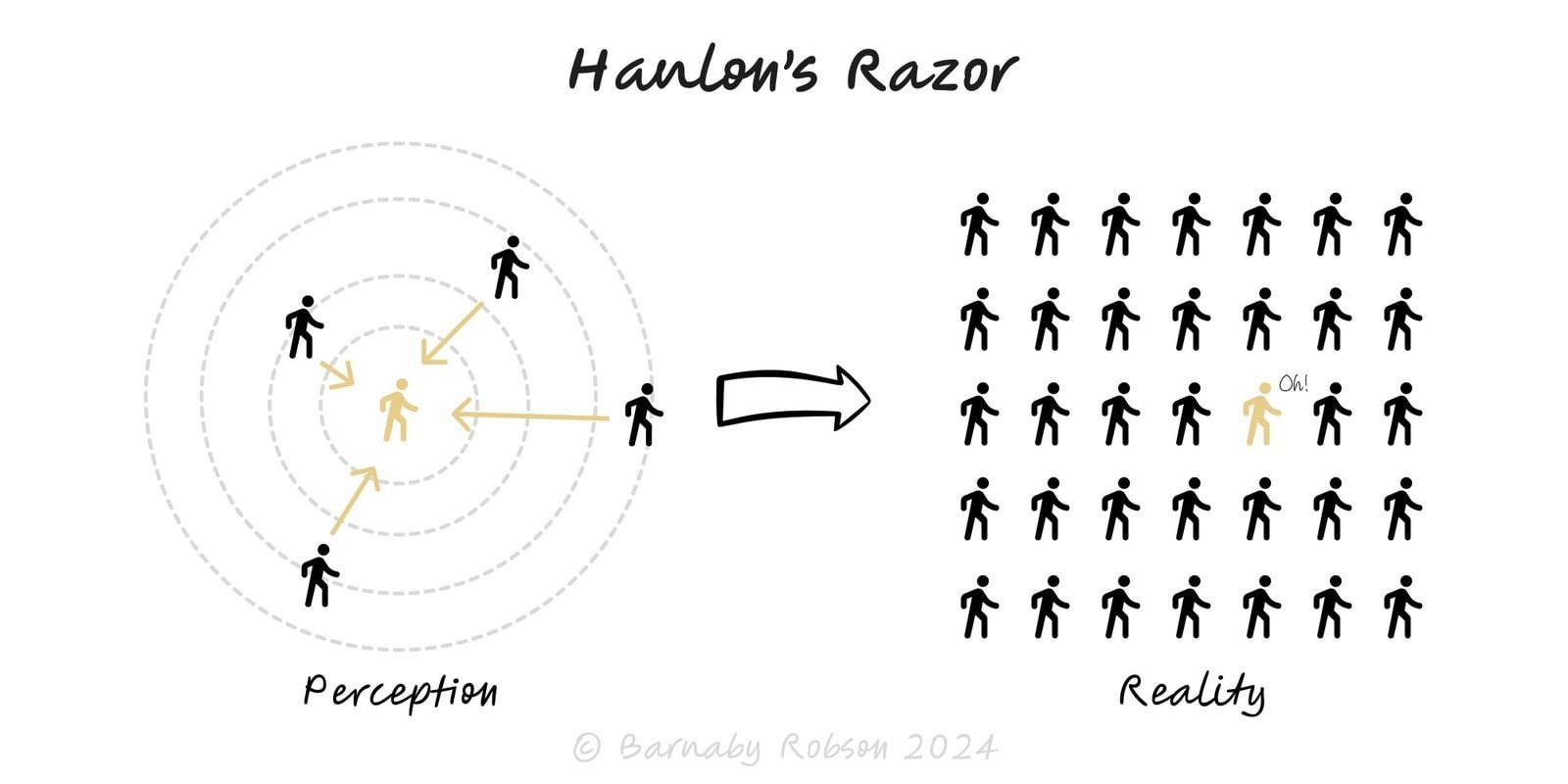
Don’t attribute to malice what can be explained by error, ignorance or misaligned incentives.