Man with a Hammer Syndrome
Over‑applying a favourite tool (“to a man with a hammer, everything looks like a nail”).
Author
Abraham Maslow (law of the instrument, 1966); popularised by Charlie Munger as “man with a hammer”
Model type
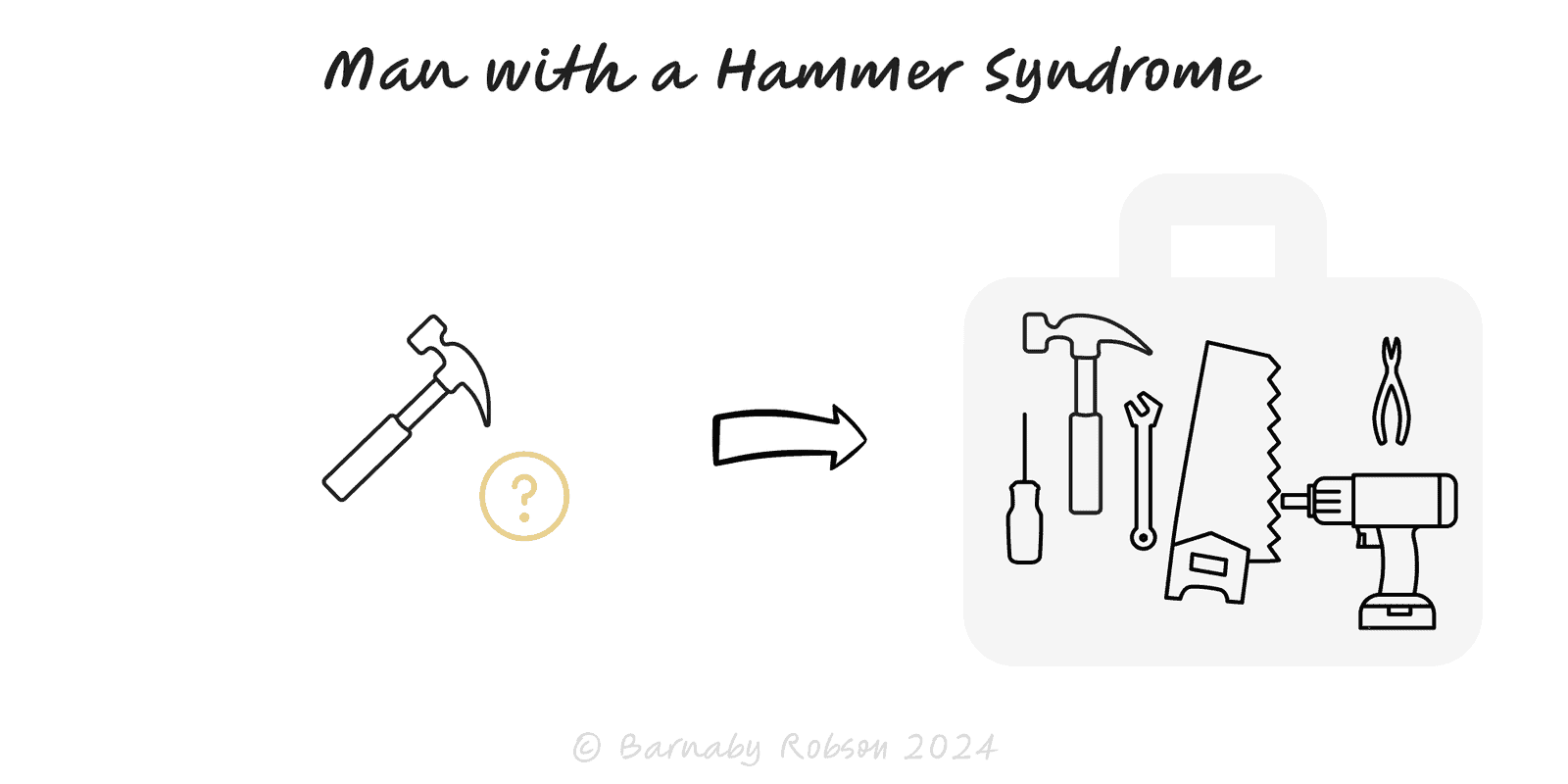
Over‑applying a favourite tool (“to a man with a hammer, everything looks like a nail”).
Abraham Maslow (law of the instrument, 1966); popularised by Charlie Munger as “man with a hammer”
Maslow warned that if all you have is a hammer, you’ll treat everything as a nail. Munger broadened this to argue for a latticework of mental models. The error isn’t using a tool; it’s defaulting to it—because of habit, identity, or incentives—when the problem’s structure calls for something else.
Functional fixedness – prior success and muscle memory narrow attention to familiar moves.
Identity & incentives – careers, tooling, and KPIs reward one approach, so alternatives feel costly.
Availability & confirmation – data that fits the “hammer” is easier to see and believe.
Path dependence – early choices lock interfaces, metrics and talent, deepening the rut.
Strategy – forcing a playbook (e.g., “enterprise sales everywhere”) onto mismatched segments.
Product/tech – using the same stack or pattern regardless of scale, latency or data shape.
Analytics – one KPI or method (A/B only, qual only) for all questions.
Organisation – applying a single management fad to every team or phase.
Investing – one style (value/growth/quant) even when market regime shifts.
Name the problem class – write the primitives: uncertainty, feedback, tail risk, constraints, time horizon.
Generate three plausible frames – e.g., bottleneck/flow, EV under uncertainty, incentives/game.
Match tool to structure – pick models whose assumptions fit the primitives (queues → Little’s Law; tail risk → fat tails; rivalry → game theory).
Run a “hammer test” – If we couldn’t use our default tool, how would we do this? Write the alternative.
Seek disconfirming evidence – cases where the favourite approach failed; set a switch criterion in advance.
Split explore vs exploit – small safe-to-fail probes with alternate tools alongside the core.
Design incentives for pluralism – reward clean kills, not just wins; rotate reviewers and methods.
Model soup – adding tools without choosing; decide, don’t hedge forever.
Cargo-culting – copying a tool’s rituals without its assumptions.
One KPI to rule them all – Goodhart’s law turns the hammer into the game; pair outcome and counter-metrics.
Status quo grip – switching costs and sunk time mask better-fit methods; budget for migration.
Overcorrection – abandoning a proven hammer where it does fit; keep domains of applicability explicit.
Click below to learn other mental models
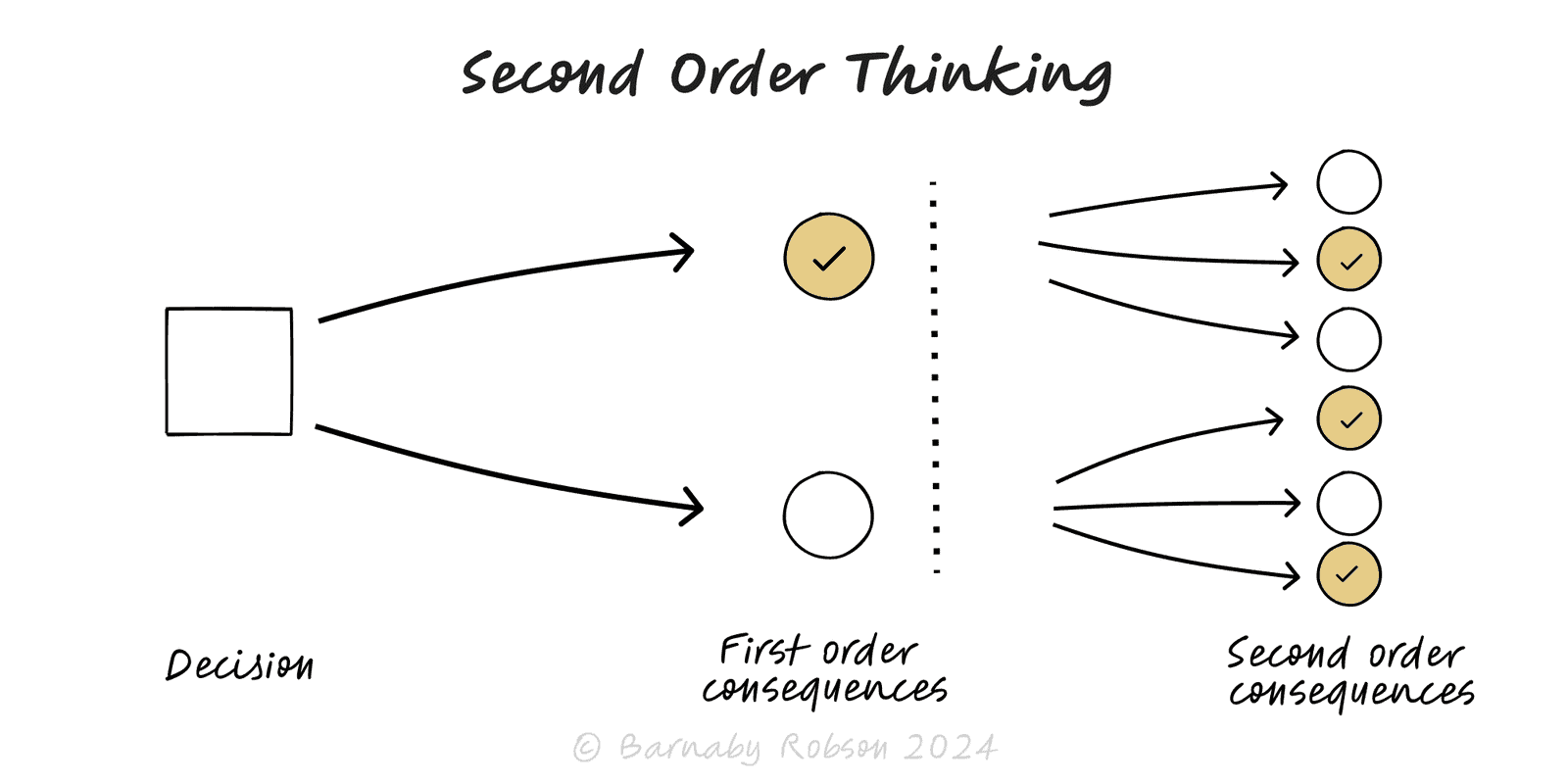
Consider the long-term and indirect consequences of decisions, rather than just the immediate or obvious ones.
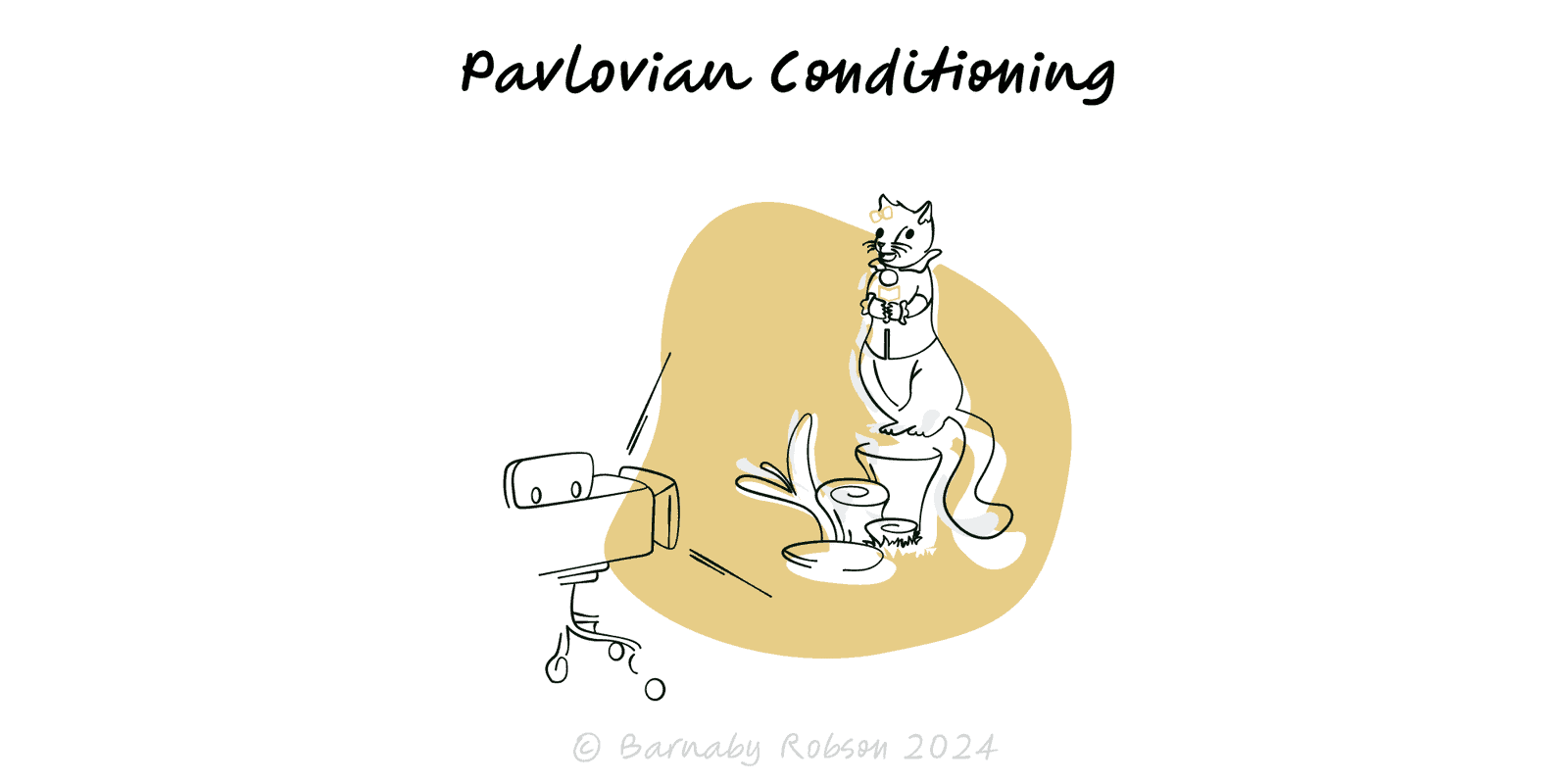
A neutral cue paired with a meaningful event can come to trigger the response on its own.
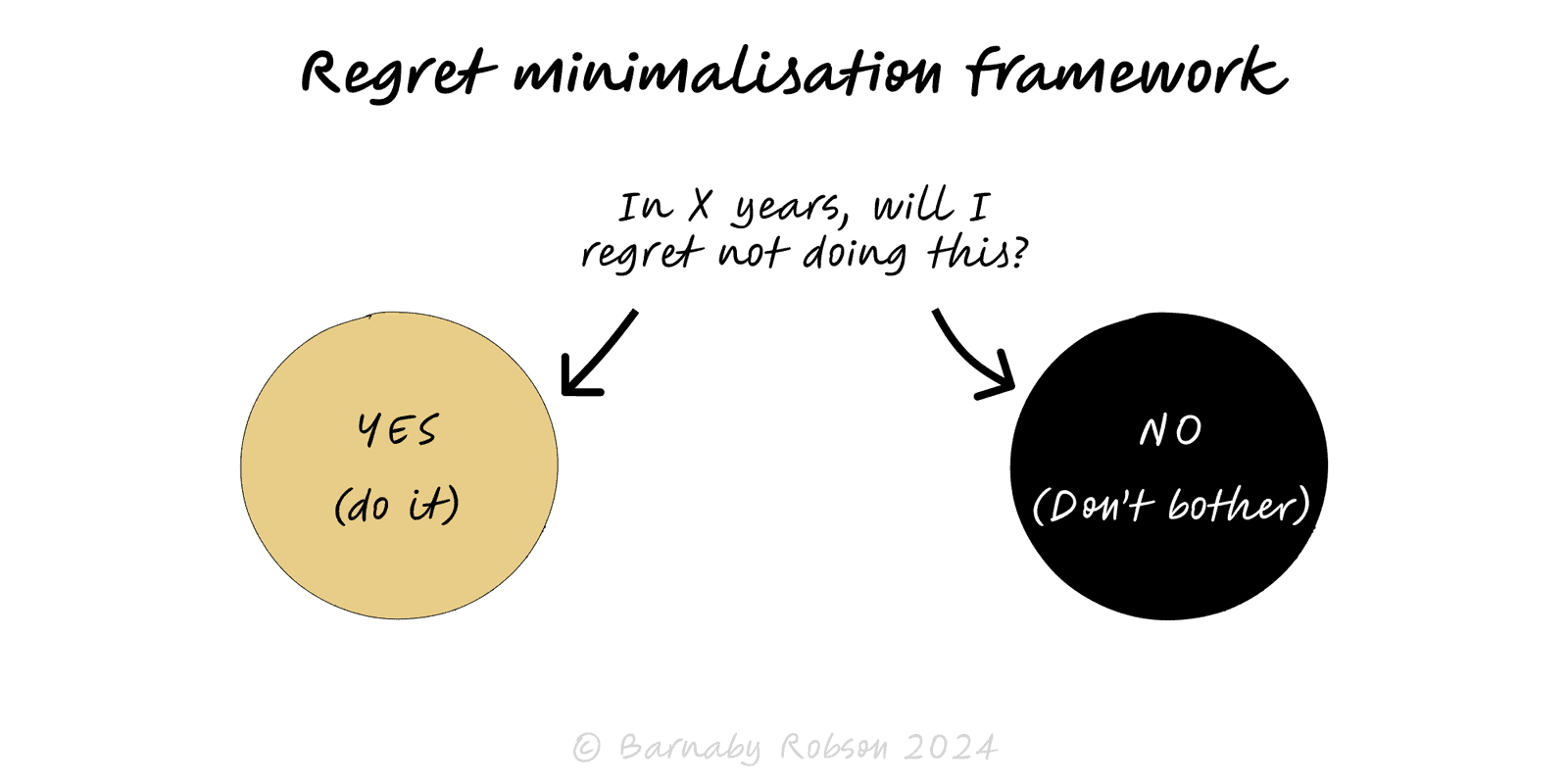
Project yourself to the decision horizon and choose the option that you will regret least. Weight omissions heavily, and treat reversibility as a key lever.