Second Order Thinking
Consider the long-term and indirect consequences of decisions, rather than just the immediate or obvious ones.
Author
Common usage (Farnam Street popularised in business)
Model type
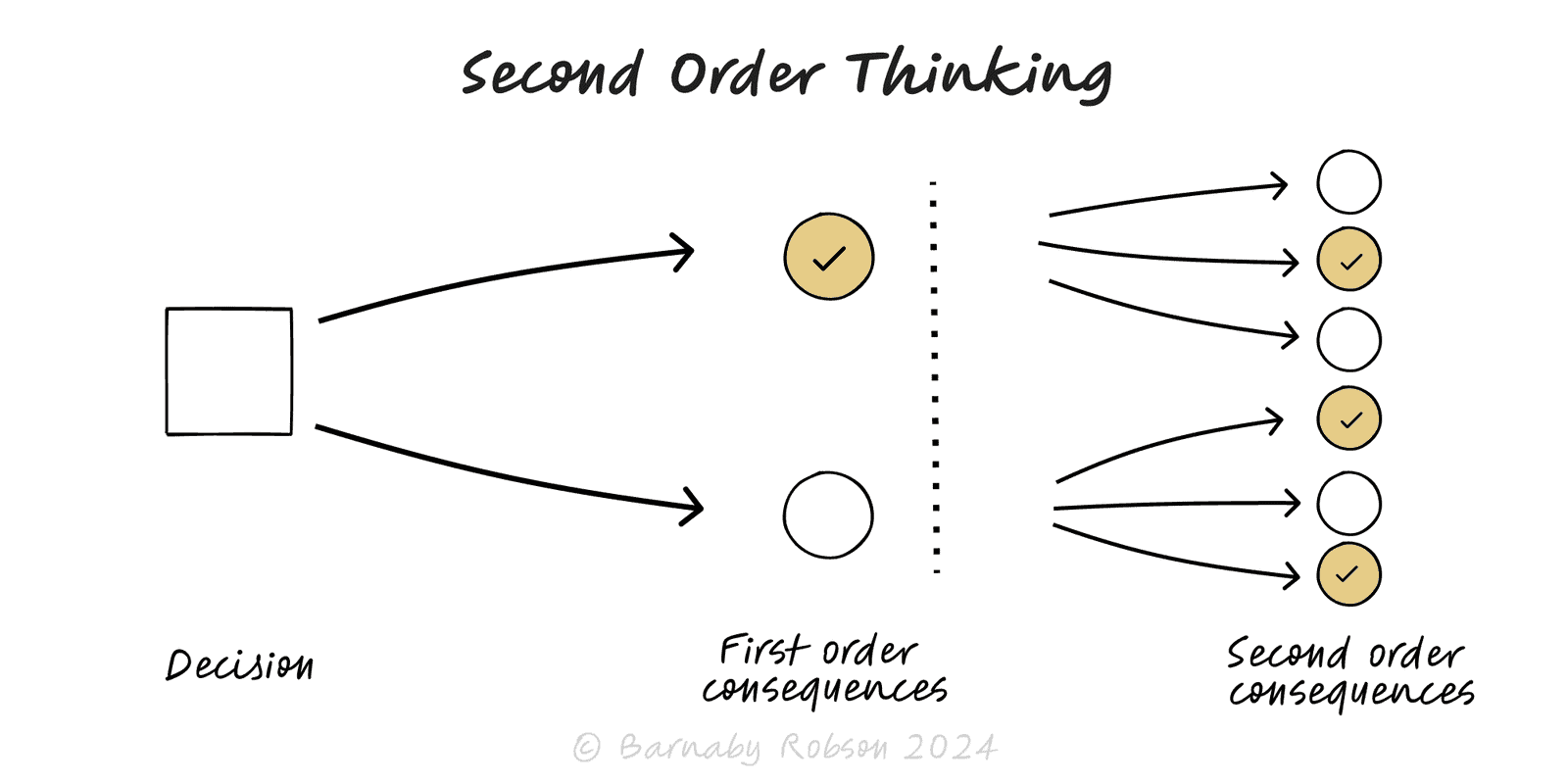
Consider the long-term and indirect consequences of decisions, rather than just the immediate or obvious ones.
Common usage (Farnam Street popularised in business)
First-order thinking asks “what happens if we do X?”. Second-order thinking asks “and then what?”.
It forces you to model reactions (customers, competitors, regulators, staff), intertemporal effects (today vs later), and general-equilibrium adjustments (prices, capacity, incentives).
First vs second order – immediate effect versus knock-ons and adaptations.
Agent responses – competitors counter, users game rules, suppliers reprice, teams reroute effort.
Intertemporal trade-offs – short-term lift vs long-term decay, habit formation, switching costs.
Equilibrium shifts – new steady state after capacity, prices, and behaviour adjust.
Displacement & leakage – effects move elsewhere (channels, segments, geos).
Non-linearities & thresholds – tipping points, queueing, network effects.
Reflexivity – the narrative changes the territory (Goodhart/metric gaming).
Pricing & promos – boost volume now; second-order: train discount expectation, provoke price war.
Comp & incentives – pay for X; second-order: gaming, cherry-picking, risk-shifting.
Product policy – tighten fraud rules; second-order: false negatives ↑, support load ↑, UX churn.
Ops changes – speed one step; second-order: bottleneck moves downstream (TOC).
Regulatory/contract terms – cap fees; second-order: reduced supply, quality downgrades.
Investing & markets – beat earnings; second-order: mean reversion, competitor entry, multiple compression.
M&A integration – centralise a function; second-order: edge teams slow, shadow IT grows.
State the first-order effect – what you expect immediately; include size and timing.
Map stakeholders – customers, competitors, partners, regulators, internal teams.
Write “then what?” chains – 2–3 steps out for each stakeholder; note direction, magnitude, timing.
Quantify & bound – identify biggest second-order terms; model ranges, not points.
Design for robustness – choose options that still work after adaptation; add guardrails to curb gaming.
Set tripwires – leading indicators that tell you a second-order effect is landing (e.g., discount re-purchase lag).
Review & iterate – compare outcomes to the chain; update playbook.
Analysis paralysis – infinite branching; cap depth at two rounds and act.
Ignoring base rates – start from how similar moves played out elsewhere.
Linear thinking – missing thresholds and capacity constraints.
One-agent tunnel vision – forgetting competitor and channel responses.
Wrong horizon – optimising the week and destroying the quarter (or vice versa).
Click below to learn other mental models
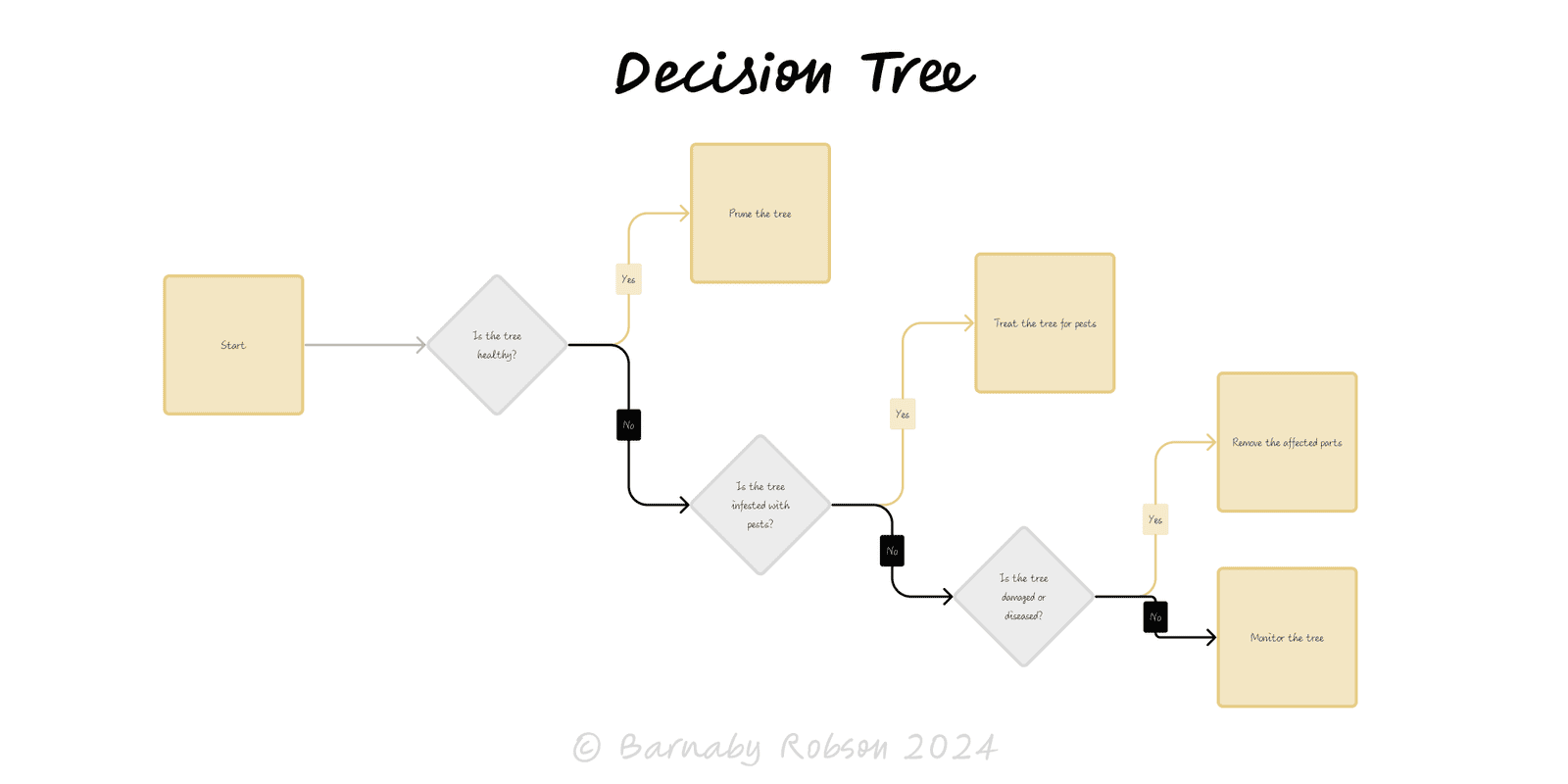
A visual of sequential decisions with probabilities and payoffs; fold back to compute expected value.
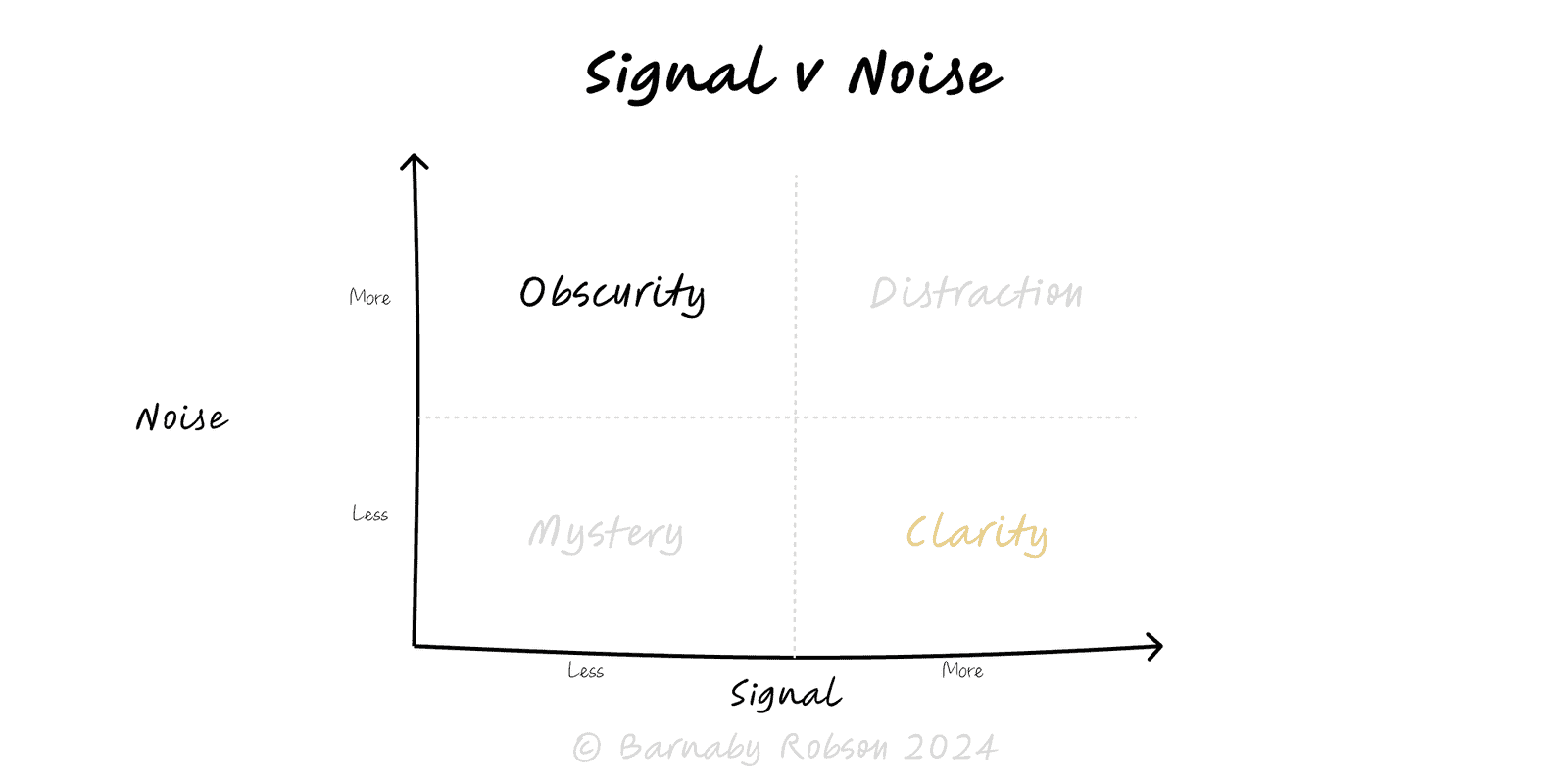
Distinguish meaningful information from random fluctuation. Set thresholds and smoothing to avoid reacting to noise, and act only when movements clear expected variability.
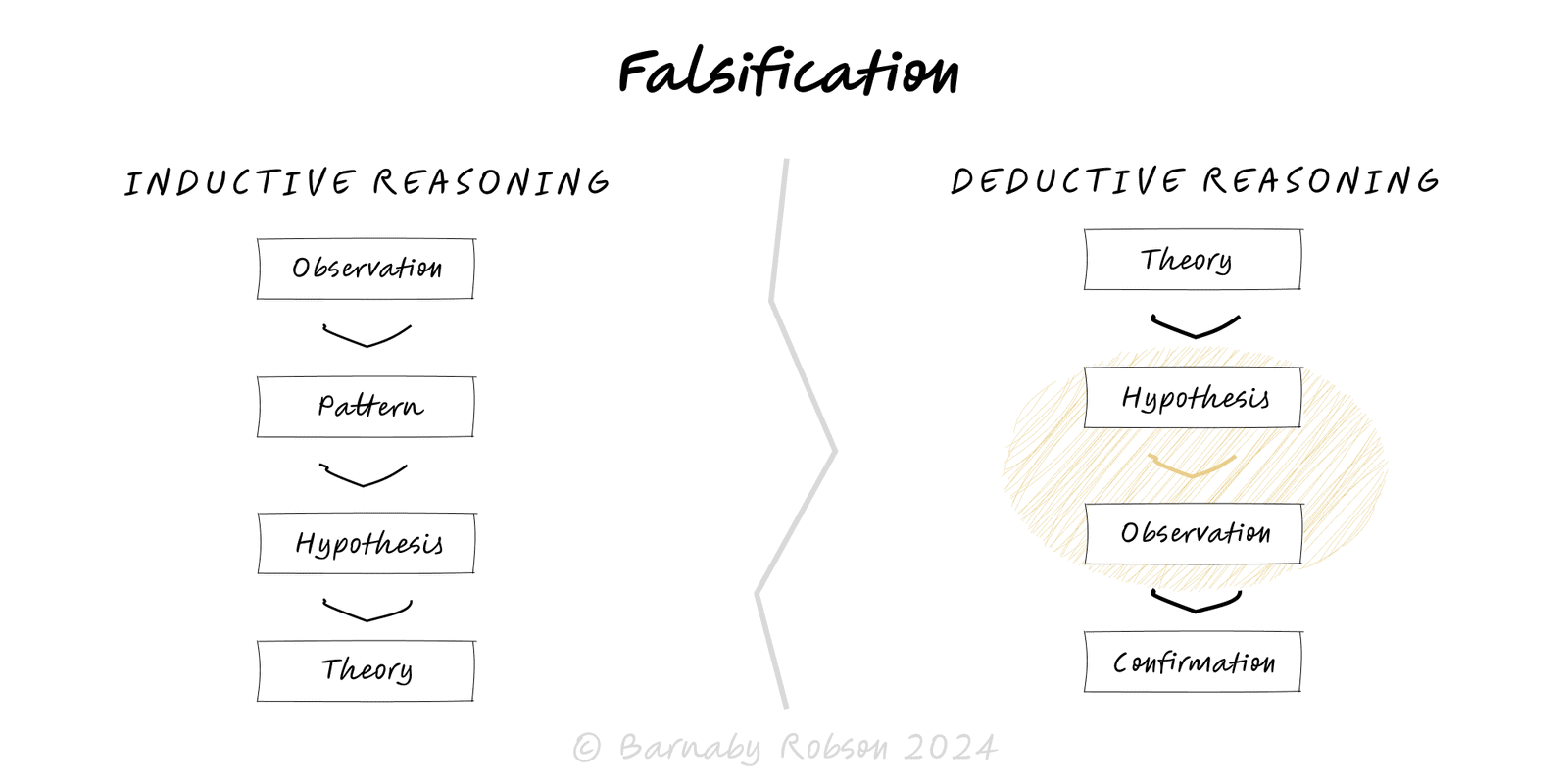
Popper’s rule: scientific theories must be testable and killable by evidence.