
Part 1 – Overview
The unbalanced Universe
A strategic guide to the 80/20 Principle and the nature of unequal results. Visual notes from the book the 80/20 Principle by Richard Koch
We are taught that the world is balanced
We assume a 50/50 relationship between cause and effect. That all customers are equally valuable. That every hour of work contributes the same. That all products in our portfolio matter equally.

But reality is fundamentally asymmetrical
A minority of causes, inputs or effort usually lead to a majority of the results, outputs or rewards
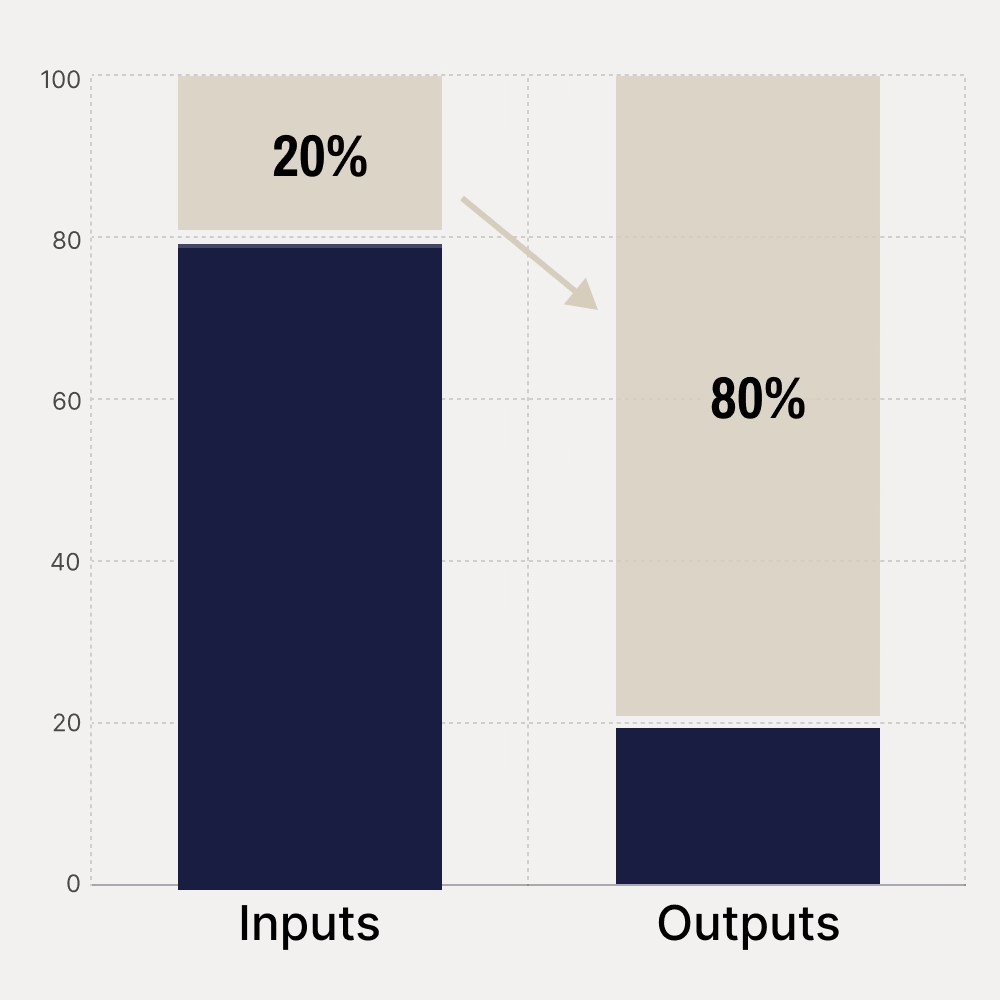
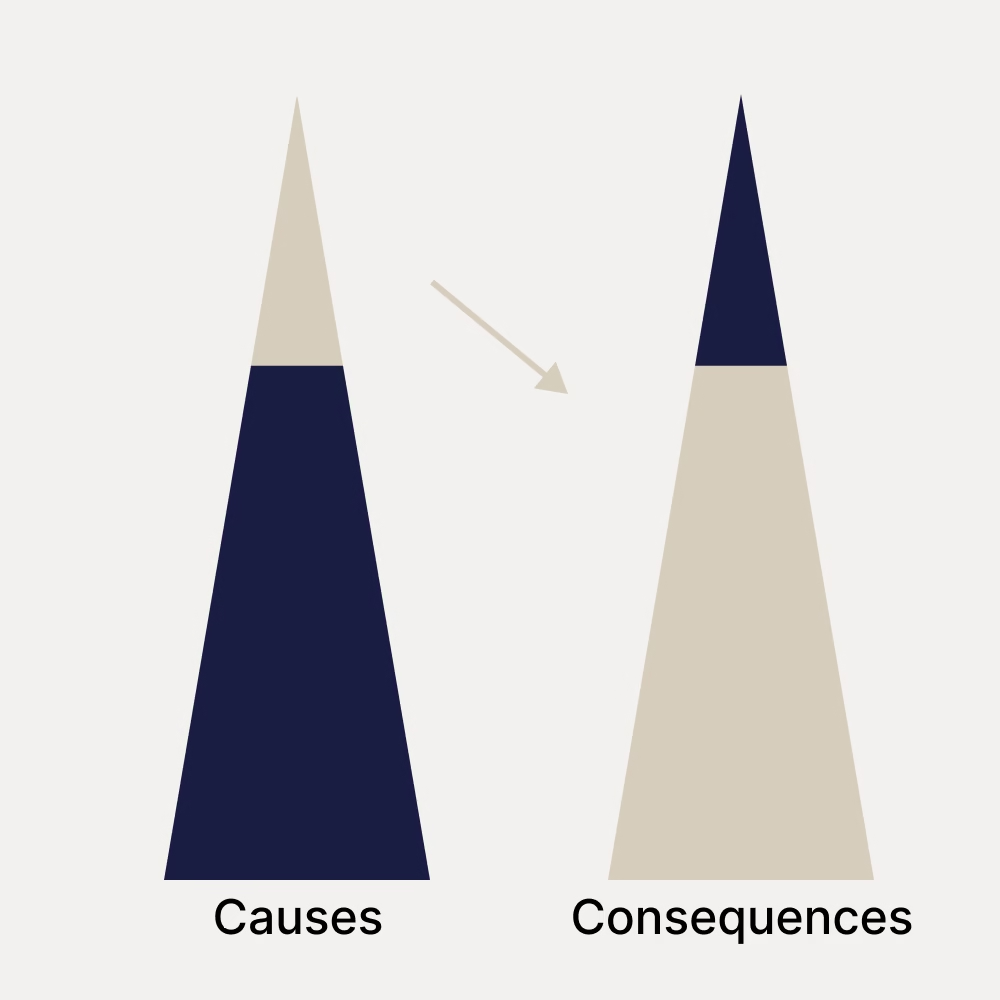
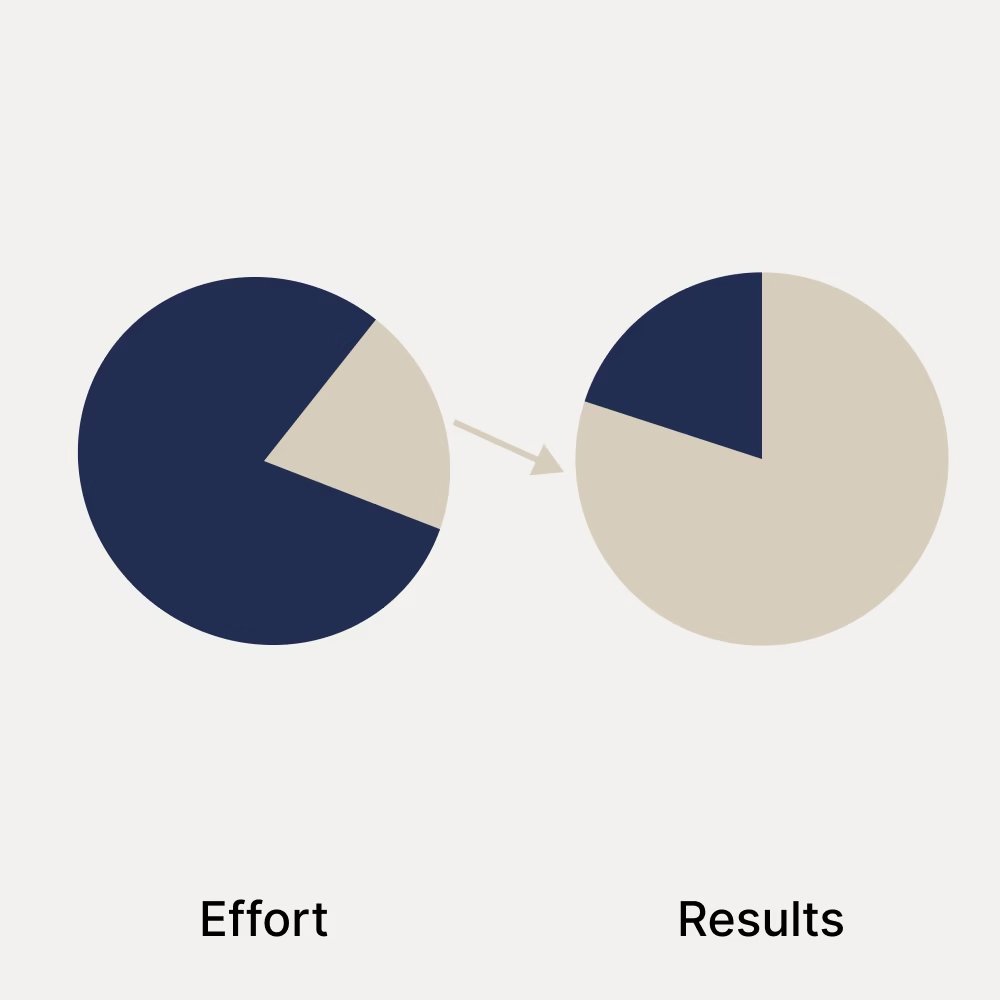
This is the 80/20 principle – a few methods, causes, ideas, inputs, or uses of time, money, manpower, will lead to great results; most will lead to poor results.
In business, this imbalance dictates profit
Key Insight 1 (Products)
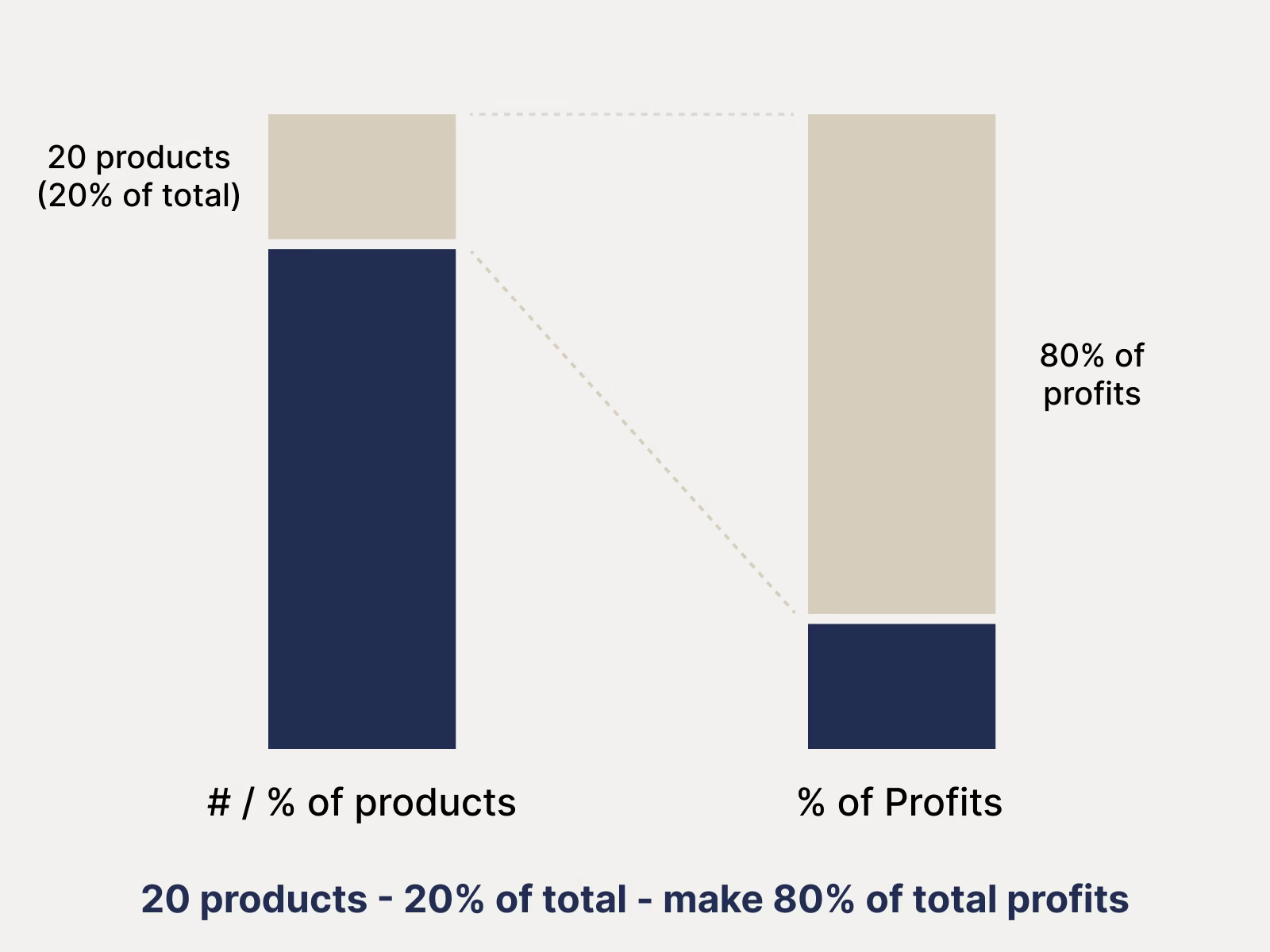
For most firms, 20% of products account for 80% of profits. Often, the ratio is even more extreme: a single product (1% of the total) can generate 20% of total profits.
Key Insight 2 (Clients)
The pattern holds for customers. In the strategy consulting industry, 80 percent of profits come from just 20 percent of clients. These large, long-term clients are the vital few.
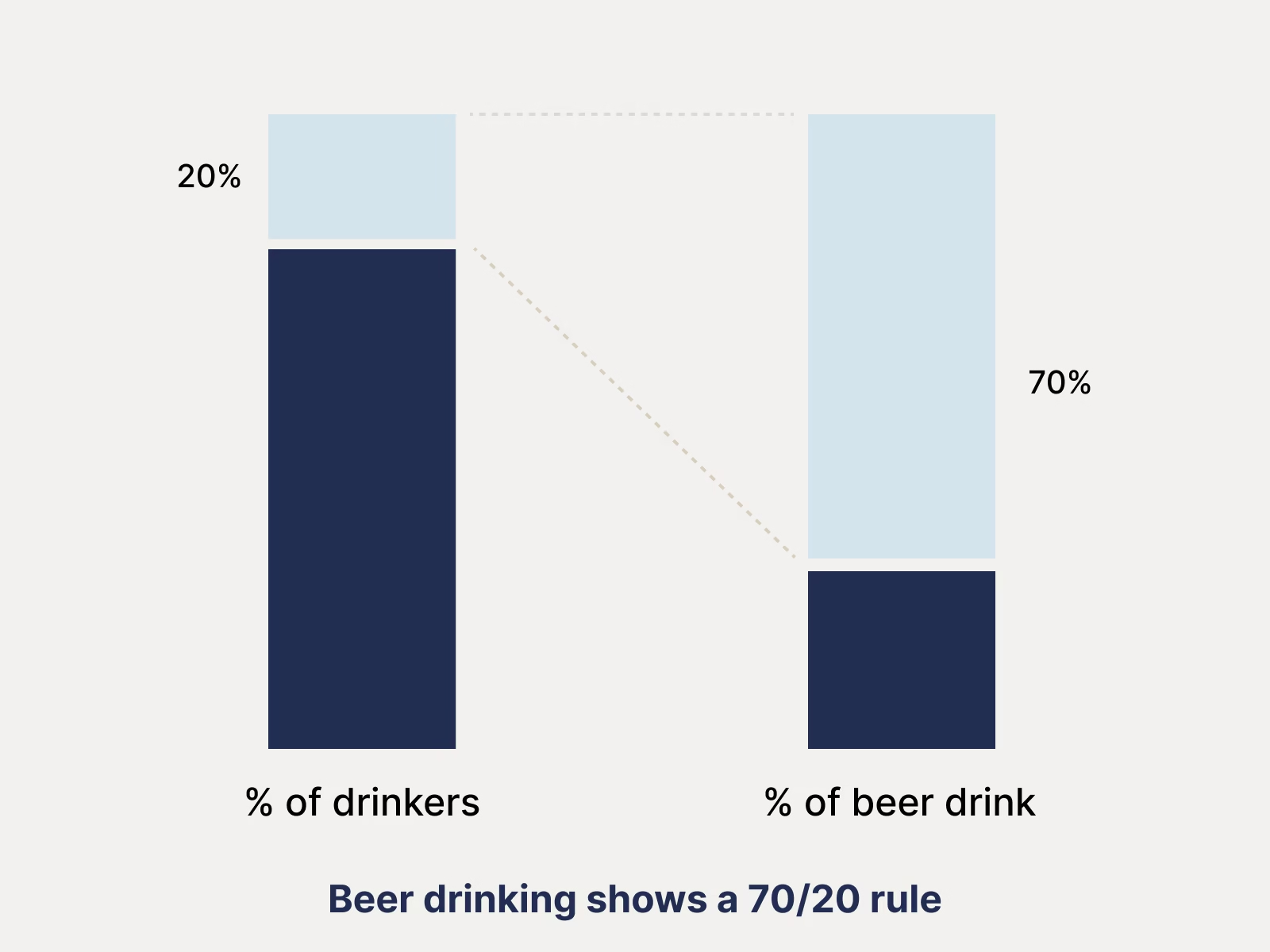
This pattern extends deep into human behaviour
Analysis shows that a small minority of drinkers consume the vast majority of beer. In one study, the top 20% of drinkers were responsible for 70% of total consumption. This is a clear demonstration of the 80/20 relationship in a social context.
On a global scale, it’s a “Winner takes all” world
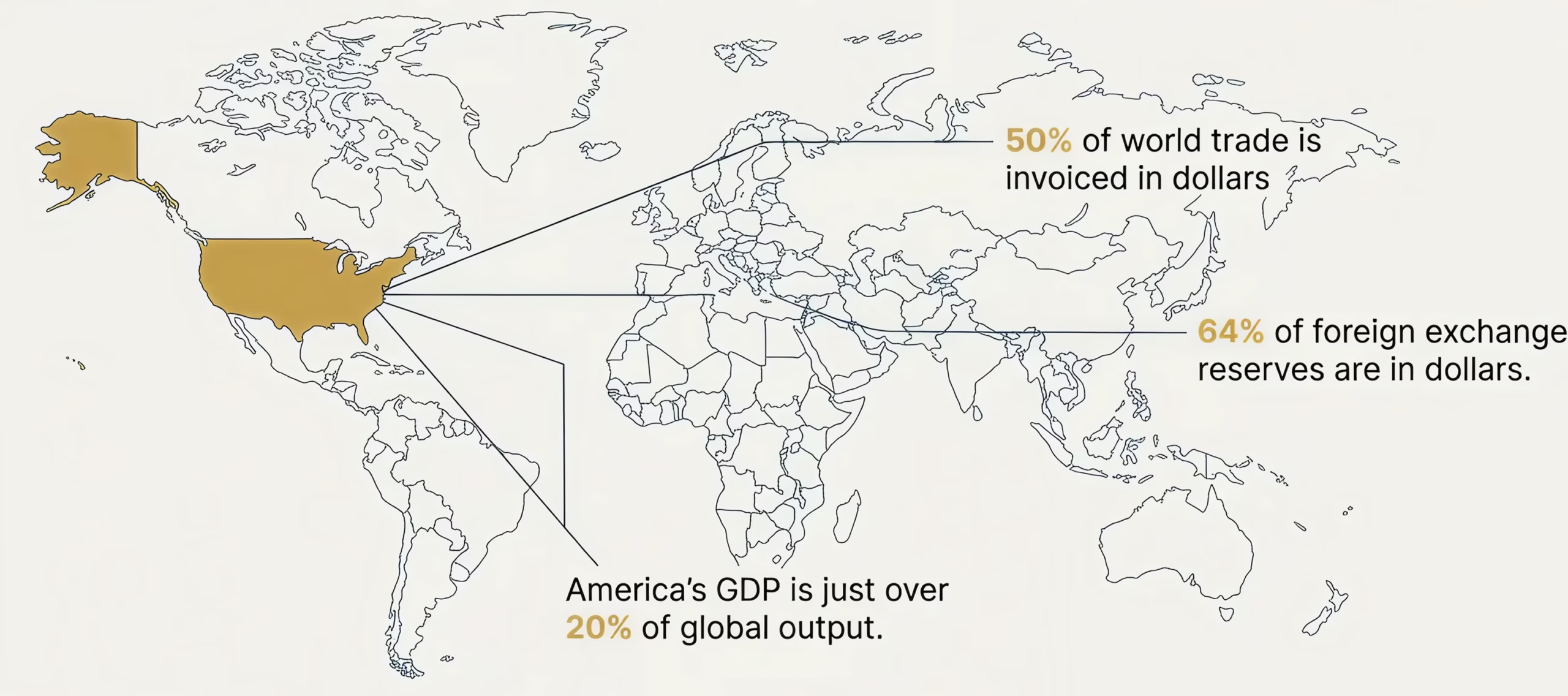
Almost 50 percent of world trade is invoiced in dollars, far above America’s 13 percent share of world exports. And, while the dollar’s share of foreign exchange reserves is 64 percent, the ratio of American GDP to global output is just over 20 percent.
There are two ways to leverage the 80/20 Principle

80/20 Analysis
The Quantitative ‘What?’
A precise method to find the facts and understand where imbalance lies
- Precise
- Quantitative
- Requires investigation
- Provides facts
- Highly valuable

80/20 Thinking
The Qualitative ‘So What?’
A conceptual tool to generate insights and ask better questions.
- Fuzzy
- Qualititative
- Requires thought
- Provides insight
- Highly valuable
Analysis tells you what is happening. Thinking helps you decide what to do about it.
What is 80/20 Analysis used for?
The rigorous examination of data to find the precise relationship between inputs and outputs.
Primary use
Identify the top 20% of inputs (e.g., customers, products) that generate 80% of results, and concentrate resources on them. This is the most
rewarding path.
Secondary use
Address the “underperforming” 80% of inputs. This is generally harder work and less rewarding.
Critical Warning: Don’t apply 80/20 analysis in a linear way

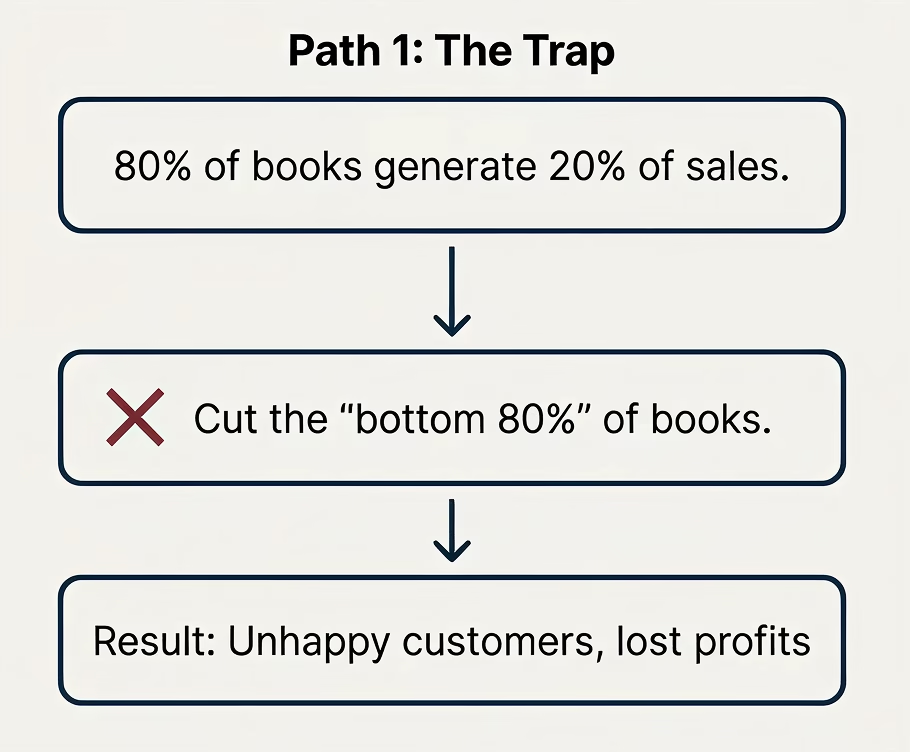
The bookstore fallacy example:
In most bookshops 20% of books account for 80% of sales
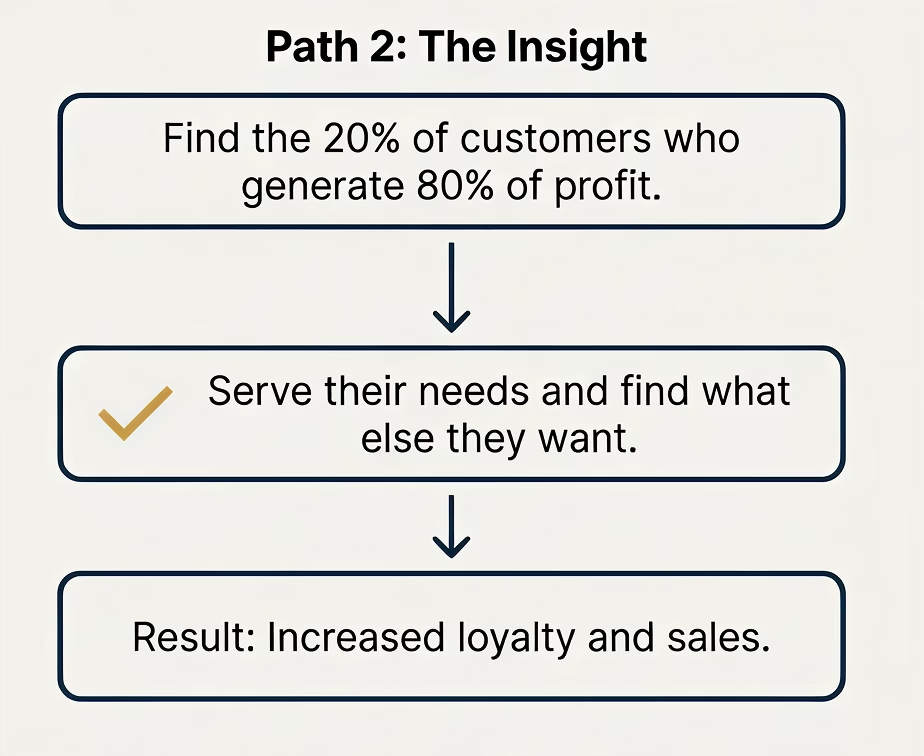
The Correct Action: Concentrate on the 20% of customers who account for 80% of profits, and find out what they want. This may include a wide range of niche books, not just chart-toppers.
While this may sound obvious to some, linear 80/20 conclusions are followed alarmingly often in the real world.
Real world example – A major global bank
The bank, once marketed as “the world’s local bank”, is selling retail operations across geographies on the premise that it will retain only its most profitable markets and segments. What this logic misses is causality. Many of its most profitable private and commercial banking clients bank with it precisely because of the global retail network beneath them. Remove that network and the apparent profitability of the remaining customers is likely to prove fragile.
The simplistic conclusion:
Cut the range of books and only stock best sellers
The deeper insight:
The key consideration is not the distribution of books sold, but what your best customers want. Customers who visit a proper bookstore expect and value a wide range. Restricting range drives away the very customers who are most profitable.
The most valuable insight from 80/20 Analysis will always come from examining non-linear relationships that others are neglecting.
80/20 Thinking – why it is necessary
To engage in 80/20 Thinking, we must constantly ask ourselves: what is the 20 percent that is leading to 80 percent?
We must never assume that we automatically know what the answer is, but take some time to think creatively about it.
celebrate exceptional productivity rather than raise average efforts
be selective, not exhaustive. strive for excellence in few things, rather than good performance in many
only do the thing we are best at doing and enjoy most
look beneath the normal texture of life to uncover ironies and oddities
calm down, work less and target a limited number of very valuable goals where 80/20 will work for us, rather than pursuing every available opportunity
look for the short cut, rather than run the full course
delegate or outsource as much as possible in our daily lives and be encouraged rather than penalized by tax systems to do this (use gardeners, car mechanics, decorators and other specialists to the maximum, instead of doing the work ourselves)
choose our careers and employers with extraordinary care, and, if possible, employ others rather than being employed ourselves
in every important sphere, work out where 20 percent of effort can lead to 80 percent of returns
make the most of those few ‘lucky streaks’ in our life where we are at our creative peak and the stars line up to guarantee success.
The universe is not on your side, but it is not against you either. It is merely unbalanced

The 80/20 Principle will help you find the levers.