Pavlovian Conditioning
A neutral cue paired with a meaningful event can come to trigger the response on its own.
Author
Ivan Pavlov (1902–1927); extended by Rescorla & Wagner, Kamin
Model type
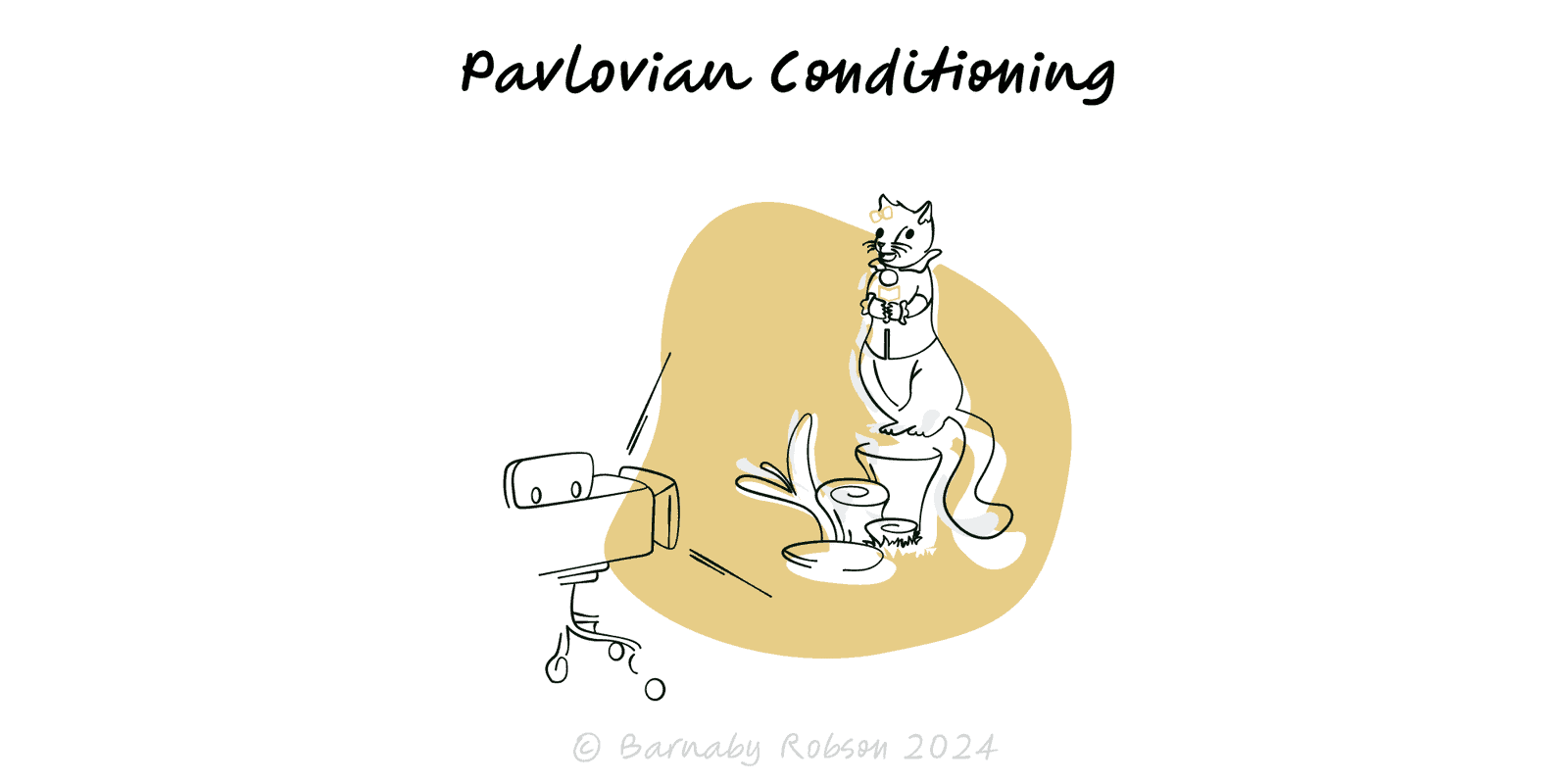

A neutral cue paired with a meaningful event can come to trigger the response on its own.
Ivan Pavlov (1902–1927); extended by Rescorla & Wagner, Kamin
Pavlovian (classical) conditioning explains how associations form: a neutral stimulus becomes a conditioned stimulus (CS) by being paired with an unconditioned stimulus (US) that naturally elicits an unconditioned response (UR). After enough pairings, the CS alone evokes a conditioned response (CR). Learning depends on contiguity (timing) and, crucially, contingency/prediction error—the CS must carry information that the US is coming.
Core terms
Acquisition – CS precedes US by a short interval (best learning with forward, short-delay pairing).
Extinction – CS without US reduces CR; spontaneous recovery can occur after a pause.
Generalisation / discrimination – responses spread to similar cues; training can narrow them.
Blocking & overshadowing – a well-established CS can block learning about a new cue presented alongside it; more salient cues overshadow weaker ones.
Prediction error – learning tracks “surprise” (Rescorla–Wagner): big updates when outcomes differ from expectation.
Second-order conditioning – a new neutral cue paired with an established CS can also elicit the CR.
Habits & behaviour change – anchor routines to stable cues; pair desired actions with immediate rewards.
Marketing/brand – sonic logos, packaging and contexts that evoke positive affect or appetite.
UX/product – notification sounds and micro-rewards that condition checking or contribution.
Training & safety – alarms that trigger rehearsed responses; animal training basics.
Therapy/health – exposure and counterconditioning for phobias; managing anticipatory nausea in chemo (conditioned responses).
Operations – consistent cues for readiness states (shift bells, kanban signals).
Define the map – US (meaningful outcome) → UR (target response). Choose a CS you can present reliably.
Pair with timing discipline – use short, forward pairings (CS just before US); keep early sessions dense and consistent.
Control context – train in the real performance environment if you want the response there; vary later to improve transfer.
Measure acquisition – track CR strength (latency, magnitude, frequency) per session.
Stabilise or fade – to maintain, occasionally reinforce (partial schedules). To remove, run extinction (CS without US) or countercondition (CS + relaxing/positive US).
Guard against generalisation – if only specific cues should trigger the response, train discrimination with contrasts.
Mind blocking/overshadowing – avoid piling cues together; teach one salient CS at a time.
Inconsistent pairing → weak learning or extinction.
Wrong timing – backward or long-delay pairings rarely work.
Unintended conditioning – nausea, fear or device anxiety can be conditioned by accident; watch contexts.
Ethics – avoid manipulative or aversive conditioning with people; get informed consent and offer opt-outs.
Context specificity – CR may fail to transfer across settings without deliberate variation.
Relapse – spontaneous recovery and renewal; plan boosters or extinction in multiple contexts.
Click below to learn other mental models
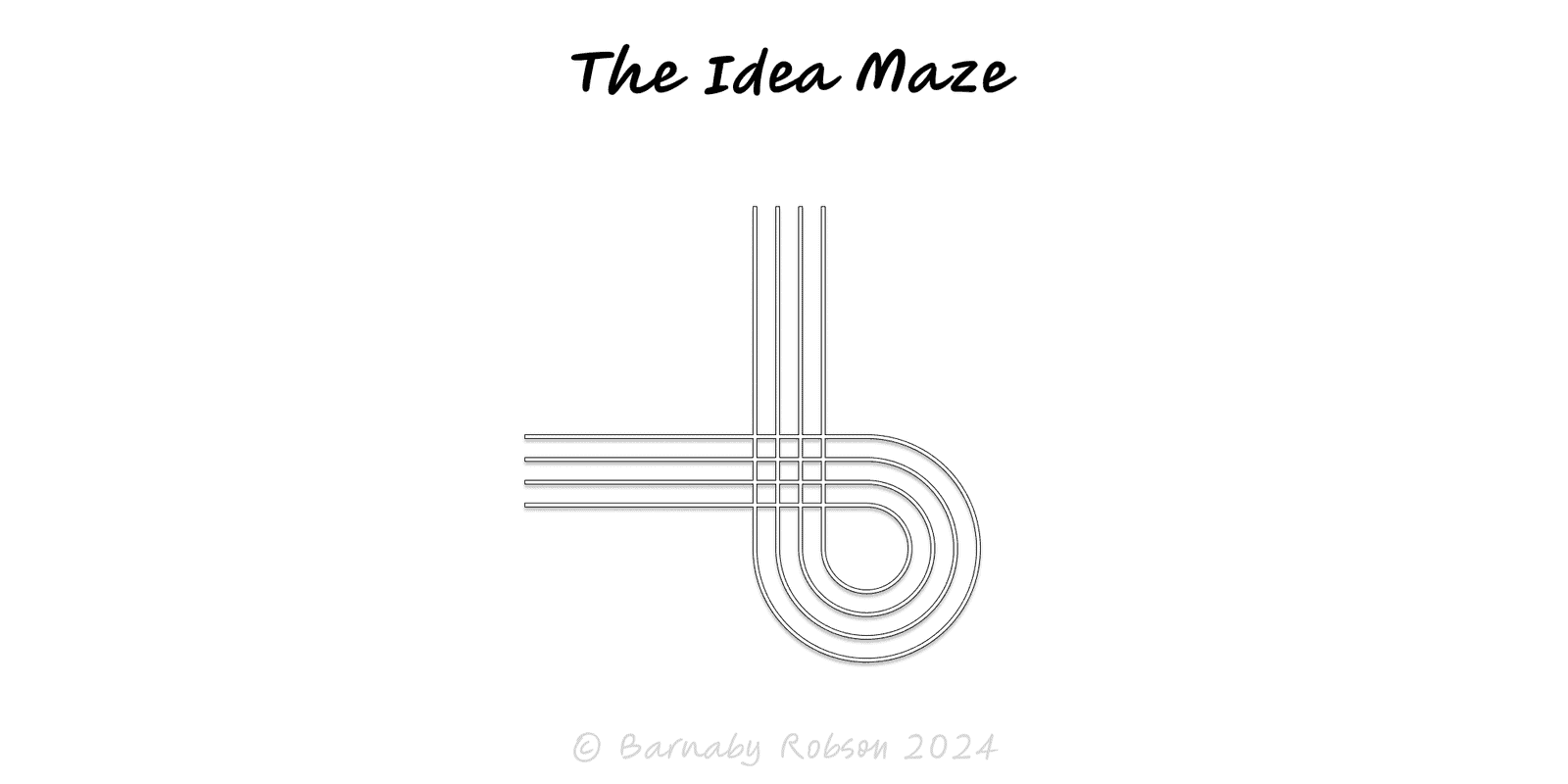
Before building, map the space: the key forks, dead ends and dependencies—so you can choose a promising path and run smarter tests.
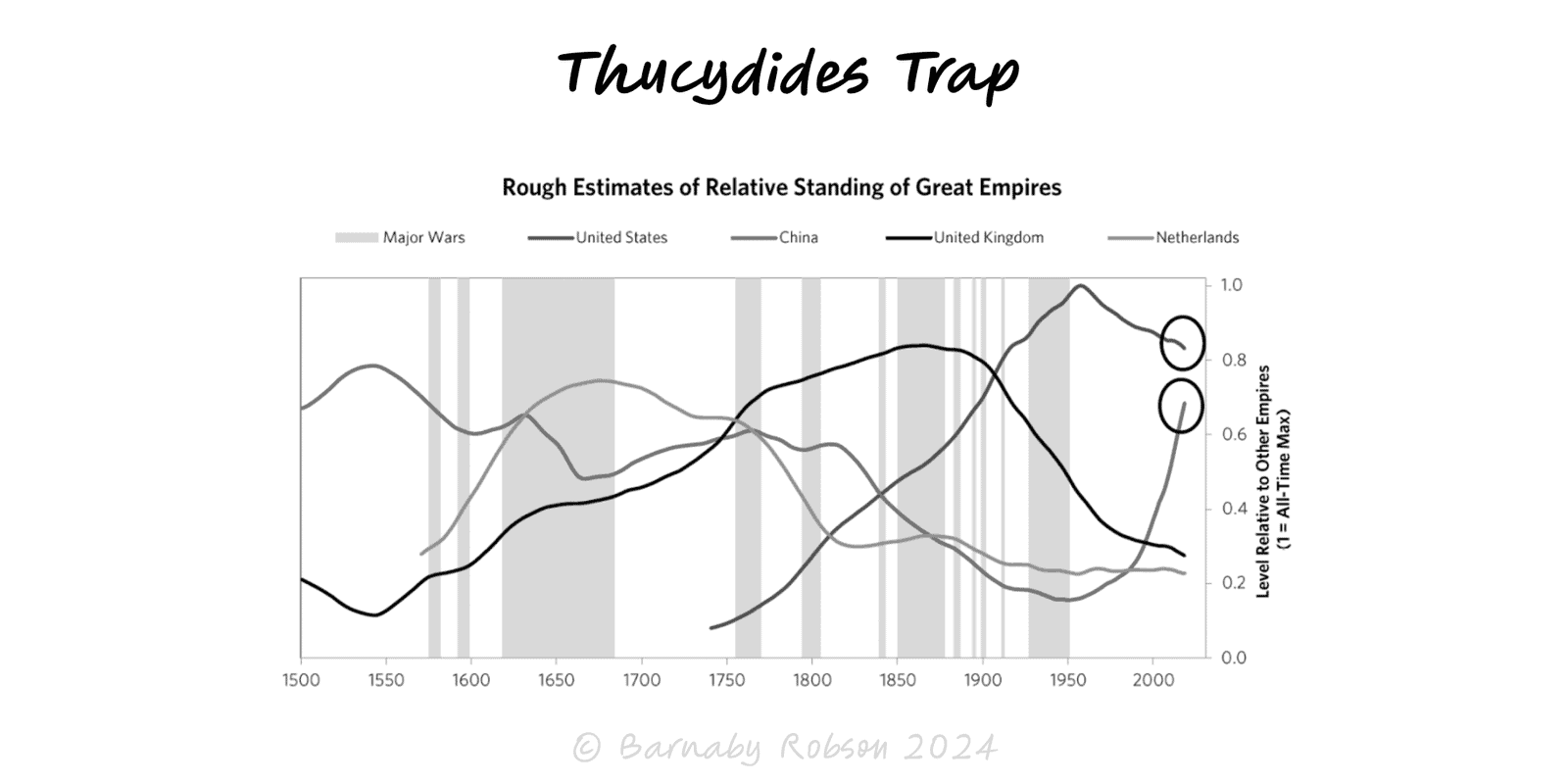
When a rising power threatens to displace a ruling power, fear and miscalculation can tip competition into conflict unless incentives and guardrails are redesigned.
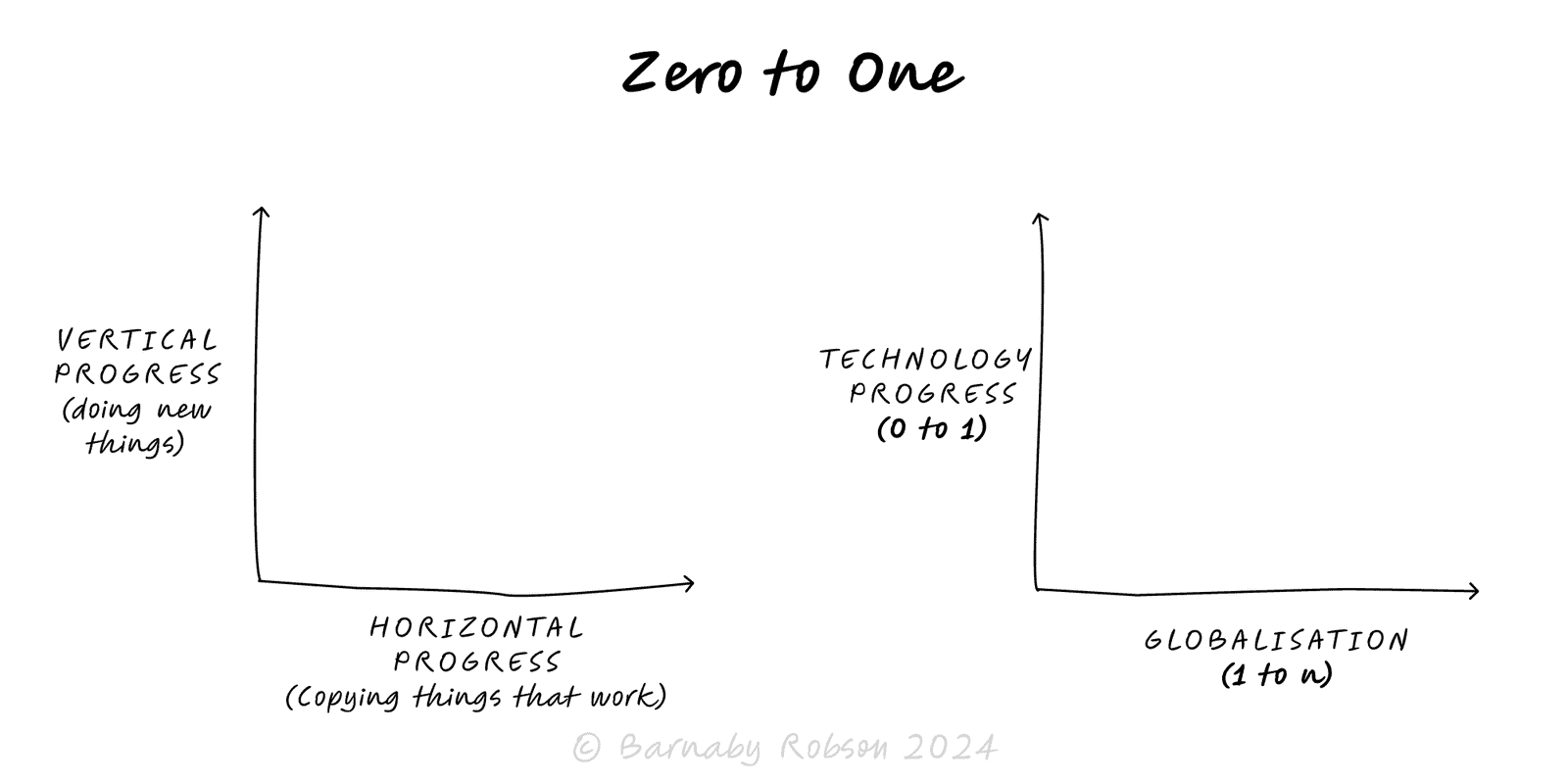
Aim for vertical progress—create something truly new (0 → 1), not just more of the same (1 → n). Win by building a monopoly on a focused niche and compounding from there.