Opportunity Cost
The real cost of any choice is the next-best alternative you give up.
Author
Classical economics (Friedrich von Wieser; mainstream microeconomics)
Model type
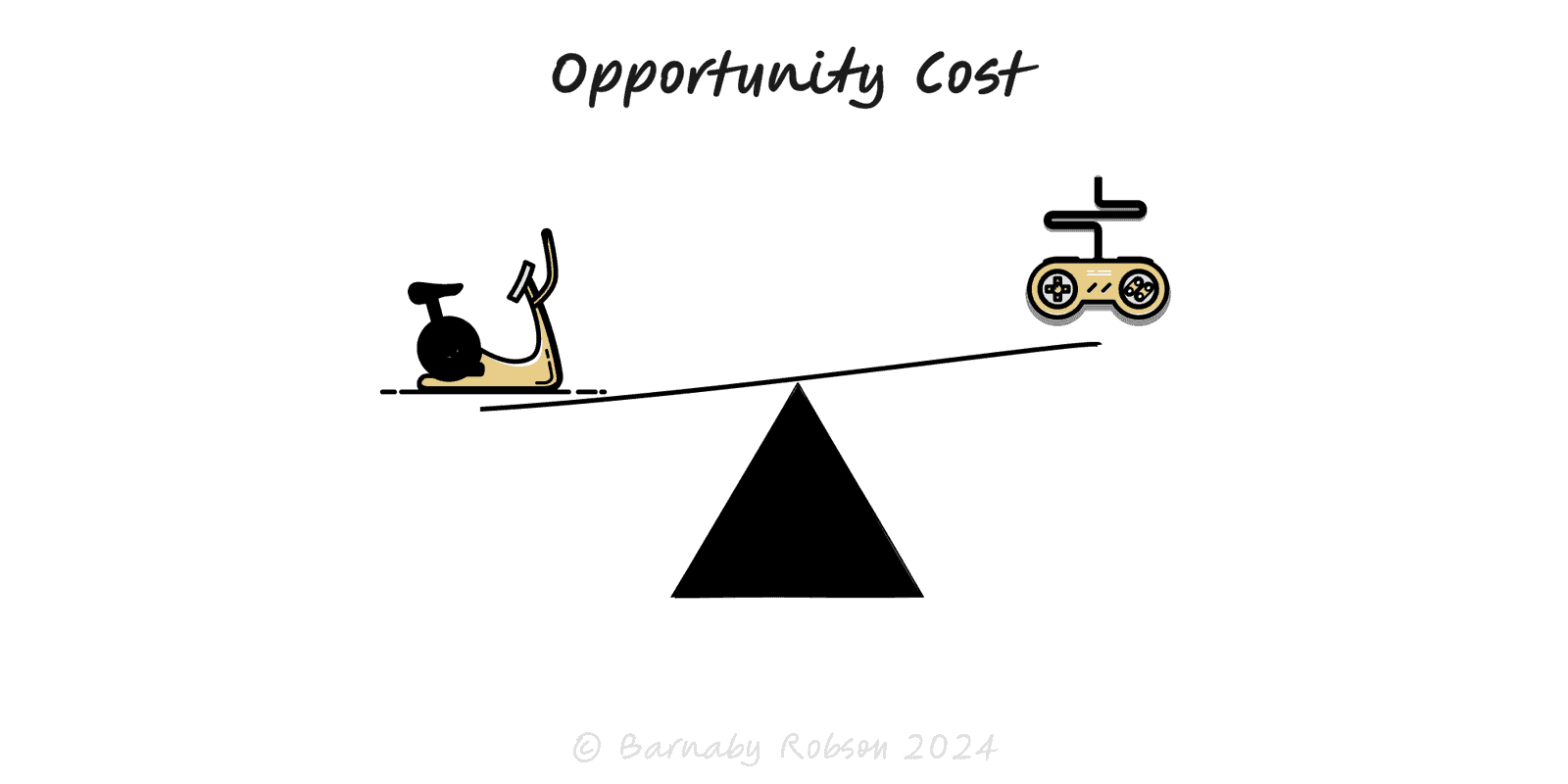

The real cost of any choice is the next-best alternative you give up.
Classical economics (Friedrich von Wieser; mainstream microeconomics)
Opportunity cost reframes decisions from “What does this option cost?” to “What am I giving up by choosing it?”. Because time, capital and attention are scarce, selecting one path excludes others. Sound choices compare options on a common basis (value, utility, ROI, joy) and focus on marginal differences, not averages or sunk costs.
Counterfactual – define the best thing you would do if you didn’t choose this option; that’s the benchmark.
Marginal, not total – compare Δbenefit − Δcost between options; ignore sunk costs.
Constrained resources – time, cash, capacity and optionality are scarce; choosing A consumes some or all of them.
Hidden costs – fatigue, complexity, lock-in and foregone learning are often the largest opportunity costs.
Relative advantage – even if you’re good at two things, do the one with the lower opportunity cost for you (ties to comparative advantage).
Capital allocation – project A vs buybacks vs debt paydown vs acquisition.
Product roadmap – what you don’t build this quarter.
Hiring & time – meetings, context switches, side projects; value of deep work.
Pricing & discounts – short-term volume vs long-term willingness to pay.
Career choices – role, location, equity vs cash, learning paths.
Operations – using scarce machines/teams on low-ROI work blocks higher-value jobs.
List real alternatives – include “do nothing” and the best use of time/capital you could choose instead.
Set a single yardstick – e.g., £NPV, contribution per hour, learning/option value; convert each option to that unit.
Compare at the margin – compute incremental benefit and cost vs the best alternative, not vs zero.
Price the intangibles – put rough £ or score ranges on risk, focus, speed, and option value.
Pick the winner & schedule the rest – choose the highest net value now; park others with review dates.
Revisit on new information – if the counterfactual improves (or constraints change), re-run the choice.
Sunk-cost fallacy – past spend/time is gone; decide on future incremental value.
Phantom alternatives – comparing against an option you wouldn’t actually execute.
Wrong unit – mixing cash, impact and vanity metrics; force a common yardstick.
Time blindness – ignoring delay costs; sometimes “good now” beats “great later”.
Lock-in – choices that kill future options can have a large opportunity cost; price optionality.
Over-optimising pennies – spending hours to save small costs while giving up high-value work.
Click below to learn other mental models

Before building, map the space: the key forks, dead ends and dependencies—so you can choose a promising path and run smarter tests.
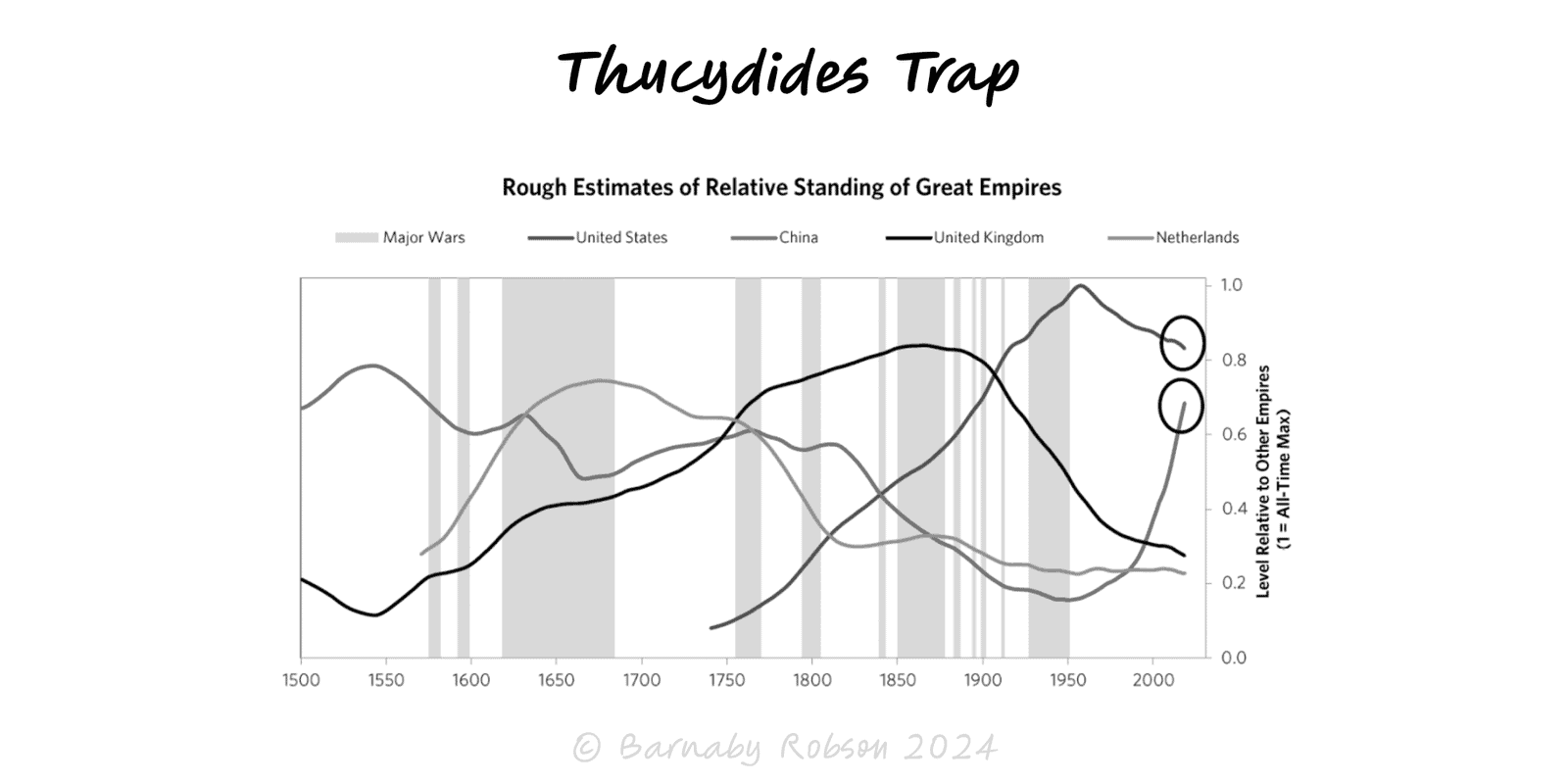
When a rising power threatens to displace a ruling power, fear and miscalculation can tip competition into conflict unless incentives and guardrails are redesigned.
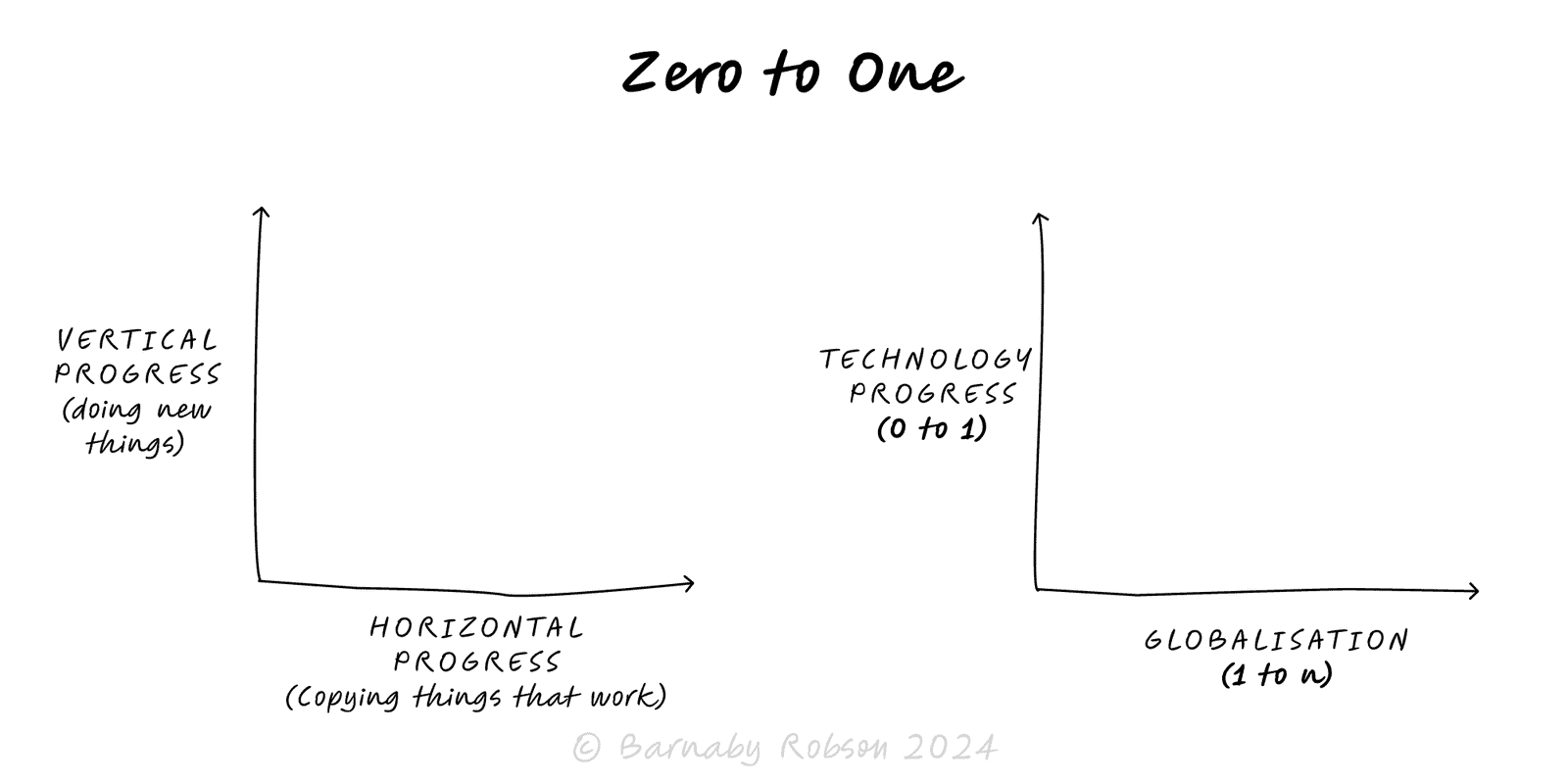
Aim for vertical progress—create something truly new (0 → 1), not just more of the same (1 → n). Win by building a monopoly on a focused niche and compounding from there.