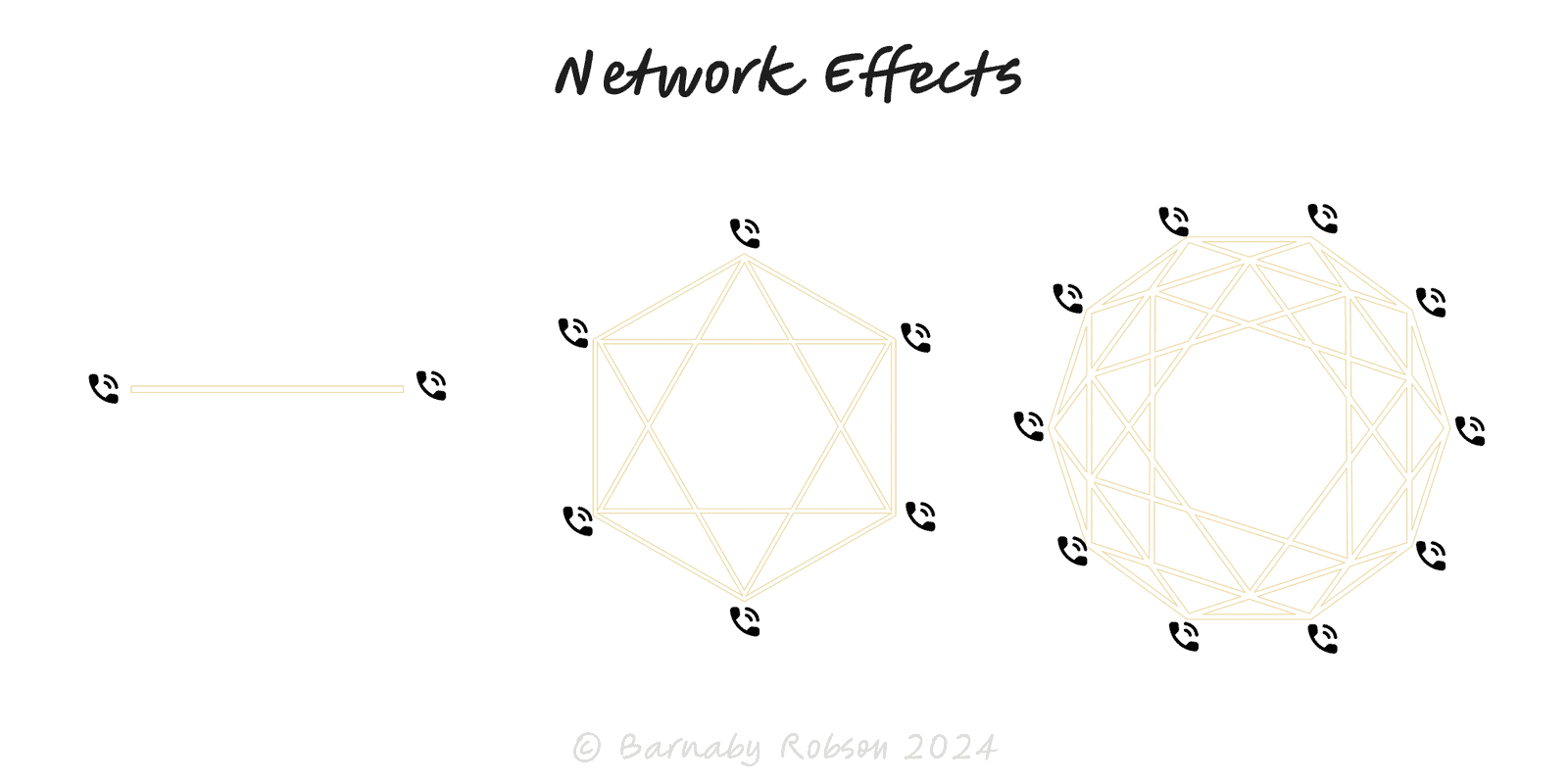
Network Effects

A product becomes more valuable as more participants join and interact. Design for liquidity and quality, not just user count.

Author

Economics of networks (Katz & Shapiro; Metcalfe; Rochet & Tirole; modern platform strategy)


Network effects arise when each new participant increases value for others. They can be same-side (messaging app) or cross-side (buyers ↔ sellers). Strong network effects create defensibility and can drive winner-take-most outcomes—until congestion, spam or multi-homing erode them. The goal is to reach critical liquidity in a focused niche, then expand while protecting interaction quality.

How it works


Types

  • Direct (same-side) – more users → more people to message/play with.
  • Indirect / two-sided (cross-side) – more of side A attracts side B (marketplaces, ad platforms).
  • Data/learning – more usage → better models → better product (search, recommendations).
  • Protocol/standard – compatibility (file formats, APIs) increases with adoption.

Strength vs size

  • Value typically scales with quality-adjusted connections, not raw n. Heuristics: ~n·log n or ~n² when everyone meaningfully connects.
  • Liquidity metrics beat vanity counts (e.g., time-to-first-match, % of requests fulfilled < X mins, messages/user/day).

Cold start & critical mass

  • Networks need a minimum density before they feel useful. You get there by seeding an atomic network (one company, campus, city, category).

Friction & decay

  • Negative network effects (congestion, spam, low quality) reduce value as size grows unless you add governance and ranking.

Use-cases


Marketplaces – riders ↔ drivers, buyers ↔ sellers, talent ↔ employers.

Social/communication – communities, messaging, creator–audience platforms.

Platforms & APIs – app stores, integrations, payment rails.

Data products – search, fraud detection, recommender systems.

Standards/protocols – file formats, payments, identity, interoperability.

Pitfalls & Cautions


Confusing virality with network effects – shares can create growth without increasing in-product value; measure on-network utility.

Counting users, not liquidity – a big but thin network feels empty; optimise density and response times.

Ignoring negative effects – spam, scams, overcrowding; add rate limits, deposits, identity and ranking.

Over-broad launch – spreading thin across geos/categories prevents any node reaching critical mass.

Subsidising the wrong side – give value where constraint actually is (usually supply at the start).

Complacent defensibility – assume lock-in; multi-homing and interoperability can unwind moats.

Recent Mental Models

Click below to learn other mental models

  • The Idea Maze

    The Idea Maze

    Before building, map the space: the key forks, dead ends and dependencies—so you can choose a promising path and run smarter tests.

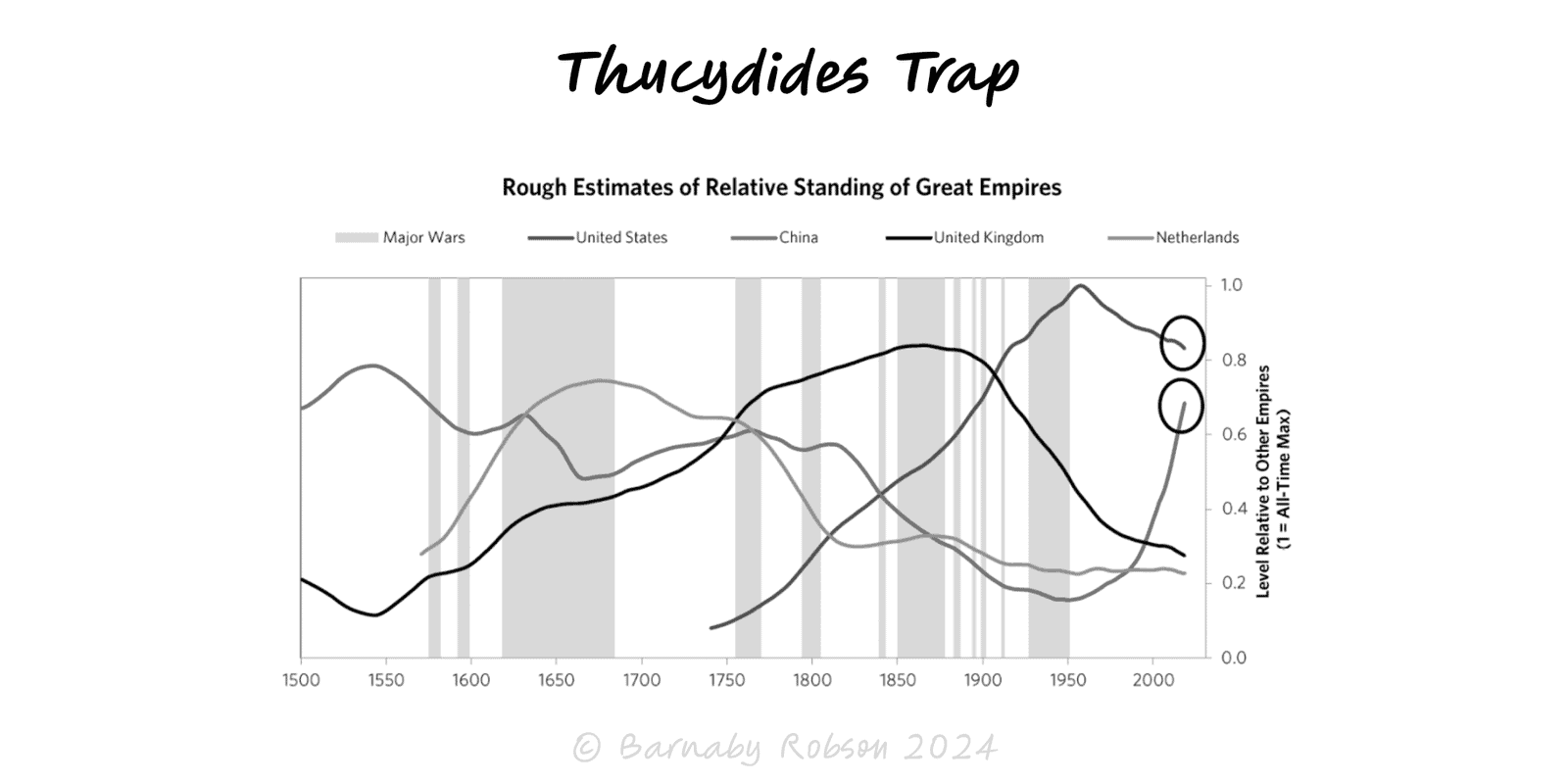
  • Thucydides Trap

    Thucydides Trap

    When a rising power threatens to displace a ruling power, fear and miscalculation can tip competition into conflict unless incentives and guardrails are redesigned.

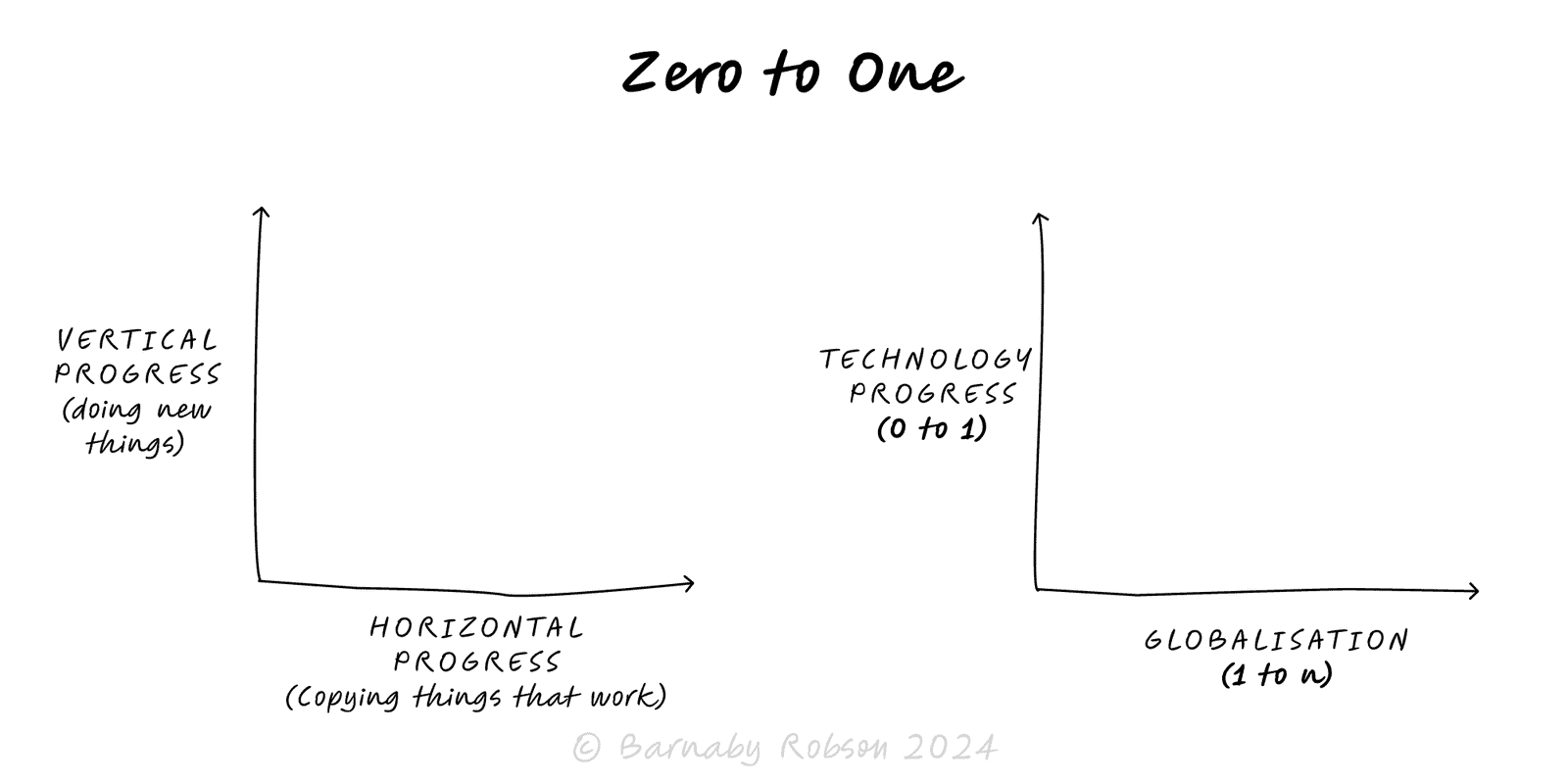
  • Zero to One

    Zero to One

    Aim for vertical progress—create something truly new (0 → 1), not just more of the same (1 → n). Win by building a monopoly on a focused niche and compounding from there.