Man with a Hammer Syndrome
Over‑applying a favourite tool (“to a man with a hammer, everything looks like a nail”).
Author
Abraham Maslow (law of the instrument, 1966); popularised by Charlie Munger as “man with a hammer”
Model type
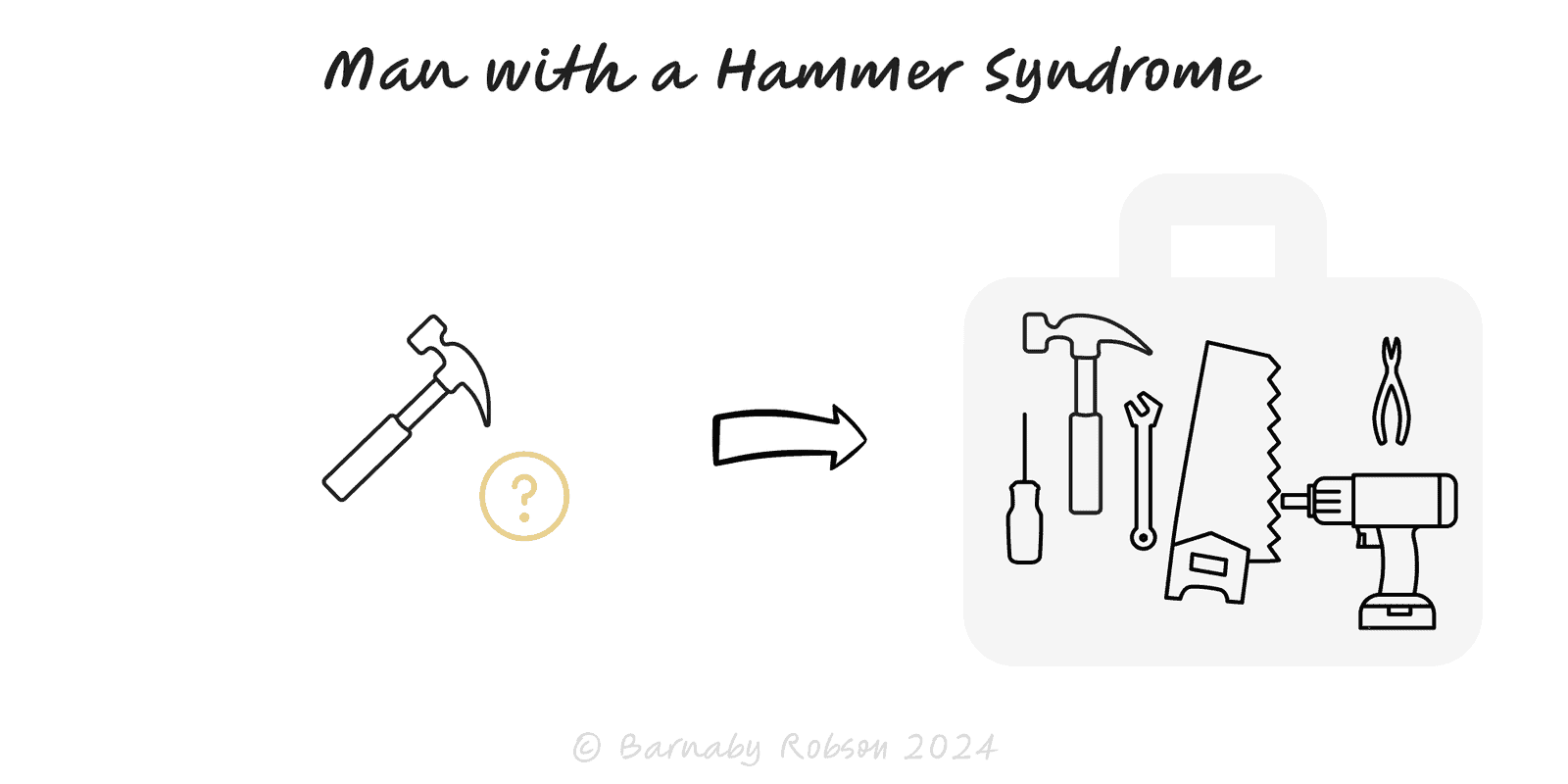

Over‑applying a favourite tool (“to a man with a hammer, everything looks like a nail”).
Abraham Maslow (law of the instrument, 1966); popularised by Charlie Munger as “man with a hammer”
Maslow warned that if all you have is a hammer, you’ll treat everything as a nail. Munger broadened this to argue for a latticework of mental models. The error isn’t using a tool; it’s defaulting to it—because of habit, identity, or incentives—when the problem’s structure calls for something else.
Functional fixedness – prior success and muscle memory narrow attention to familiar moves.
Identity & incentives – careers, tooling, and KPIs reward one approach, so alternatives feel costly.
Availability & confirmation – data that fits the “hammer” is easier to see and believe.
Path dependence – early choices lock interfaces, metrics and talent, deepening the rut.
Strategy – forcing a playbook (e.g., “enterprise sales everywhere”) onto mismatched segments.
Product/tech – using the same stack or pattern regardless of scale, latency or data shape.
Analytics – one KPI or method (A/B only, qual only) for all questions.
Organisation – applying a single management fad to every team or phase.
Investing – one style (value/growth/quant) even when market regime shifts.
Name the problem class – write the primitives: uncertainty, feedback, tail risk, constraints, time horizon.
Generate three plausible frames – e.g., bottleneck/flow, EV under uncertainty, incentives/game.
Match tool to structure – pick models whose assumptions fit the primitives (queues → Little’s Law; tail risk → fat tails; rivalry → game theory).
Run a “hammer test” – If we couldn’t use our default tool, how would we do this? Write the alternative.
Seek disconfirming evidence – cases where the favourite approach failed; set a switch criterion in advance.
Split explore vs exploit – small safe-to-fail probes with alternate tools alongside the core.
Design incentives for pluralism – reward clean kills, not just wins; rotate reviewers and methods.
Model soup – adding tools without choosing; decide, don’t hedge forever.
Cargo-culting – copying a tool’s rituals without its assumptions.
One KPI to rule them all – Goodhart’s law turns the hammer into the game; pair outcome and counter-metrics.
Status quo grip – switching costs and sunk time mask better-fit methods; budget for migration.
Overcorrection – abandoning a proven hammer where it does fit; keep domains of applicability explicit.
Click below to learn other mental models
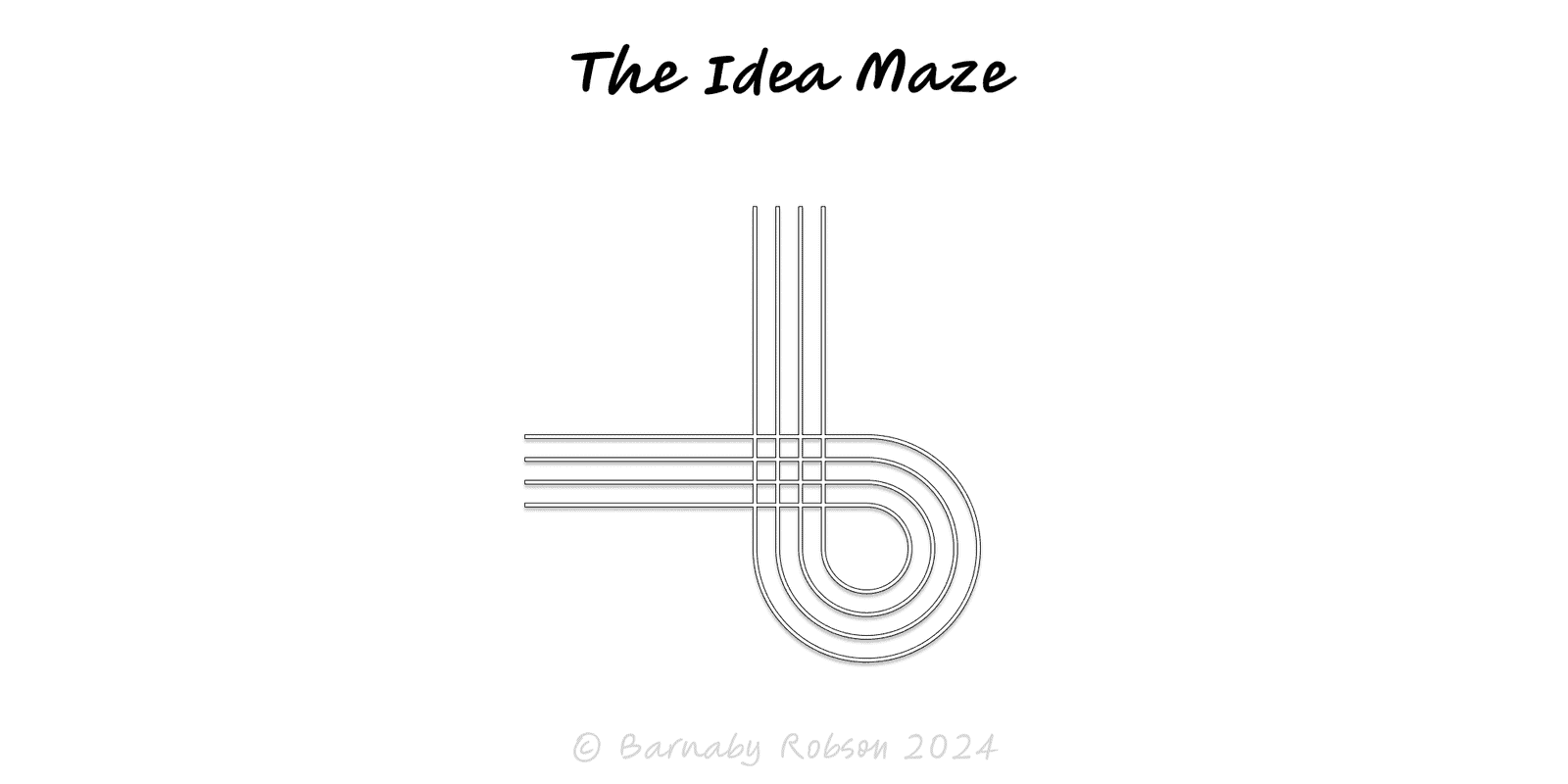
Before building, map the space: the key forks, dead ends and dependencies—so you can choose a promising path and run smarter tests.
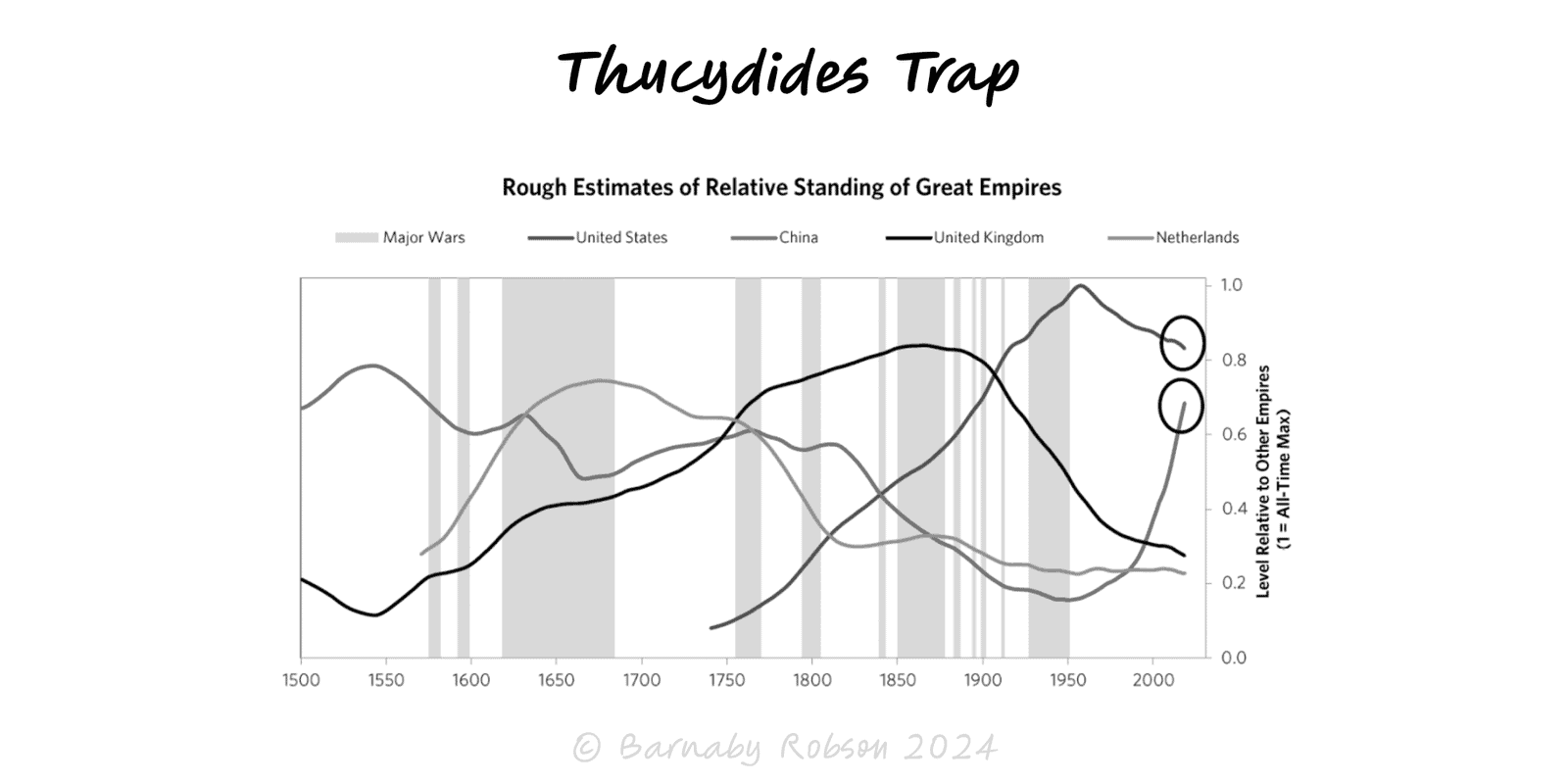
When a rising power threatens to displace a ruling power, fear and miscalculation can tip competition into conflict unless incentives and guardrails are redesigned.
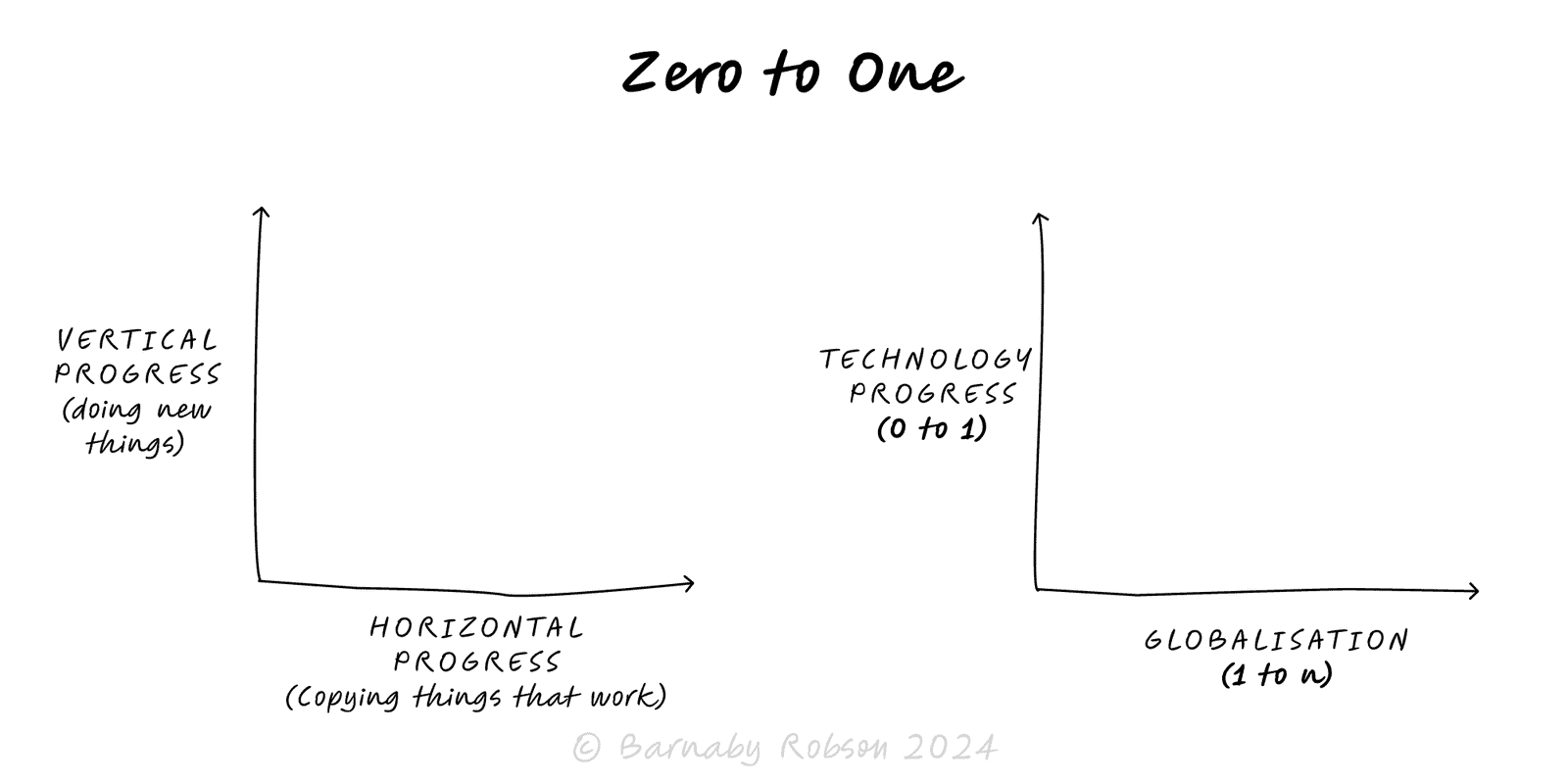
Aim for vertical progress—create something truly new (0 → 1), not just more of the same (1 → n). Win by building a monopoly on a focused niche and compounding from there.