Lindy Effect
For non-perishable things (ideas, books, protocols), the older it is, the longer it’s likely to last.
Author
Broadway show-business heuristic (1960s) popularised by Benoît Mandelbrot and Nassim Nicholas Taleb
Model type
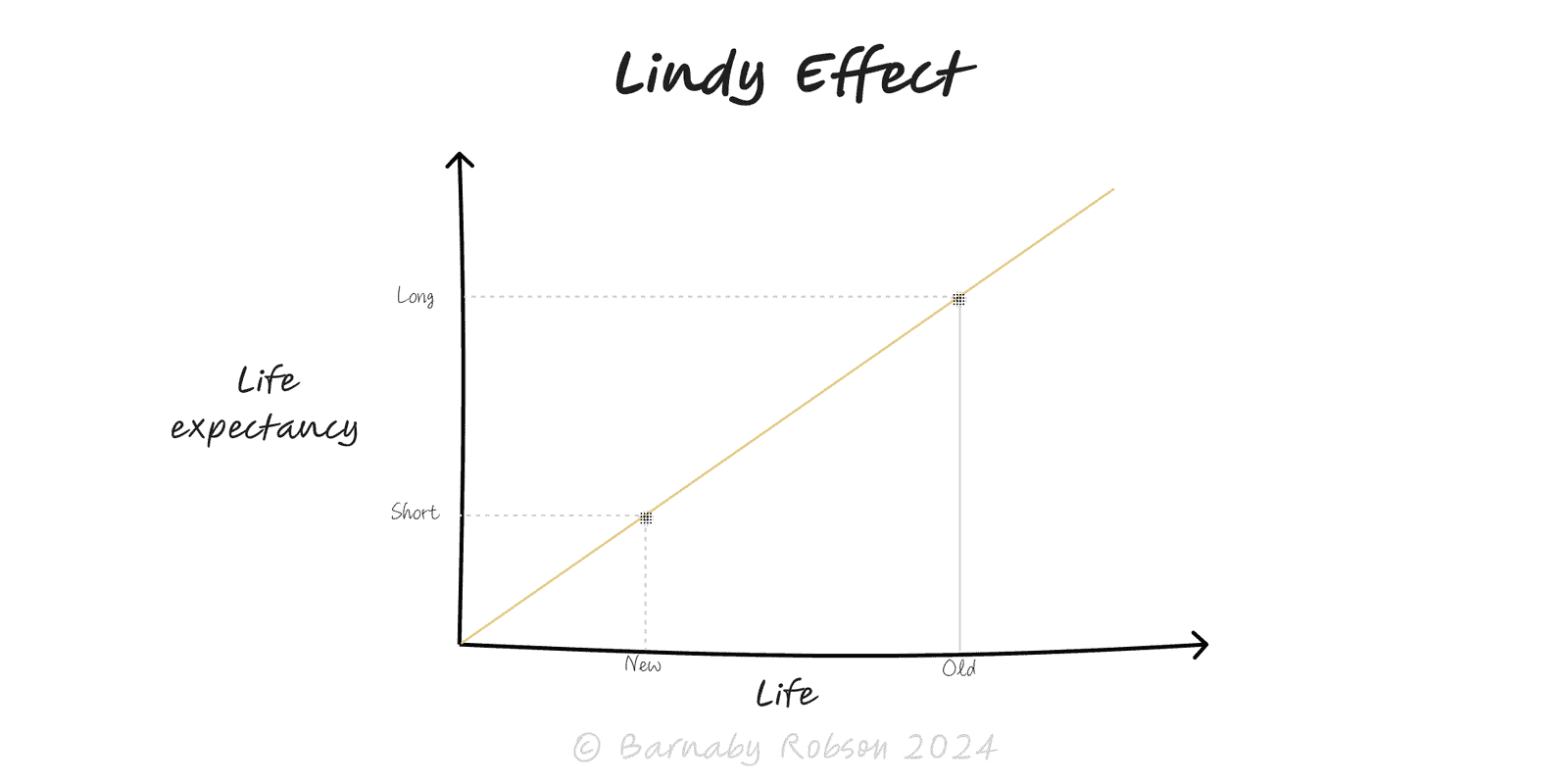

For non-perishable things (ideas, books, protocols), the older it is, the longer it’s likely to last.
Broadway show-business heuristic (1960s) popularised by Benoît Mandelbrot and Nassim Nicholas Taleb
The Lindy effect says that for things which don’t physically decay—like ideas, technologies, and institutions—remaining life expectancy grows with age. A book in print for 50 years is more likely to be around for another 50 than a brand-new one is to reach 50. It’s a base-rate for durability, not a guarantee of quality.
Non-perishable vs perishable – people and machines wear out; ideas and protocols don’t.
Survival as evidence – each extra year alive is a test passed (product–market fit, incentives, culture).
Heavy-tailed lifetimes – persistence often follows power-law-ish survival curves; a few things endure for very long.
Path dependence – adoption, standards and network effects reinforce longevity.
Reading lists & research – prioritise classics that have outlived fads; mix with a small new-ideas budget.
Technology choices – prefer time-tested primitives (UNIX, TCP/IP, SQL) for core systems; experiment at the edges.
Product/UX patterns – default to stable interaction conventions; innovate where it helps.
Policy & contracts – reuse clauses and norms that have survived litigation and cycles.
Investing & vendors – sceptical prior for shiny new things; look for evidence of staying power before sizing up.
Classify the object – is it non-perishable (concept, protocol, norm) or perishable (hardware, team velocity)?
Write the base rate – current age = __; Lindy prior = expect at least ~that long again absent contrary evidence.
Look for survival markers – multi-context use, standards status, community depth, backwards compatibility, incentive alignment.
Size your bet – core choices favour Lindy-positive options; place small, reversible bets on the new.
Combine with falsification – keep novelty, but require clear wins vs the Lindy baseline.
Revisit on regime shifts – when constraints change (regulation, compute, platforms), update the prior.
Survivorship bias – what you see survived; don’t assume the unseen failed for the same reasons.
Age ≠ merit – some old ideas persist due to lock-in, not excellence; test fitness today.
Category error – misapplying Lindy to perishable assets (servers, humans, tyres).
Status-quo trap – using Lindy to dismiss innovation; keep an option budget for new bets.
Regime change – technology or incentives can flip what survives (e.g., distribution platforms).
Click below to learn other mental models

Before building, map the space: the key forks, dead ends and dependencies—so you can choose a promising path and run smarter tests.
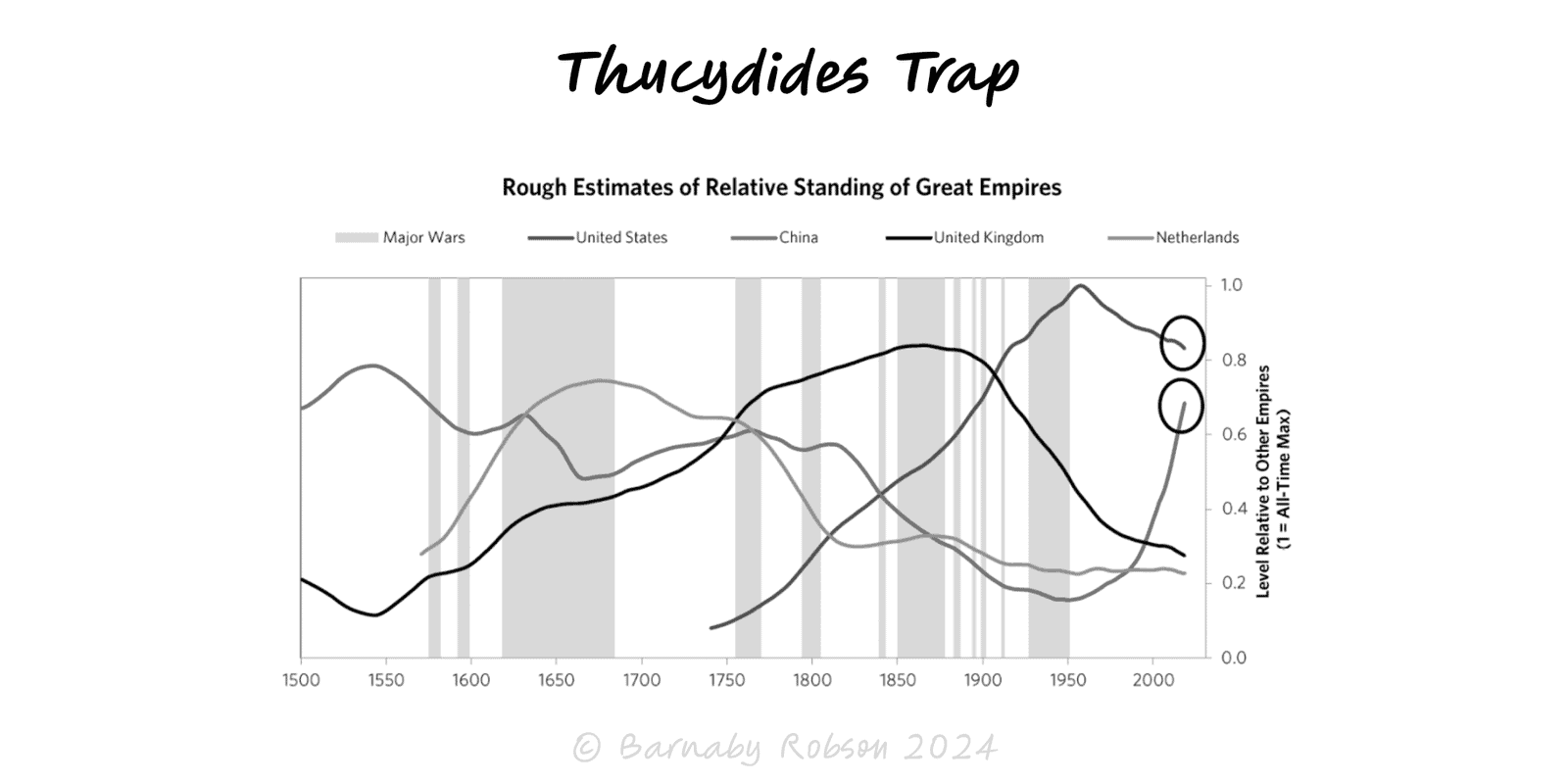
When a rising power threatens to displace a ruling power, fear and miscalculation can tip competition into conflict unless incentives and guardrails are redesigned.
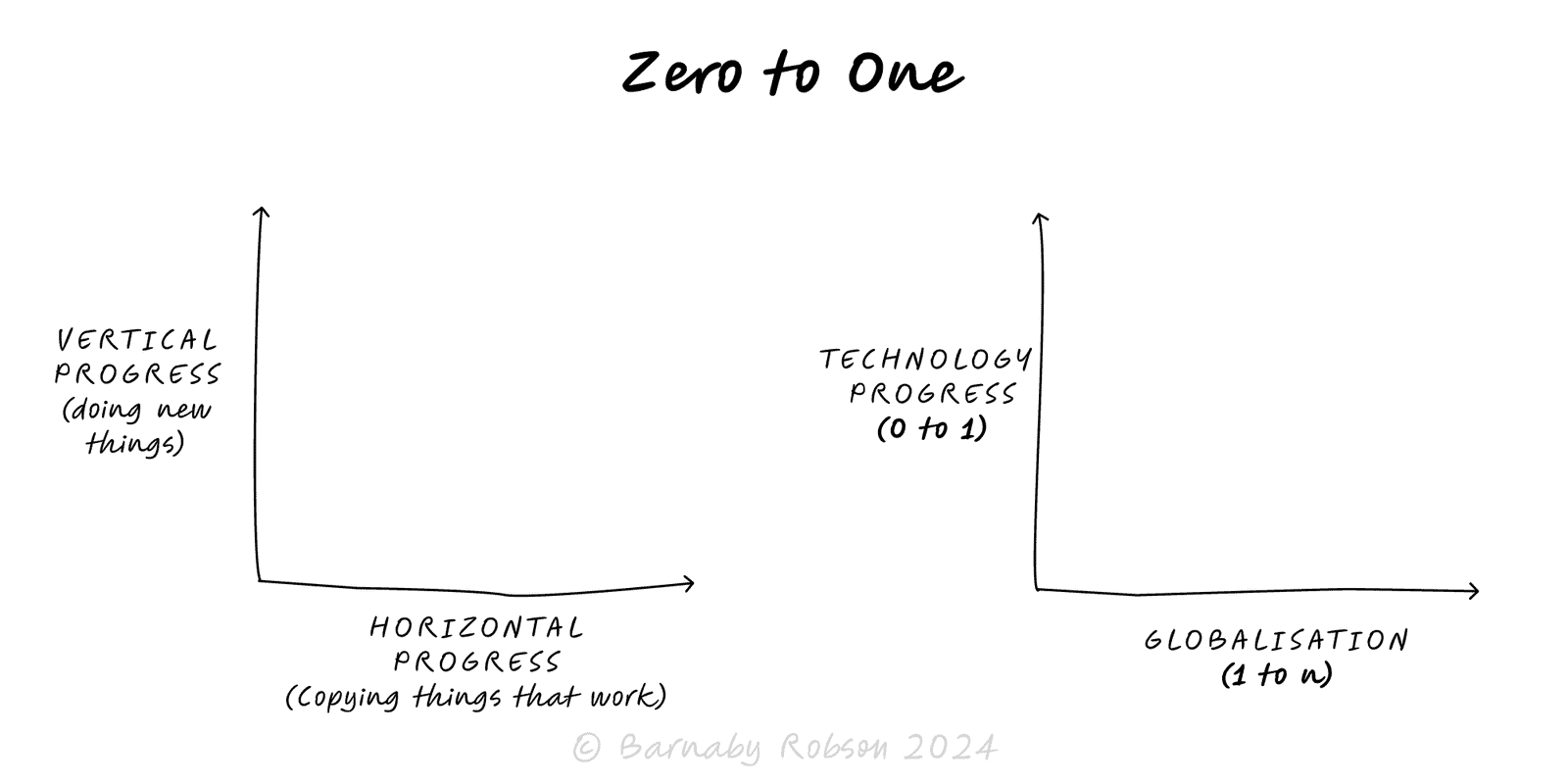
Aim for vertical progress—create something truly new (0 → 1), not just more of the same (1 → n). Win by building a monopoly on a focused niche and compounding from there.