Leverage
Use small inputs to create large outputs by applying amplifiers — capital, code, media, process, partnerships. Leverage magnifies both gains and losses.
Author
General usage (mechanics → finance → modern “force multipliers”)
Model type
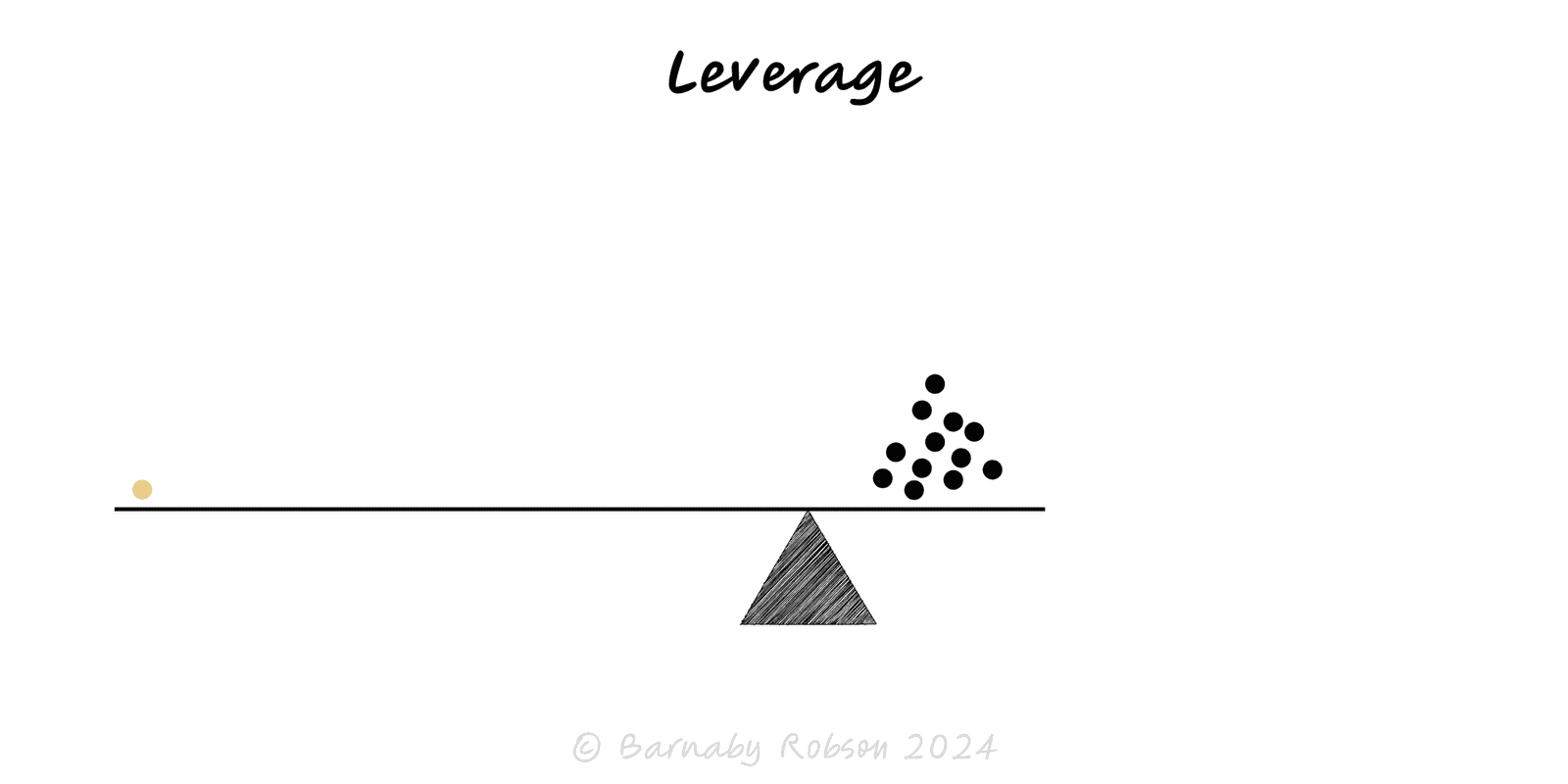

Use small inputs to create large outputs by applying amplifiers — capital, code, media, process, partnerships. Leverage magnifies both gains and losses.
General usage (mechanics → finance → modern “force multipliers”)
Leverage is any mechanism that lets one unit of effort produce more than one unit of result. The original metaphor is the physical lever; in business the common forms are financial (debt), operating (fixed-cost heavy models), and permissionless leverage such as code and media that scale without proportional headcount. The craft is to choose high-upside, bounded-downside leverage and size it prudently.
Operating leverage – more fixed costs (software, plant, content) mean profit rises quickly after break-even.
Financial leverage – borrow to increase the equity holder’s exposure.
Distribution leverage – partnerships, platforms, SEO, marketplaces that multiply reach.
Code & media – software and content scale with near-zero marginal cost (“build once, run many”).
Process & automation – checklists, SOPs, and bots that let one person do the work of many.
Compounders – flywheels and networks increase leverage over time as effects reinforce.
Startups – ship software and content that work while you sleep; integrate into existing platforms for reach.
Sales & GTM – ecosystems, affiliates, app stores, OEM deals.
Ops – automation, self-serve workflows, templates, and shared services.
Finance – sensible debt for assets with stable cash flows; project finance with ring-fenced risk.
Personal – writing, tooling, and frameworks that keep paying off.
Pick the amplifier – capital, code, media, distribution, or process.
Model the payoff – where does output scale sub-linearly with added input? what is the break-even and marginal ROI?
Bound the downside – use limited-recourse structures, caps, SLAs, circuit breakers, and small reversible tests.
Right-size exposure – set position limits (debt ratios, spend caps, concurrency), and target DOL that you can support through downturns.
Sequence leverage – earn operating leverage first (repeatable demand), then add financial leverage if cashflows are robust.
Instrument – track unit economics, contribution margin, utilisation, cash runway, covenant headroom; review monthly.
Compound – reinvest gains to deepen the moat (automation, content libraries, distribution deals).
Ruin risk – leverage multiplies volatility; a few bad periods can wipe out equity (margin calls, covenant breaches).
Premature fixed costs – high operating leverage before product–market fit raises break-even and burn.
Single-channel dependence – platform or partner policy changes remove your “free” distribution.
Brittle automation – silent failures at scale; add monitoring and manual escape hatches.
Debt without duration match – short-term funding for long-term assets creates refinancing risk.
Confusing motion with leverage – busywork that doesn’t increase slope is not leverage.
Click below to learn other mental models

Before building, map the space: the key forks, dead ends and dependencies—so you can choose a promising path and run smarter tests.
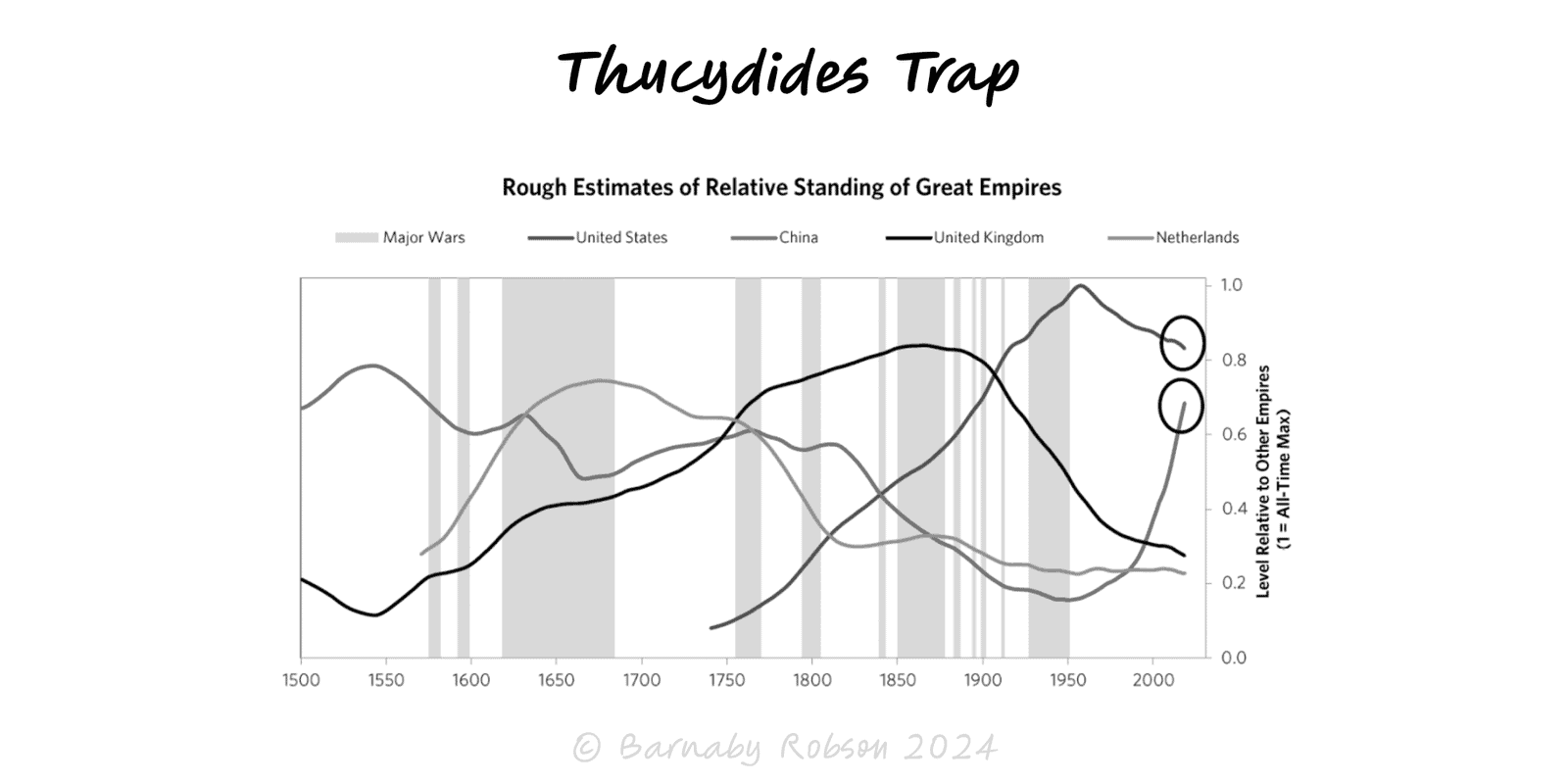
When a rising power threatens to displace a ruling power, fear and miscalculation can tip competition into conflict unless incentives and guardrails are redesigned.
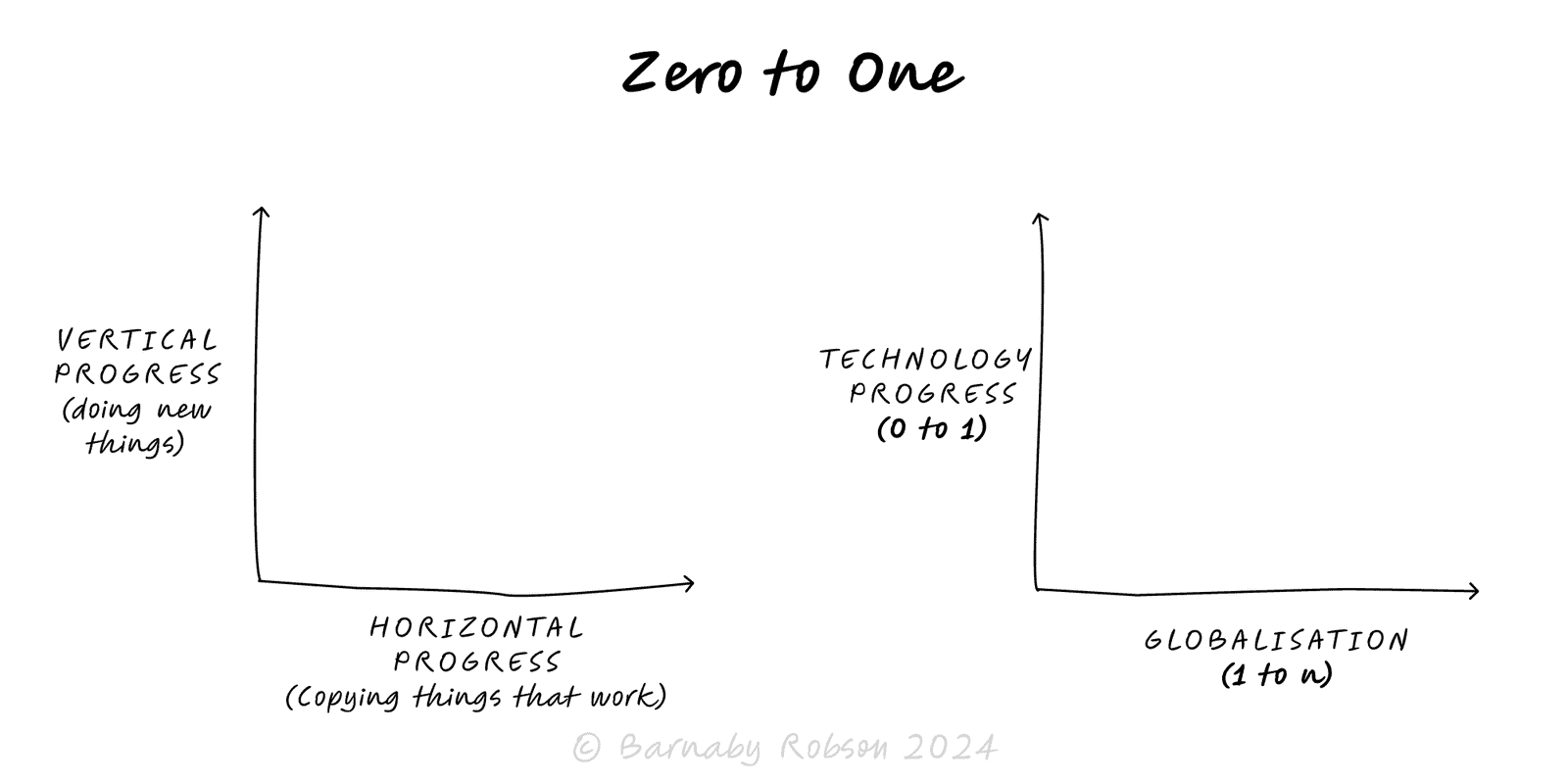
Aim for vertical progress—create something truly new (0 → 1), not just more of the same (1 → n). Win by building a monopoly on a focused niche and compounding from there.