Flywheels
Compounding loops that accelerate with momentum; popularised by Jim Collins.
Author
Jim Collins (popularised); modern growth-loop practice in product and marketplaces
Model type
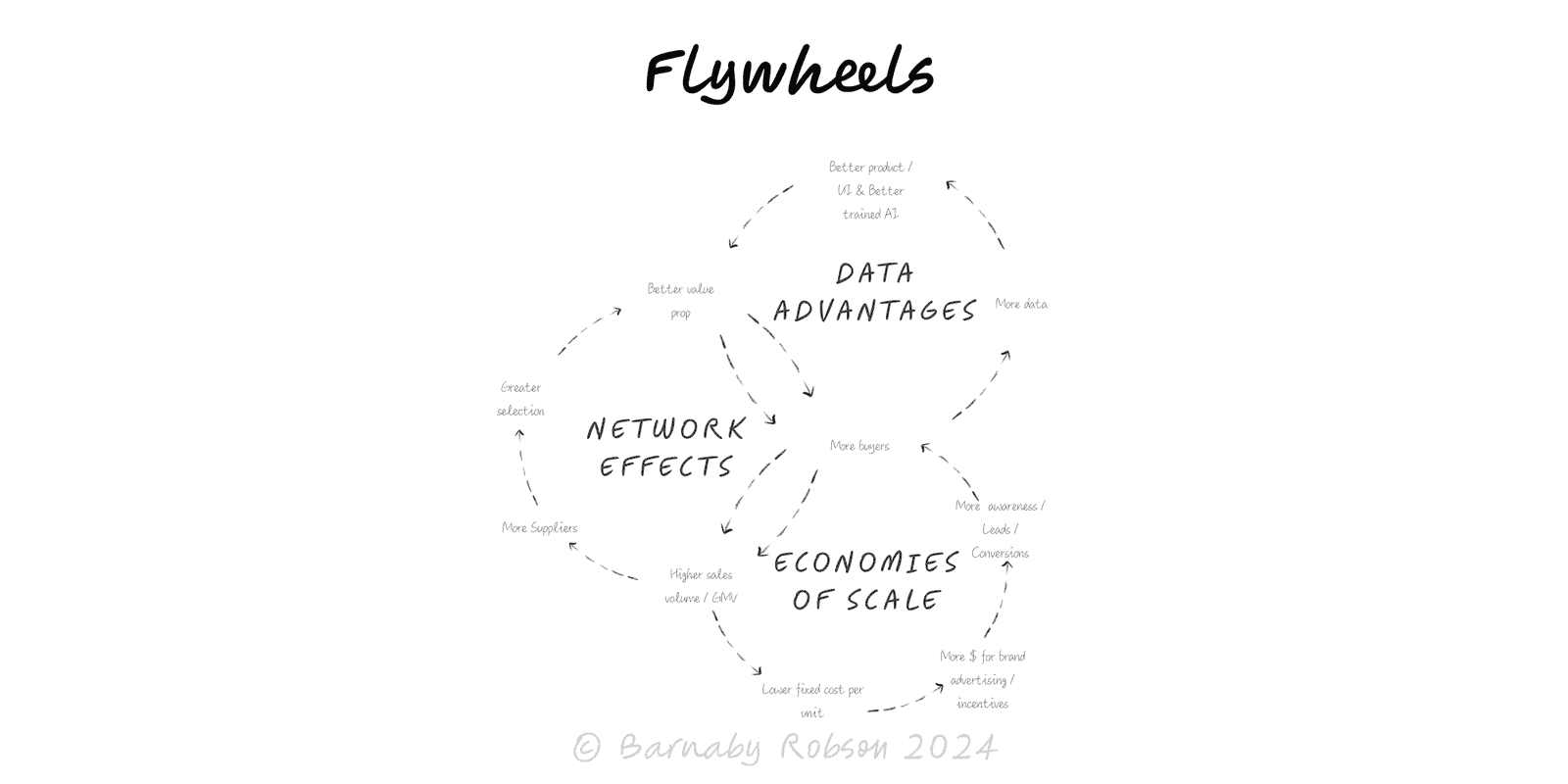

Compounding loops that accelerate with momentum; popularised by Jim Collins.
Jim Collins (popularised); modern growth-loop practice in product and marketplaces
A flywheel is a repeatable sequence of actions whose outcomes feed back to make the next cycle stronger. Unlike one-off funnels or campaigns, flywheels compound: momentum builds, costs per result fall, and performance improves with each turn. Classic examples include marketplace loops (more selection → better experience → more buyers → attracts more sellers) and product-led loops (usage → content/data → better product → more usage).
Loop definition – name 3–6 nodes that feed one another and return to the start (A → B → C → A’).
Loop gain (g) – the multiplicative effect per cycle. If g > 1, the loop accelerates; if g < 1, it stalls.
Latency – time for one full turn; shorter cycles compound faster.
Momentum and push – early turns need external energy (sales, promos, manual ops) until the loop carries itself.
Friction and leakages – drop-offs, delays, quality issues, and handoffs reduce g; fix the weakest link first.
Counter-loops – pair helpful loops with balancing loops (quality, trust, cost) to avoid runaway harm.
Doom loops – the same logic can spiral down (slower delivery → worse reviews → fewer orders → slower delivery).
Product-led growth – usage → content/data → better recommendations/features → more usage.
Marketplaces – more supply → better choice → more demand → attracts more supply.
Content/SEO – publish quality pieces → organic traffic → email/community growth → more signals and contributors → more quality pieces.
Developer platforms – more apps/integrations → more users → more APIs and tooling → more apps.
Operations – better reliability → trust/adoption → more data and automation → lower incident rate.
Brand – great experience → referrals/reviews → higher conversion → more customers experiencing greatness.
Name the mission variable – the stock you want to compound (active users, orders, retained revenue, trust).
Map the loop – 3–6 specific nodes with measurable verbs (e.g., “Acquire trial users → Activate in 1 day → Users create content → Content attracts organic sign-ups → …”).
Quantify loop gain – multiply the key conversion/impact ratios around the loop; baseline g and loop time.
Find the constraint – identify the node with the lowest elasticity or worst drop-off; design fixes there first.
Shorten the cycle – remove steps and handoffs; automate; bring forward the first “aha” moment.
Seed momentum intentionally – run temporary pushes (ads, BD, manual curation) that accelerate early turns without becoming permanent crutches.
Install quality guards – add balancing loops (review systems, fraud checks, SLAs) so growth doesn’t erode the core.
Instrument – track g, cycle time, health metrics (quality, NPS, fraud), and cost per turn; review weekly.
Evolve the loop – as one node saturates, add a complement or a second loop (e.g., creator → viewer → creator loop).
Calling funnels “flywheels” – if outcomes don’t meaningfully feed the next turn, it isn’t a flywheel.
g < 1 – pretty diagrams with leaky steps; quantify or you’ll fool yourself.
Long latencies – slow cycles blunt compounding; bring value forward.
Perverse incentives – growth that harms quality or trust; pair with counter-metrics.
Over-seeding – permanent discounts or manual hacks that mask a weak loop.
Single-node obsession – improving one step while another throttles the loop.
Ignoring saturation – loops flatten at constraints (supply, attention, channel caps); design the next loop.
Click below to learn other mental models

Before building, map the space: the key forks, dead ends and dependencies—so you can choose a promising path and run smarter tests.
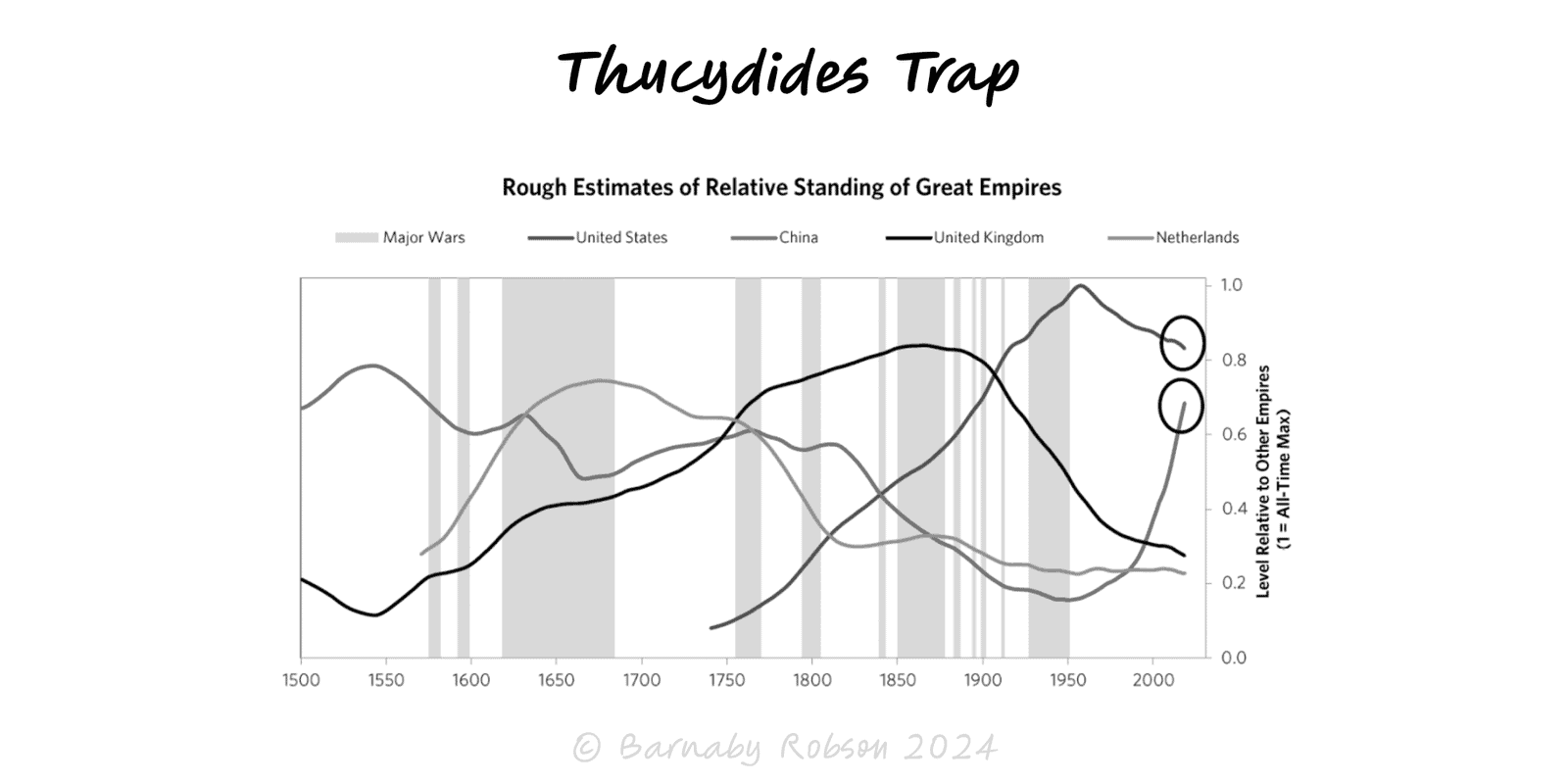
When a rising power threatens to displace a ruling power, fear and miscalculation can tip competition into conflict unless incentives and guardrails are redesigned.
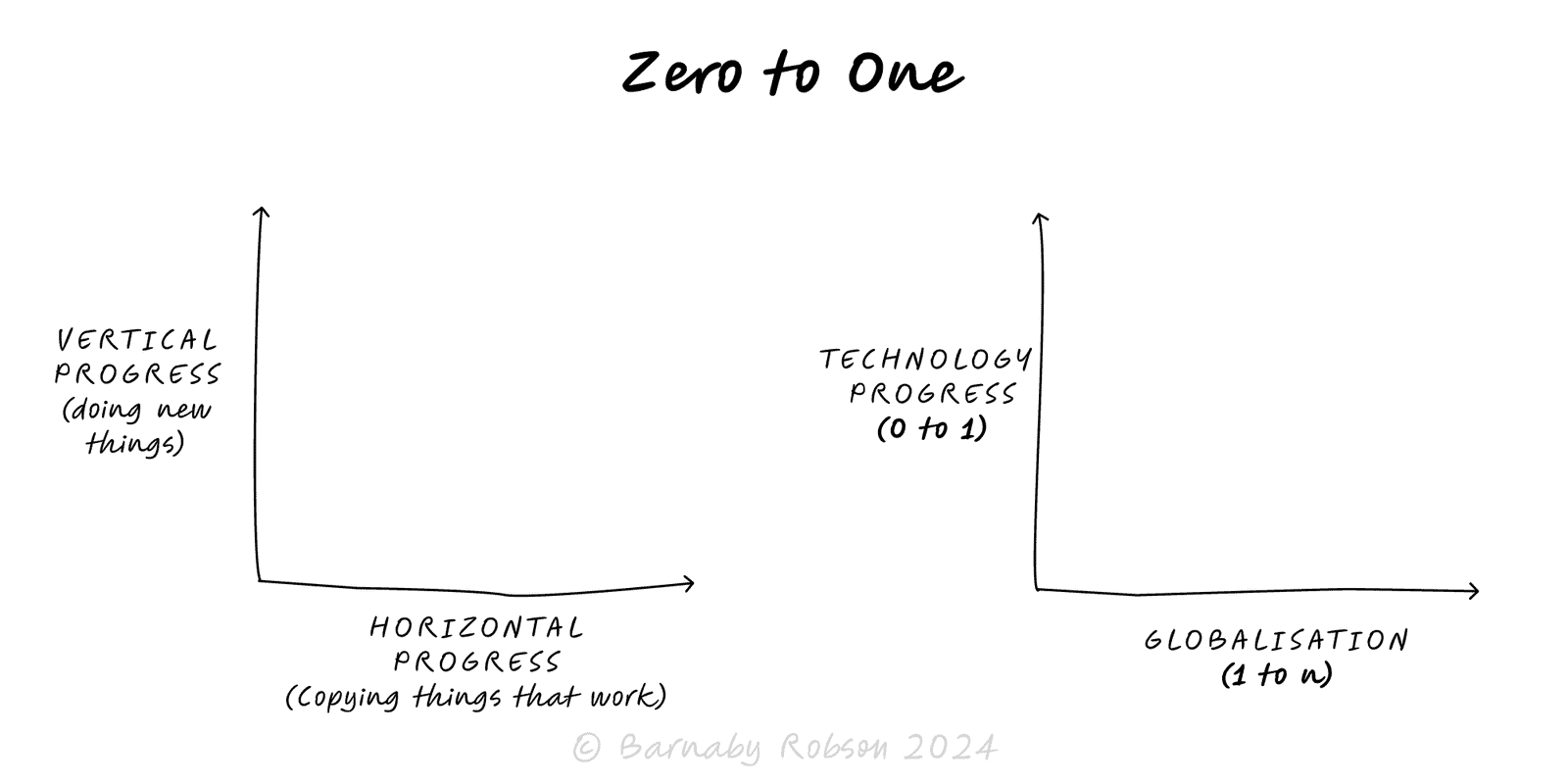
Aim for vertical progress—create something truly new (0 → 1), not just more of the same (1 → n). Win by building a monopoly on a focused niche and compounding from there.