Economies of Scale

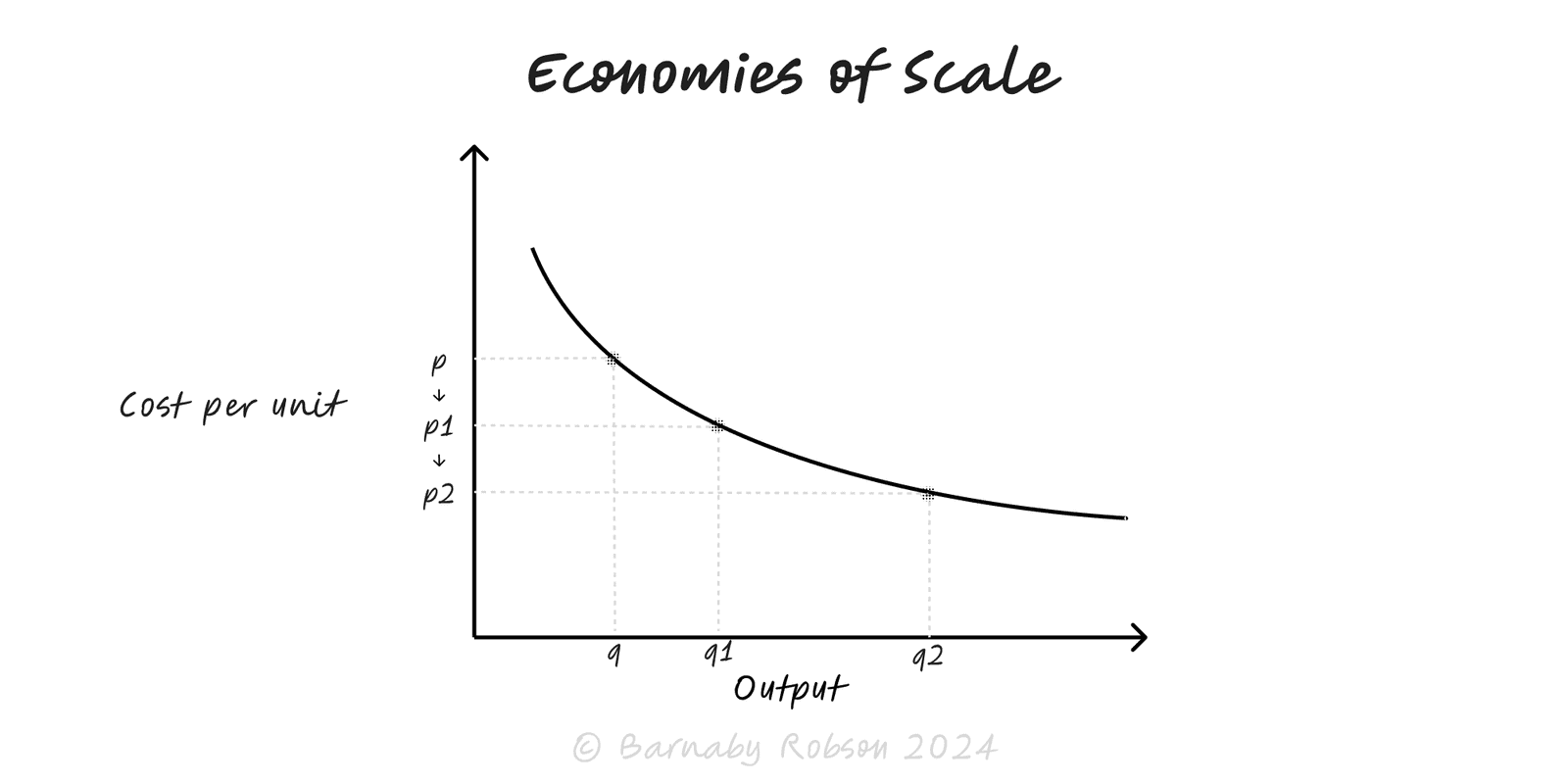
Produce more to lower average cost by spreading fixed costs, improving specialisation and buying better—until coordination costs bite.

Author

Microeconomics (Marshall et al.); experience curve popularised by Bruce Henderson (BCG)


Economies of scale occur when average cost per unit falls as output rises. Fixed costs (plant, R&D, tooling, brand) are spread over more units; labour and machines specialise; suppliers give better terms; logistics densify. Beyond a point, diseconomies (coordination, complexity, congestion) can reverse the effect. Related but distinct ideas: economies of scope (shared inputs across products) and the experience/learning curve (cost drops with cumulative output).

How it works


Cost anatomy – Average cost at volume q: AC(q) = F/q + V(q), where F is fixed cost and V(q) is per-unit variable cost (which may also fall with scale).

Sources of scale

  • Fixed-cost dilution – plant, software, compliance, marketing.
  • Specialisation – narrower tasks, better tools, faster setups.
  • Purchasing power – bulk discounts, better payment terms.
  • Process + tech – automation, higher-throughput equipment, densified routes.
  • Learning/experience – cost falls by x percent when cumulative output doubles (e.g., an 80 percent learning curve).

Shapes & thresholdsstep-fixed costs create kinks (new line/shift); minimum efficient scale (MES) is where AC is near its floor.

External vs internal – industry-wide infrastructure or cluster effects (external) vs firm-specific advantages (internal).

Not the same as network effects – network effects raise value with users; scale economies lower cost with output.

Use-cases


Manufacturing & fulfilment – lines, changeovers, distribution density.

Software/SaaS – high fixed R&D, near-zero marginal cost; AC plunges with users.

Procurement – frame contracts, vendor consolidation, volume tiers.

Marketing – brand assets amortised over larger revenue.

Shared services – finance, support, data platforms amortised across business units.

Pitfalls & Cautions


Chasing scale without demand – stranded capacity and leverage risk.

Confusing scale with network effects – cheap units don’t guarantee adoption.

Diseconomies – coordination overhead, long queues, defect spikes at high utilisation.

Step shocks – a new plant raises F before volume arrives; model ramp and cash burn.

Mix drift – low-margin variants dilute gains.

Regulatory/antitrust – aggressive consolidation or pricing can trigger scrutiny.

Learning ≠ time – experience curve depends on cumulative output, not the calendar.

Recent Mental Models

Click below to learn other mental models

  • The Idea Maze

    The Idea Maze

    Before building, map the space: the key forks, dead ends and dependencies—so you can choose a promising path and run smarter tests.

  • Thucydides Trap

    Thucydides Trap

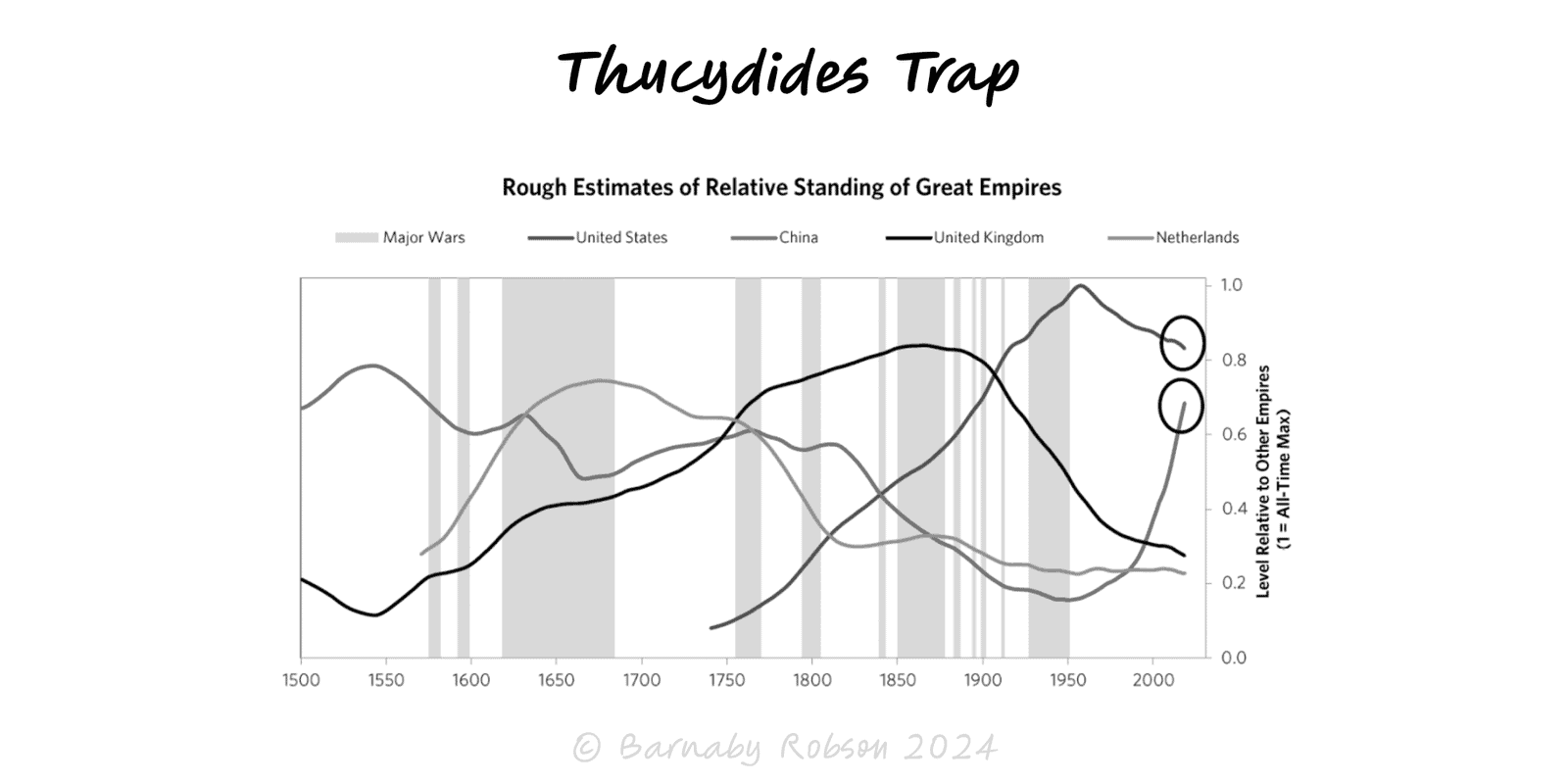
    When a rising power threatens to displace a ruling power, fear and miscalculation can tip competition into conflict unless incentives and guardrails are redesigned.

  • Zero to One

    Zero to One

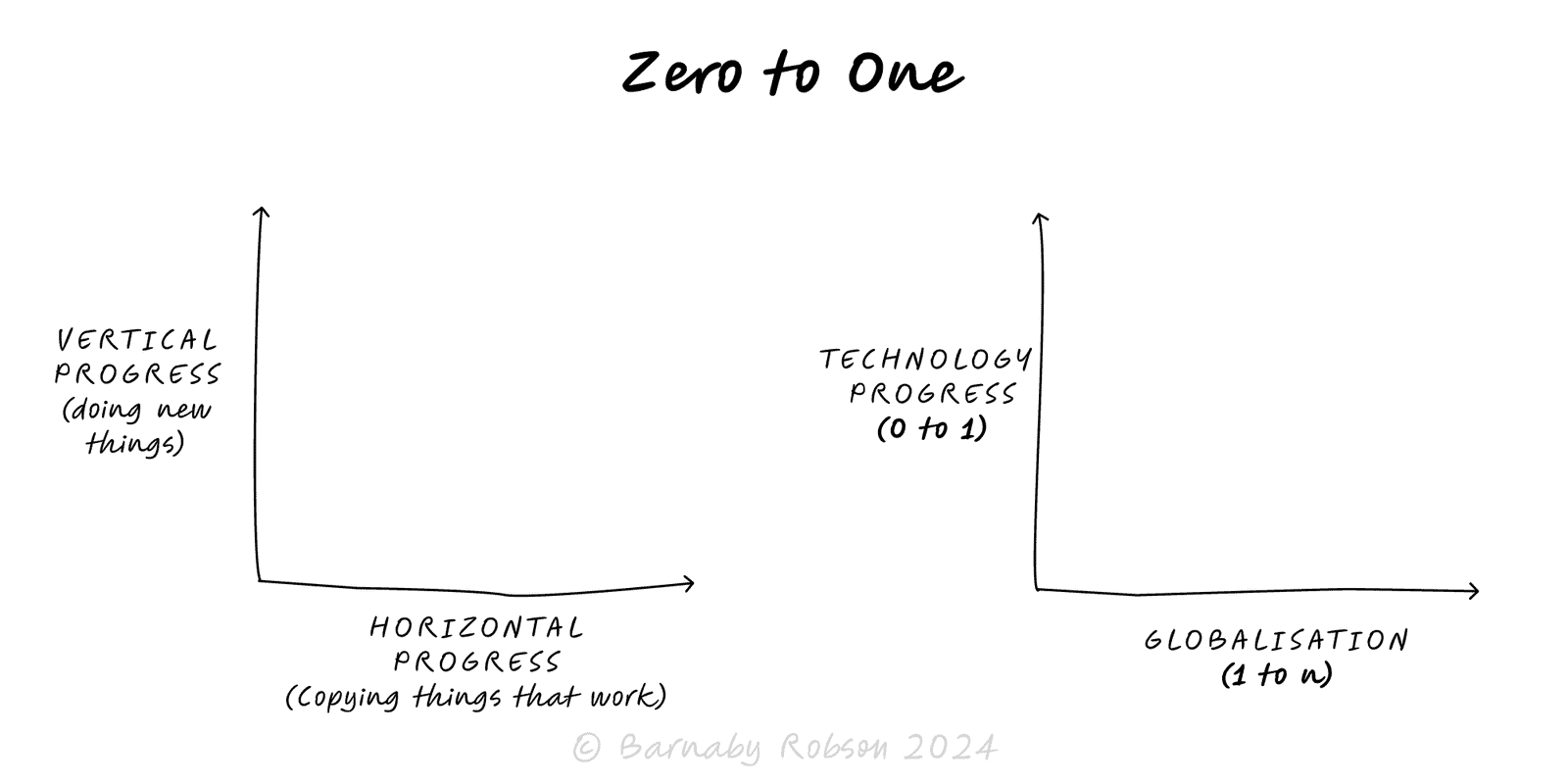
    Aim for vertical progress—create something truly new (0 → 1), not just more of the same (1 → n). Win by building a monopoly on a focused niche and compounding from there.