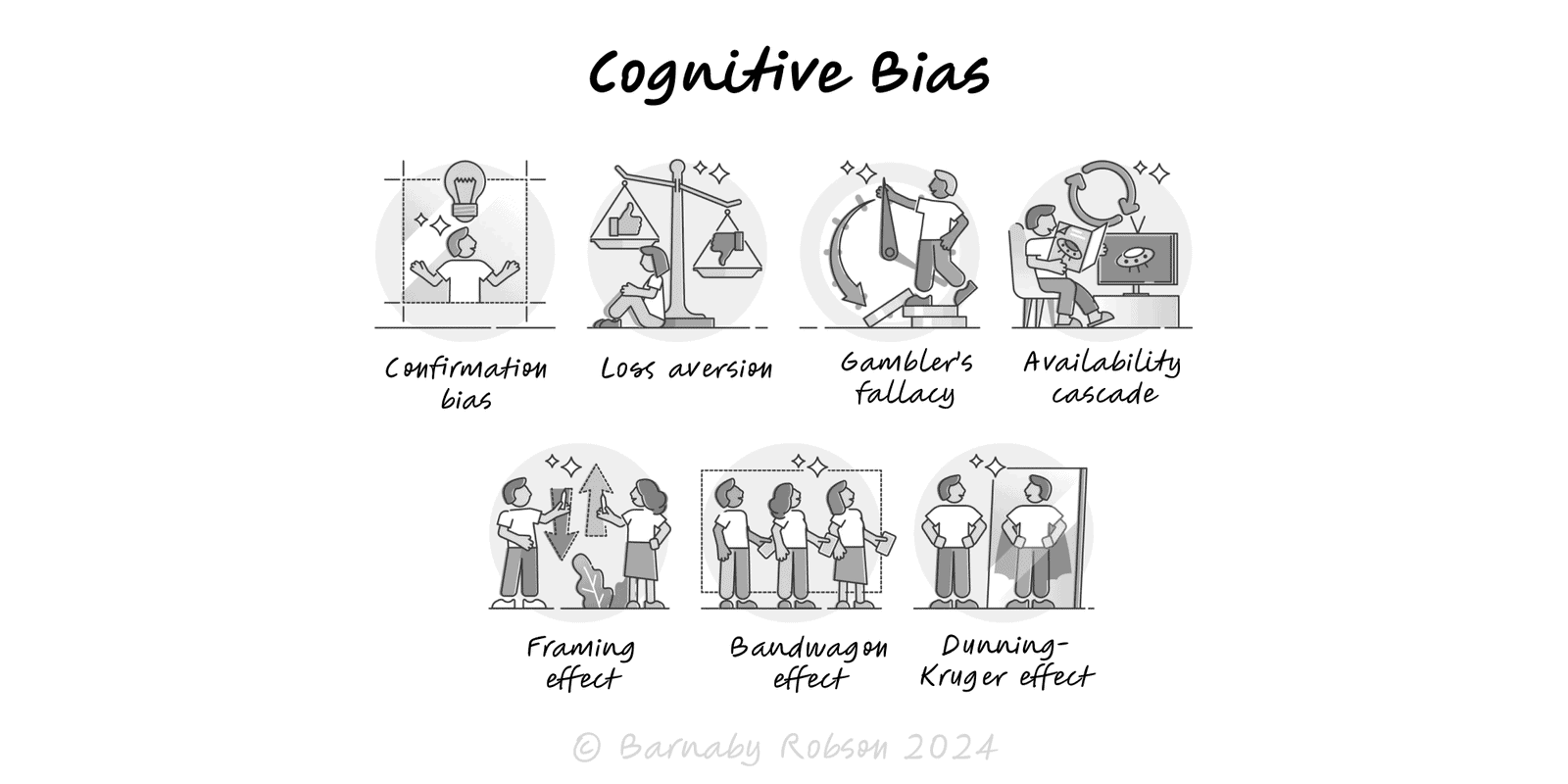
Cognitive Bias

Systematic shortcuts in thinking that create predictable errors. Know the patterns; design decisions and communication to counter their effects.

Author

Behavioural economics and cognitive psychology (notably Daniel Kahneman & Amos Tversky)


Cognitive biases arise because the brain uses heuristics to act fast under uncertainty. These shortcuts are efficient, but they tilt judgement in consistent ways—especially with noisy data, incentives, and time pressure. The goal isn’t to eliminate bias (impossible) but to shape processes so important decisions are less error-prone.

How it works


Speed vs accuracy – fast, intuitive processing (often “System 1”) trades rigour for speed; slow, analytical processing (“System 2”) corrects when engaged.

Common families (with examples)

  • Confirmation bias – we search for and overweight evidence that supports our prior.

    Countermoves: pre-register disconfirming tests; assign a “red team”; force a “what would change our mind?” line.

  • Loss aversion – losses loom larger than equivalent gains (often ~2×).

    Countermoves: show both frames (gain and loss); use long-horizon metrics; make reversible trials the default.

  • Gambler’s fallacy – believing independent events self-correct (“after five tails, heads is due”).

    Countermoves: state independence/base rates explicitly; display binomial ranges; ban “due for” language in reviews.

  • Availability cascade – repeated, vivid claims feel truer and spread via social proof, regardless of evidence.

    Countermoves: require source quality and independent confirmation; add a cool-off for viral topics; track what’s known vs said.

  • Framing effect – choices swing when the same facts are presented differently (e.g., 90% survival vs 10% mortality).

    Countermoves: standardise wording; show both frames and absolute numbers with denominators; pre-set decision rules.

  • Bandwagon effects (herding) – people adopt beliefs or actions because others have, not because of private evidence.

    Countermoves: collect independent estimates before discussion; use silent votes/Delphi; expose dissent and its evidence.

  • Dunning–Kruger effect – novices overestimate ability; experts may under-estimate variance and assume shared context.

    Countermoves: calibration training (forecasting with feedback), checklists and peer review; compare to reference-class outcomes.

Context matters – stress, ambiguity, and incentives amplify bias; check the environment, not just the person.

Use-cases


Decision reviews for strategy, hiring, investment, pricing, and vendor selection.

Research & experiments – survey design, A/B test interpretation, sampling and power.

Risk & forecasting – reference-class baselines, ranges not points, premortems.

Communication – neutral wording, show both frames, order-effects control.

Ops & safety – checklists, standard work, second-checker on high-risk steps.

Pitfalls & Cautions


Checklist theatre – rituals without teeth; tie each step to a real go/no-go or redesign.

Bias labelling as argument – calling someone “biased” doesn’t resolve evidence; show the data and process defect.

Over-correction – slowing everything to a crawl; reserve heavy controls for material decisions.

One-and-done – biases reappear; keep a cadence of calibration and post-mortems.

Recent Mental Models

Click below to learn other mental models

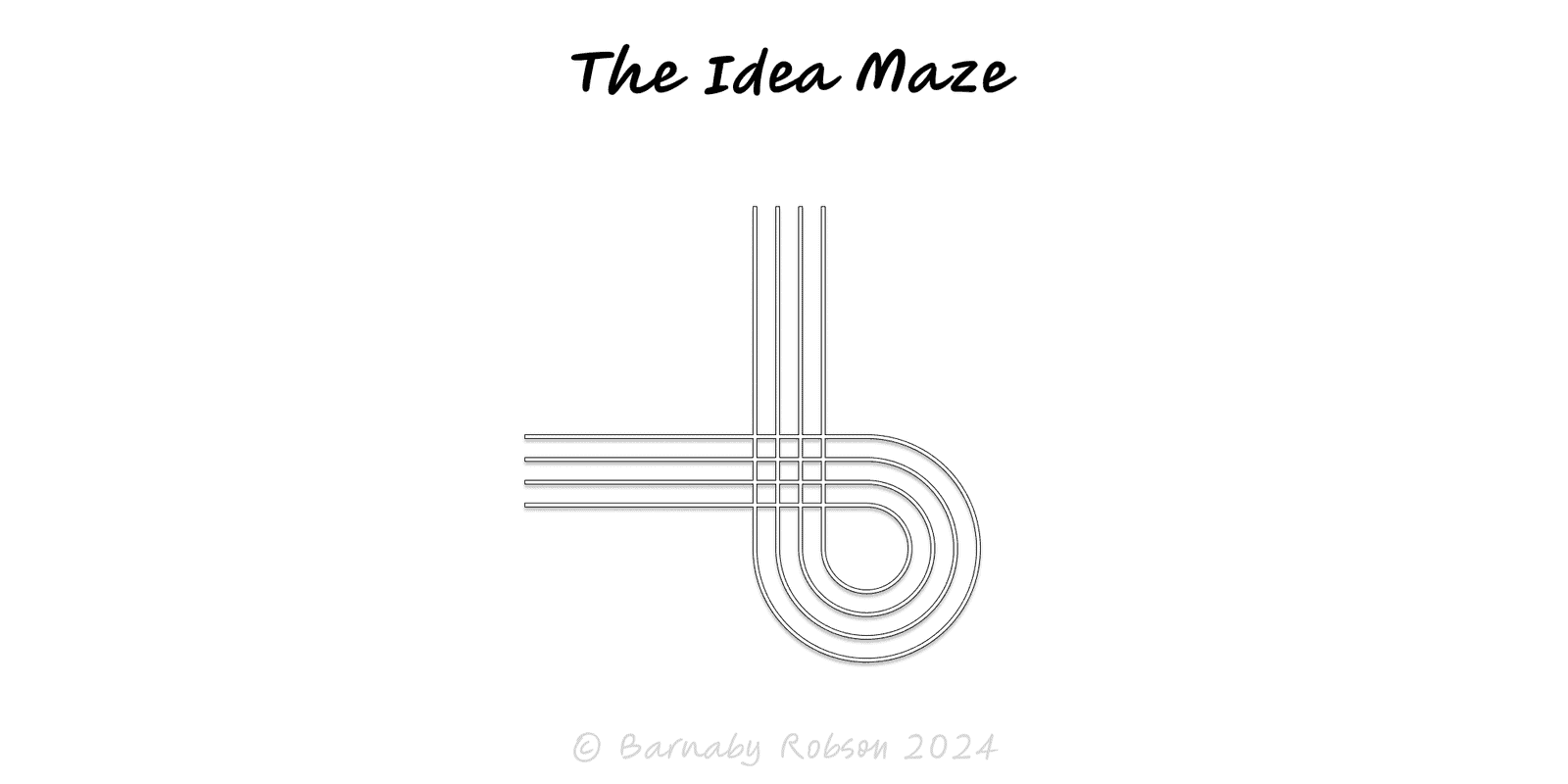
  • The Idea Maze

    The Idea Maze

    Before building, map the space: the key forks, dead ends and dependencies—so you can choose a promising path and run smarter tests.

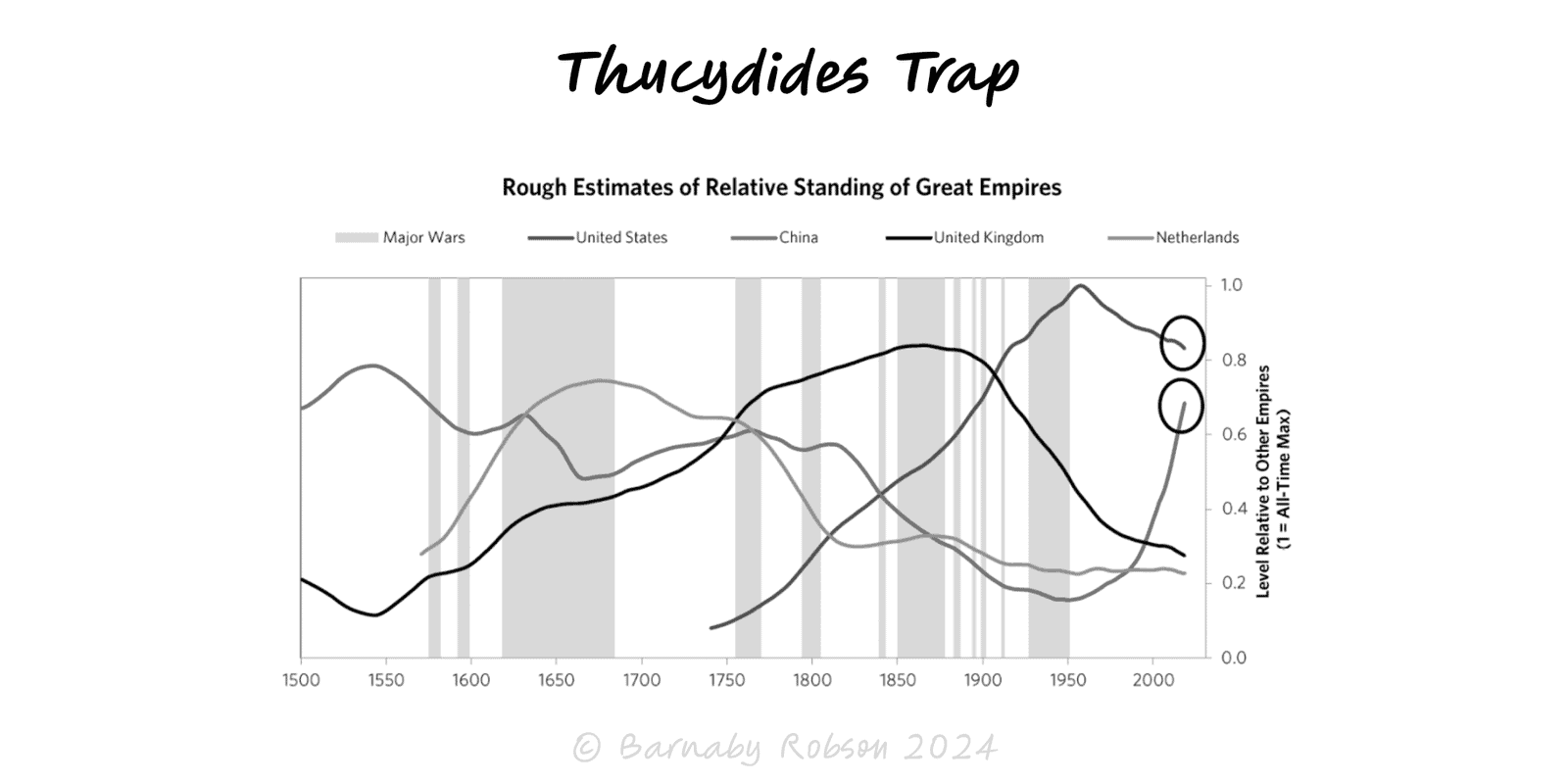
  • Thucydides Trap

    Thucydides Trap

    When a rising power threatens to displace a ruling power, fear and miscalculation can tip competition into conflict unless incentives and guardrails are redesigned.

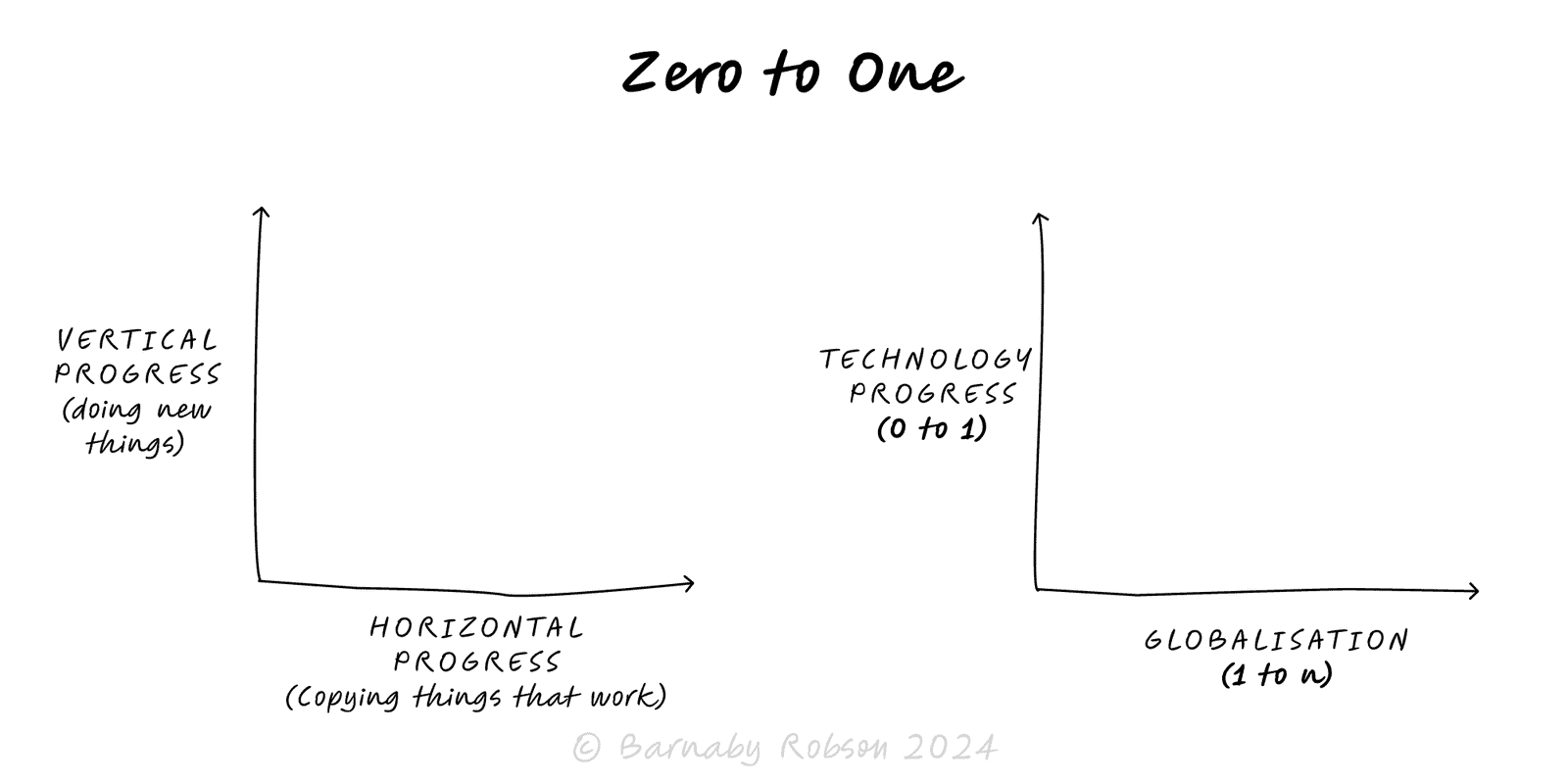
  • Zero to One

    Zero to One

    Aim for vertical progress—create something truly new (0 → 1), not just more of the same (1 → n). Win by building a monopoly on a focused niche and compounding from there.