Climbing the Wrong Hill
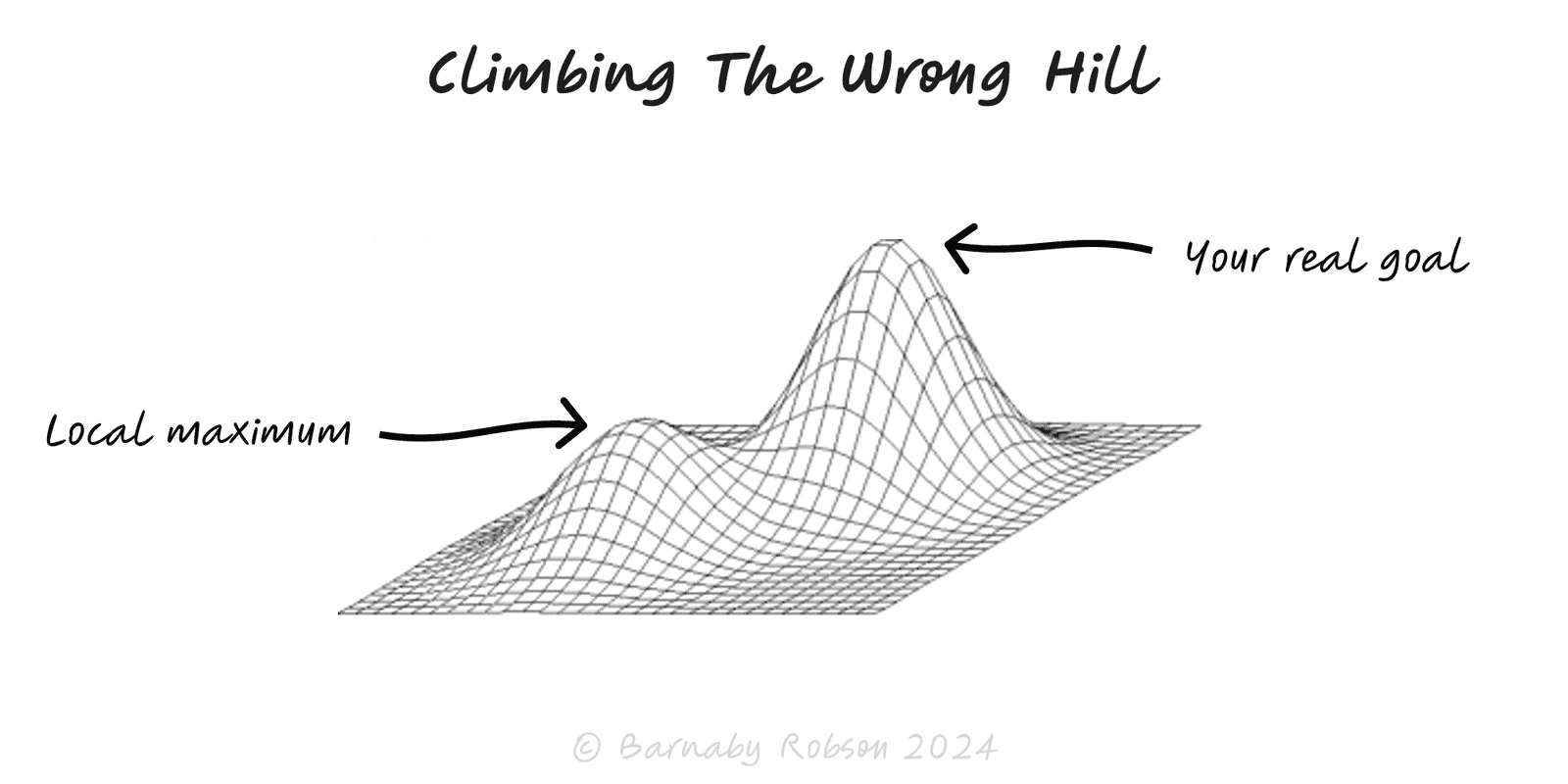
Greedy improvements can trap you on a nearby peak; sometimes you must go down or sideways to reach a higher hill.
Author
Chris Dixon (popularised, 2009); roots in optimisation (hill-climbing / simulated annealing)
Model type

Greedy improvements can trap you on a nearby peak; sometimes you must go down or sideways to reach a higher hill.
Chris Dixon (popularised, 2009); roots in optimisation (hill-climbing / simulated annealing)
Chris Dixon’s 2009 essay uses the computer-science idea of hill-climbing to explain why smart people and teams can get stuck pursuing the “closest” improvement instead of the best opportunity. The more rugged the landscape, the likelier you are to stall on a local maximum unless you periodically explore new starts or allow short-term setbacks.
Fitness function – the metric you’re optimising (conversion, margin, learning). It defines the “hill” you’re on.
Local vs global optimum – hill-climbing takes the best immediate step; it often stops at a local peak.
Rugged landscapes – many peaks/valleys from constraints and complementarities; easy to get trapped.
Exploration vs exploitation – balance small safe gains with periodic broad searches.
Escaping traps – new start points, bigger moves, or simulated annealing: occasionally accept a worse move to find a taller hill.
Path dependence – early choices narrow later options; switching costs can keep you on the wrong hill.
Product & UX – A/B tests that yield tiny wins around a weak concept; try concept resets or new acquisition channels.
Strategy – stuck in a crowded segment; sample a different segment, model or distribution play.
Pricing & packaging – legacy tiers create a local maximum; test new bundles/metrics.
Operations – process tweaks hit a ceiling; re-sequence work, shrink batches, alter hand-offs.
Career design – “good job, wrong hill”; accept a short dip to move to a higher trajectory.
Wrong metric – optimising a proxy that doesn’t map to the mission.
Premature convergence – declaring victory on a low hill because micro-tests “win”.
Under-exploration – never sampling the better region; over-protecting the current curve.
Over-exploration – thrash from constant resets; burn focus without compounding.
Ignoring switching costs – the higher hill exists, but the valley crossing bankrupts you.
Click below to learn other mental models

Before building, map the space: the key forks, dead ends and dependencies—so you can choose a promising path and run smarter tests.
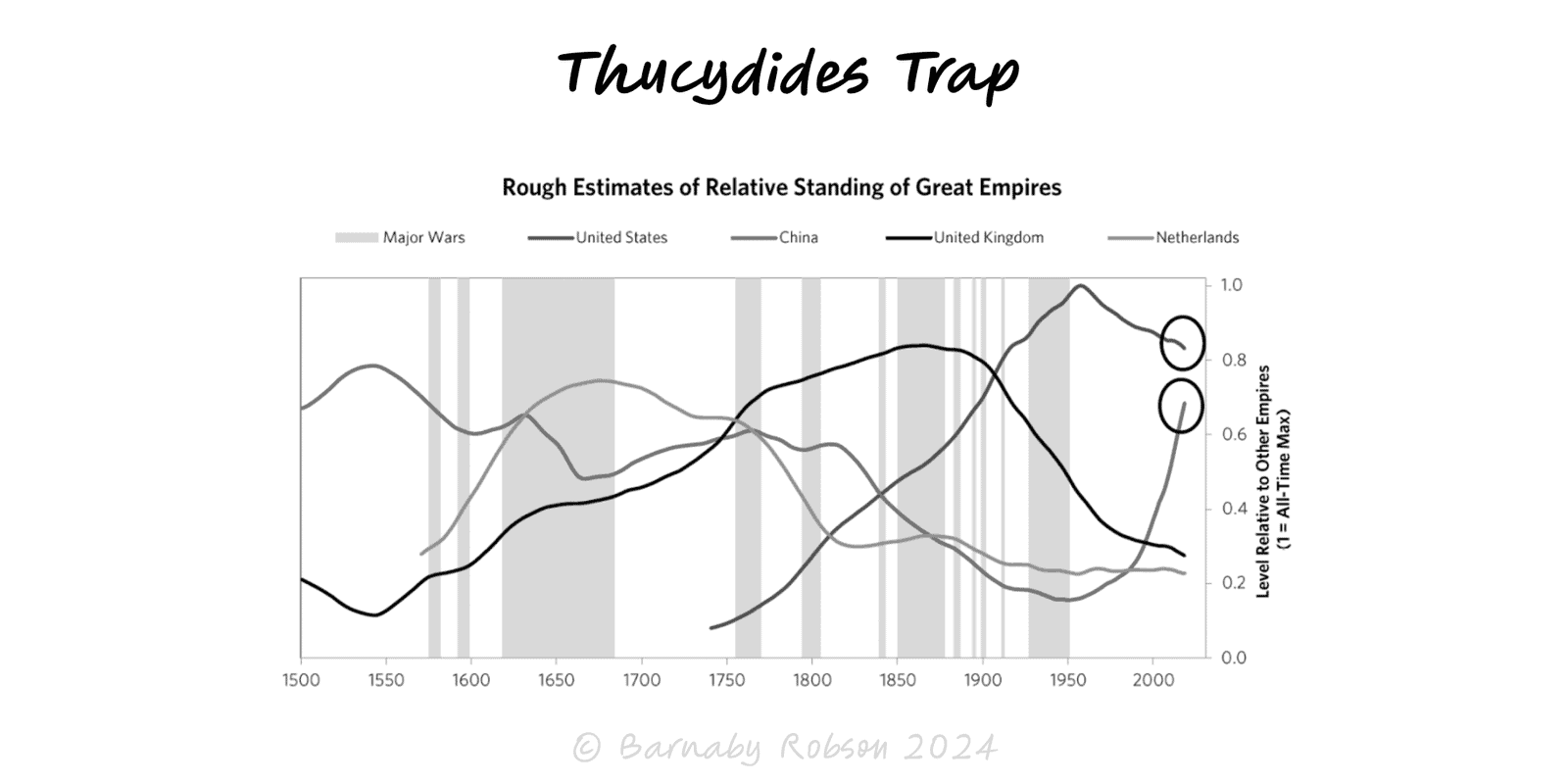
When a rising power threatens to displace a ruling power, fear and miscalculation can tip competition into conflict unless incentives and guardrails are redesigned.
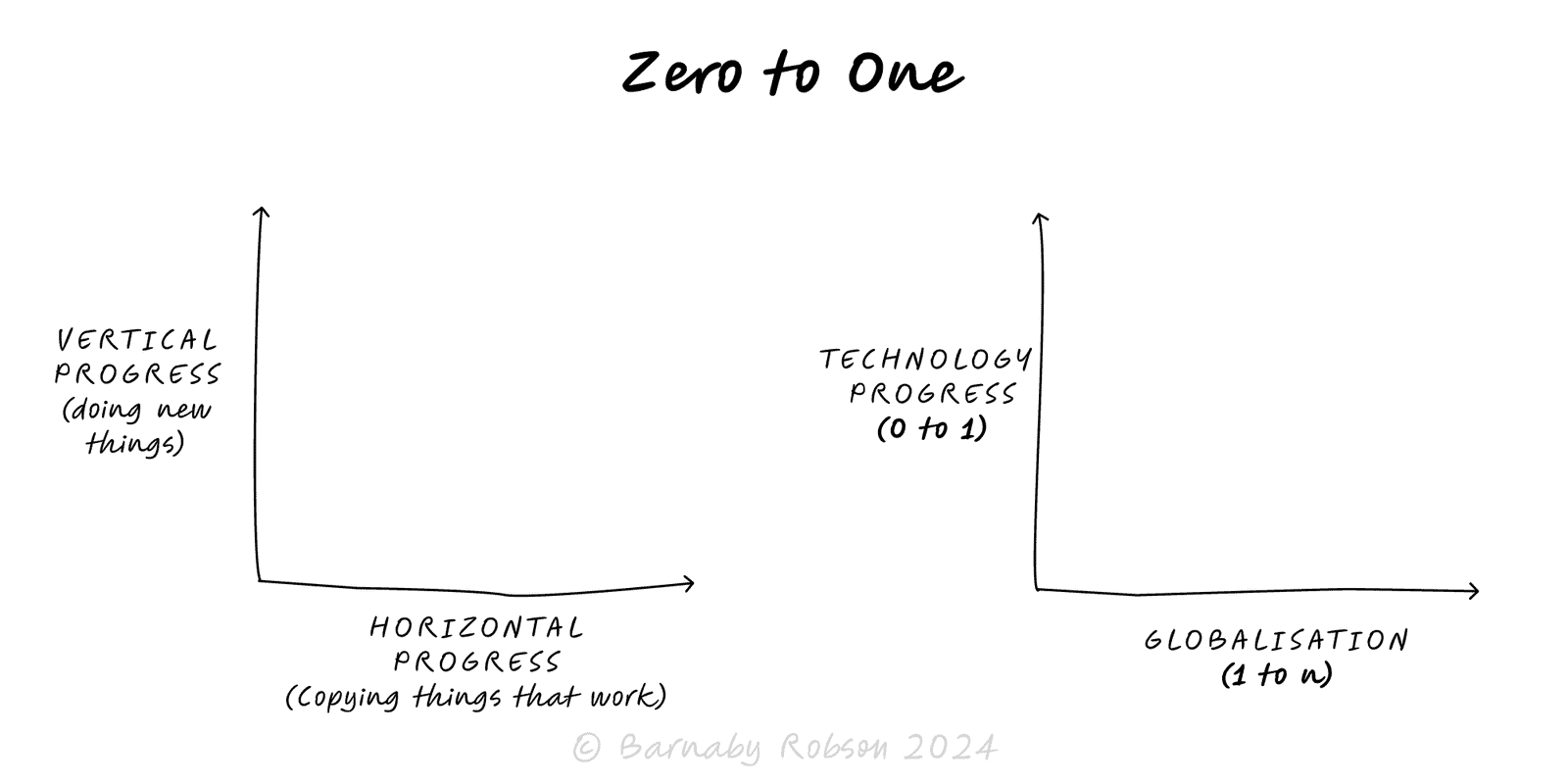
Aim for vertical progress—create something truly new (0 → 1), not just more of the same (1 → n). Win by building a monopoly on a focused niche and compounding from there.