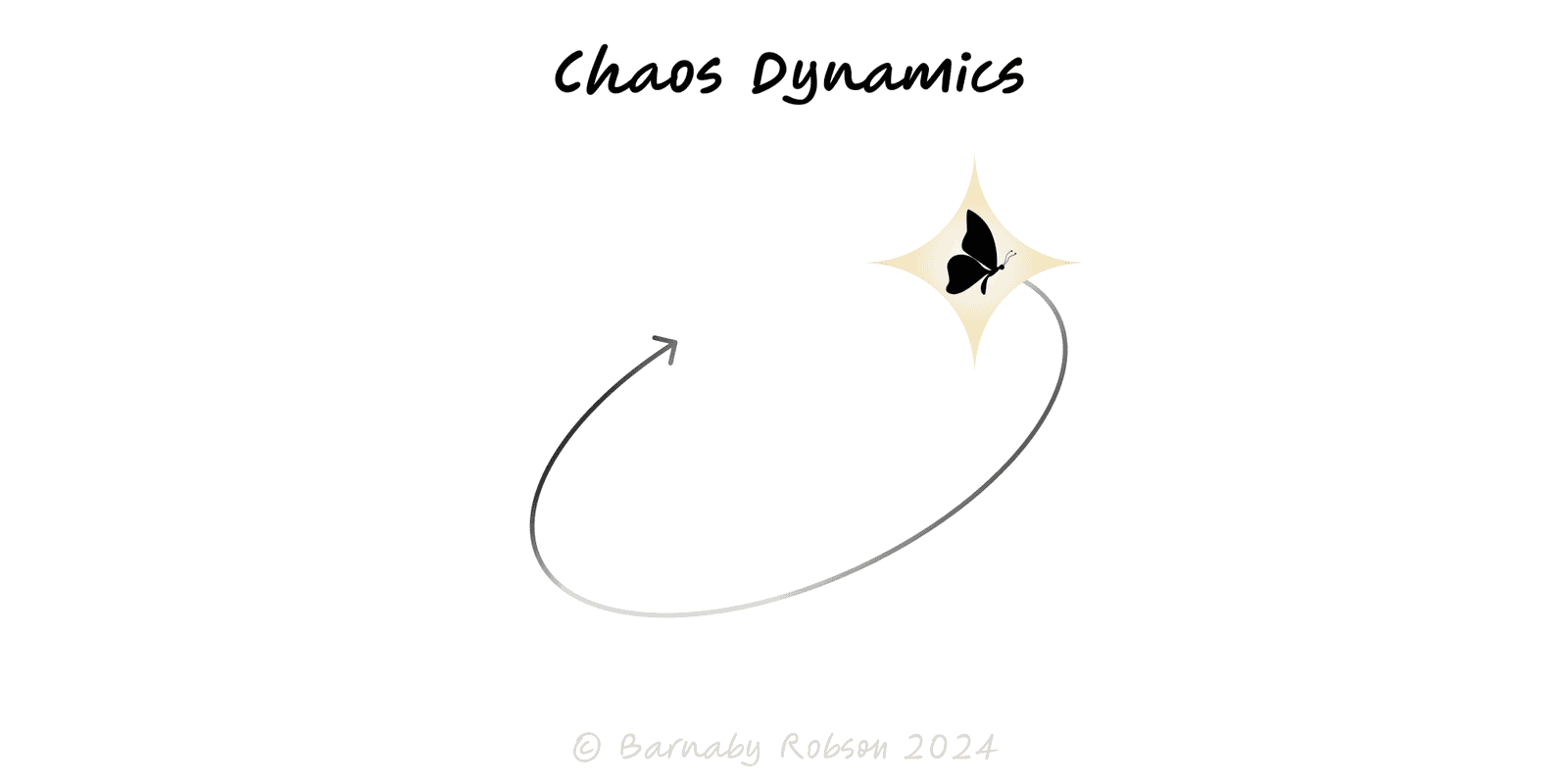
Chaos Dynamics

Sensitivity to initial conditions and non‑linear feedbacks can make long‑range prediction impossible; manage by bounds, not points.

Author

Henri Poincaré (foundations), Edward Lorenz (weather “butterfly effect”), Robert May (logistic map) — modern systems thinking


Chaos is deterministic unpredictability: even simple, rule-driven systems can behave irregularly when non-linearity and feedback interact. Tiny changes in the starting state diverge exponentially (Lorenz), so forecast skill collapses beyond a Lyapunov time. The practical move is to steer rather than “know”: work with ranges, shorten control loops, reduce coupling and design guardrails.

How it works


Sensitivity to initial conditions – error grows ≈ eλt with λ > 0 (Lyapunov exponent). Short-term structure; long-term unpredictability.

Non-linear feedback – outputs feed back into inputs; effects aren’t proportional (thresholds, saturation).

Attractors & basins – behaviour lives near shapes in “state space”; small nudges can jump you between regimes.

Bifurcations – a parameter drift flips the regime (stable → oscillating → chaotic).

Chaos ≠ noise – it’s deterministic yet looks random; the fix is design, not more data cleaning.

Use-cases


Demand and growth loops – virality, word-of-mouth, congestion and capacity feedbacks.

Reliability & incidents – cascading failures in networks; power, cloud, payments.

Markets & macro – heavy non-linearity and reflexivity; prefer exposure control to point bets.

Epidemiology / traffic / supply chains – small delays or shocks create large oscillations.

Pitfalls & Cautions


Spurious precision – elaborate point forecasts in a regime where skill evaporates.

Over-reaction – frantic policy changes amplify chaos; set decision windows and thresholds.

Confusing noise for chaos – random noise calls for filtering; chaos calls for design changes and bounds.

Hidden coupling – tight integrations make local fixes backfire elsewhere.

Over-damping – too much friction kills performance; tune dampers to the constraint.

No learning capture – without post-mortems and telemetry, the system stays chaotic by accident.

Recent Mental Models

Click below to learn other mental models

  • The Idea Maze

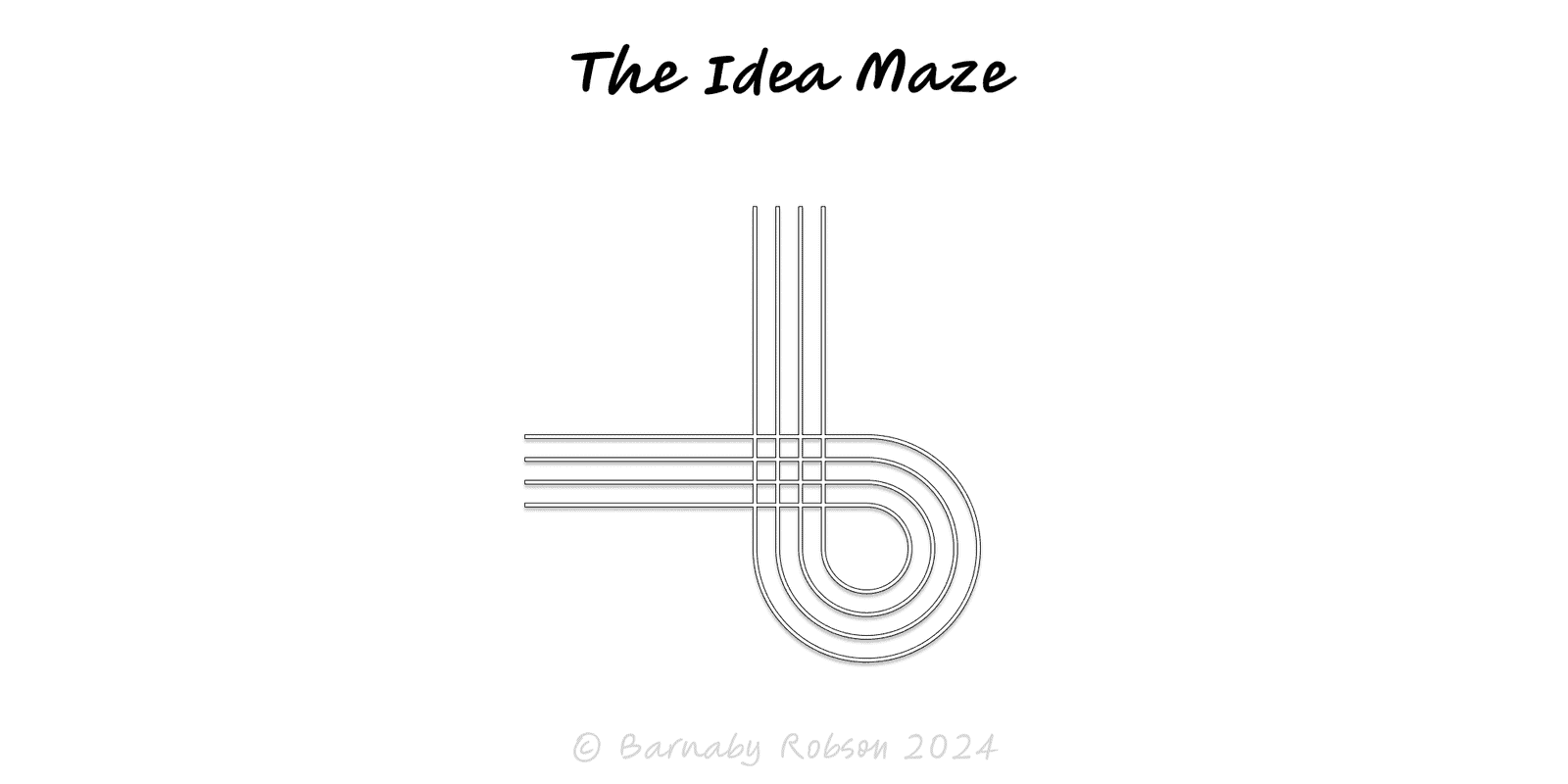
    The Idea Maze

    Before building, map the space: the key forks, dead ends and dependencies—so you can choose a promising path and run smarter tests.

  • Thucydides Trap

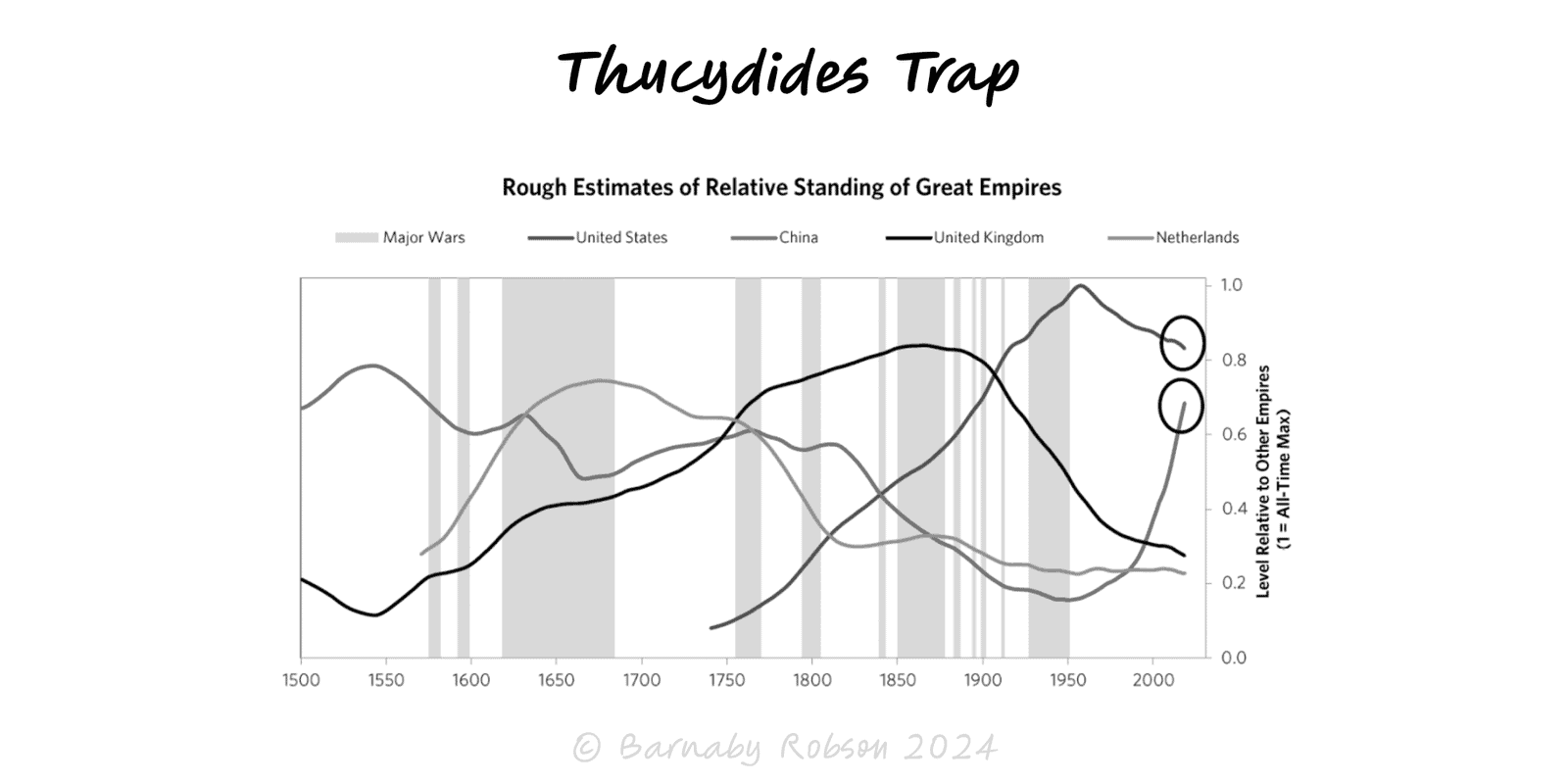
    Thucydides Trap

    When a rising power threatens to displace a ruling power, fear and miscalculation can tip competition into conflict unless incentives and guardrails are redesigned.

  • Zero to One

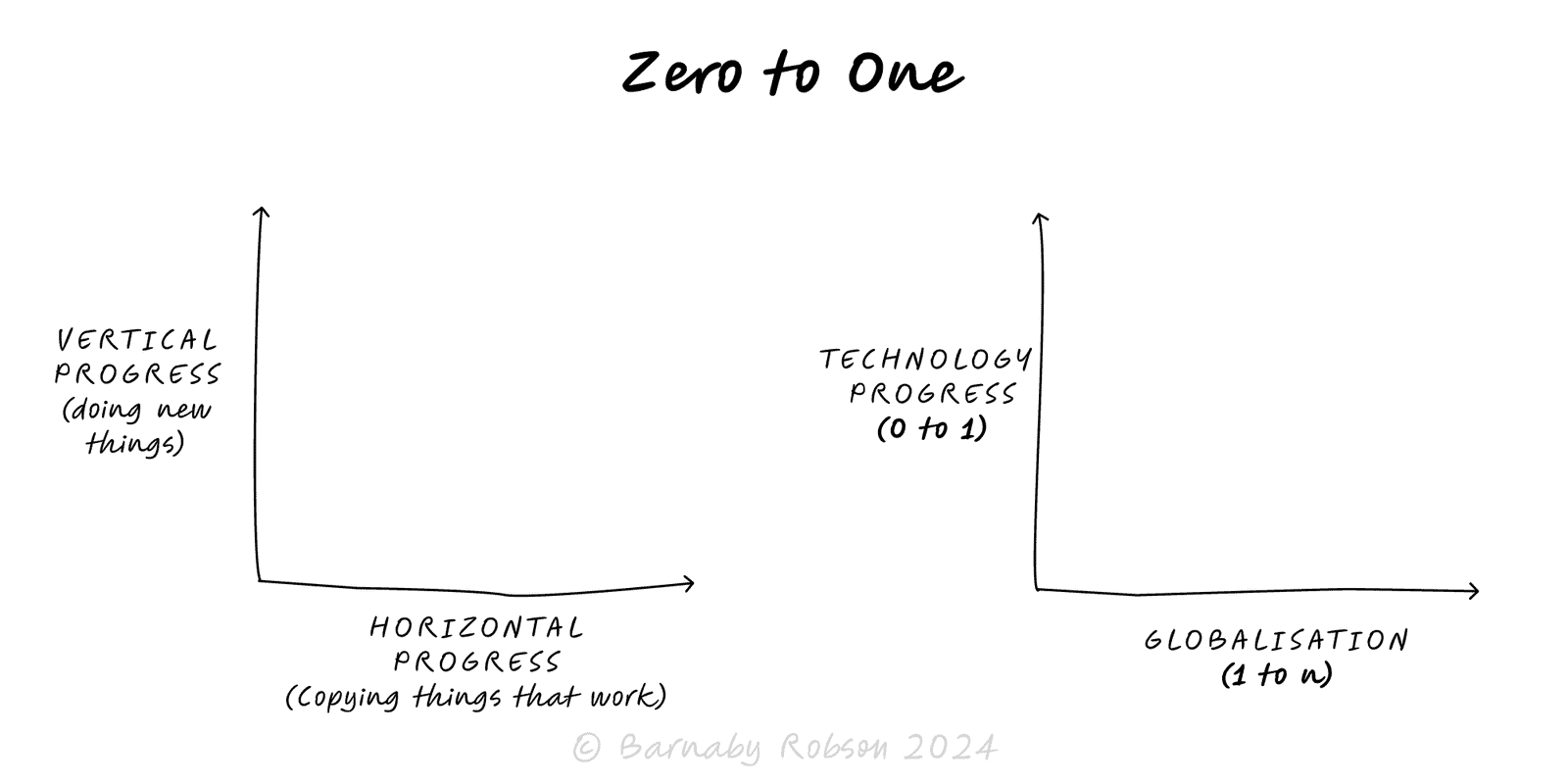
    Zero to One

    Aim for vertical progress—create something truly new (0 → 1), not just more of the same (1 → n). Win by building a monopoly on a focused niche and compounding from there.