Anti-Fragility
Design systems that gain from volatility and shocks, not just survive them.
Author
Nassim Taleb
Model type

Design systems that gain from volatility and shocks, not just survive them.
Nassim Taleb
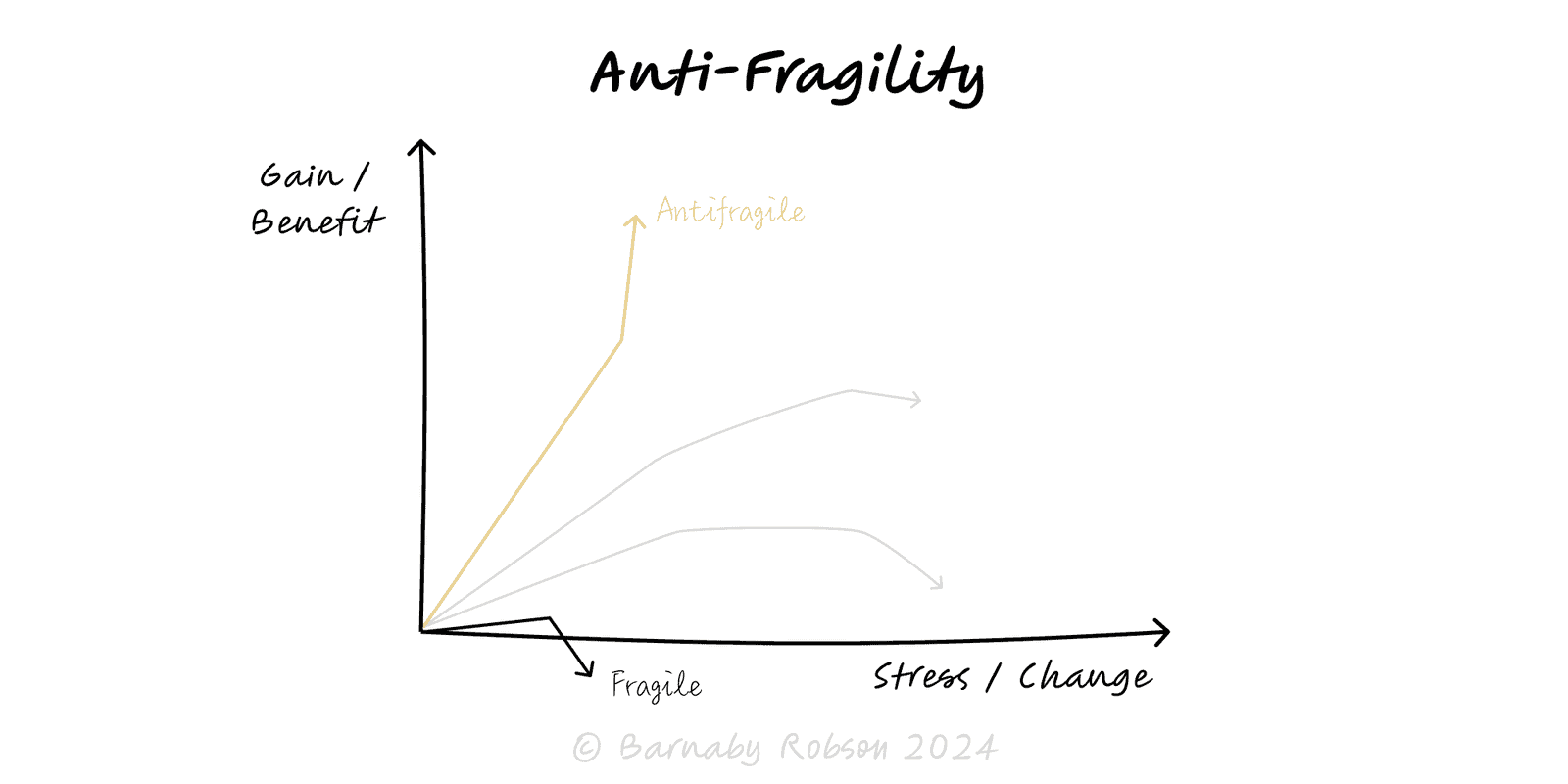
Anti-fragility is the opposite of fragility.
Fragile things are harmed by variability.
Robust things resist it.
Anti-fragile things benefit from disorder because their pay-offs are convex (bounded downside, open upside).
Taleb’s idea converts risk management from prediction to positioning: cap ruin, keep options, let small errors teach, and allow upside to compound.
Convex pay-offs – small losses, occasional large gains; seek payoff asymmetry.
Optionality – many low-cost options; few commitments; easy to exit.
Barbell portfolio – most resources in very safe assets/processes, a small slice in high-upside experiments.
Redundancy & slack – spare capacity and second sources prevent cascade failure.
Via negativa – remove things that add fragility (debt, tight coupling, single points of failure).
Skin in the game – decision-makers share downside, so feedback is honest.
Small batch evolution – run varied, reversible trials; keep what works, drop what doesn’t.
Investing & treasury – barbell positioning; avoid leverage-driven ruin.
Product & growth – many small experiments with fast kill/scale rules.
Operations & supply chain – buffers, dual sourcing, decoupling, chaos-testing.
Technology – microservices, feature flags, circuit breakers, autoscaling.
Org design – autonomous teams, clear ownership, post-mortems that change systems.
Personal routines – incremental load (hormesis), diverse income, low fixed costs.
Map fragility – list where variance hurts vs helps; identify ruin risks.
Cap the downside – add margin of safety, redundancy, and limits; ban single points of failure.
Create options – modular architecture, supplier alternatives, testable feature flags, talent benches.
Use a barbell – 80–90% in safe/core delivery; 10–20% in high-convexity bets.
Remove fragilisers – cut debt, over-tight SLAs, hidden coupling, hero-only processes.
Stress and learn – inject safe stressors (game days/chaos tests), log overrides, and adapt rules.
Align incentives – ensure owners feel both upside and downside (“skin in the game”).
Chasing volatility – not all noise is opportunity; measure convexity first.
No ruin cap – upside without hard loss limits leads to blow-ups.
Correlation in the tails – a “barbell” that crashes together isn’t a barbell.
Excess redundancy – slack without purpose just burns cash; target the constraint.
Experiment sprawl – options have carrying costs; enforce kill criteria and learning capture.
Regulatory & safety limits – some domains require predictability over optionality.
Click below to learn other mental models
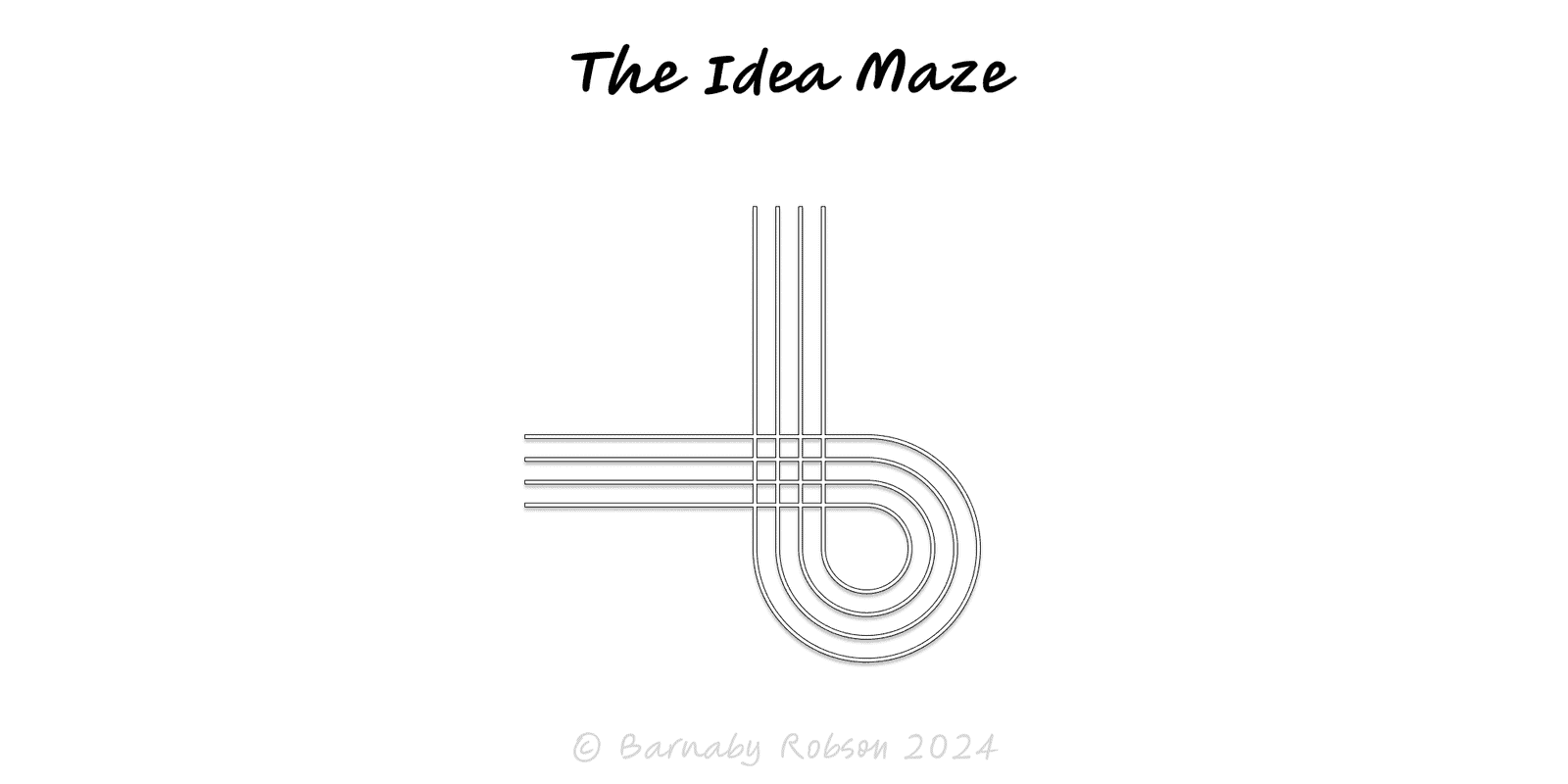
Before building, map the space: the key forks, dead ends and dependencies—so you can choose a promising path and run smarter tests.
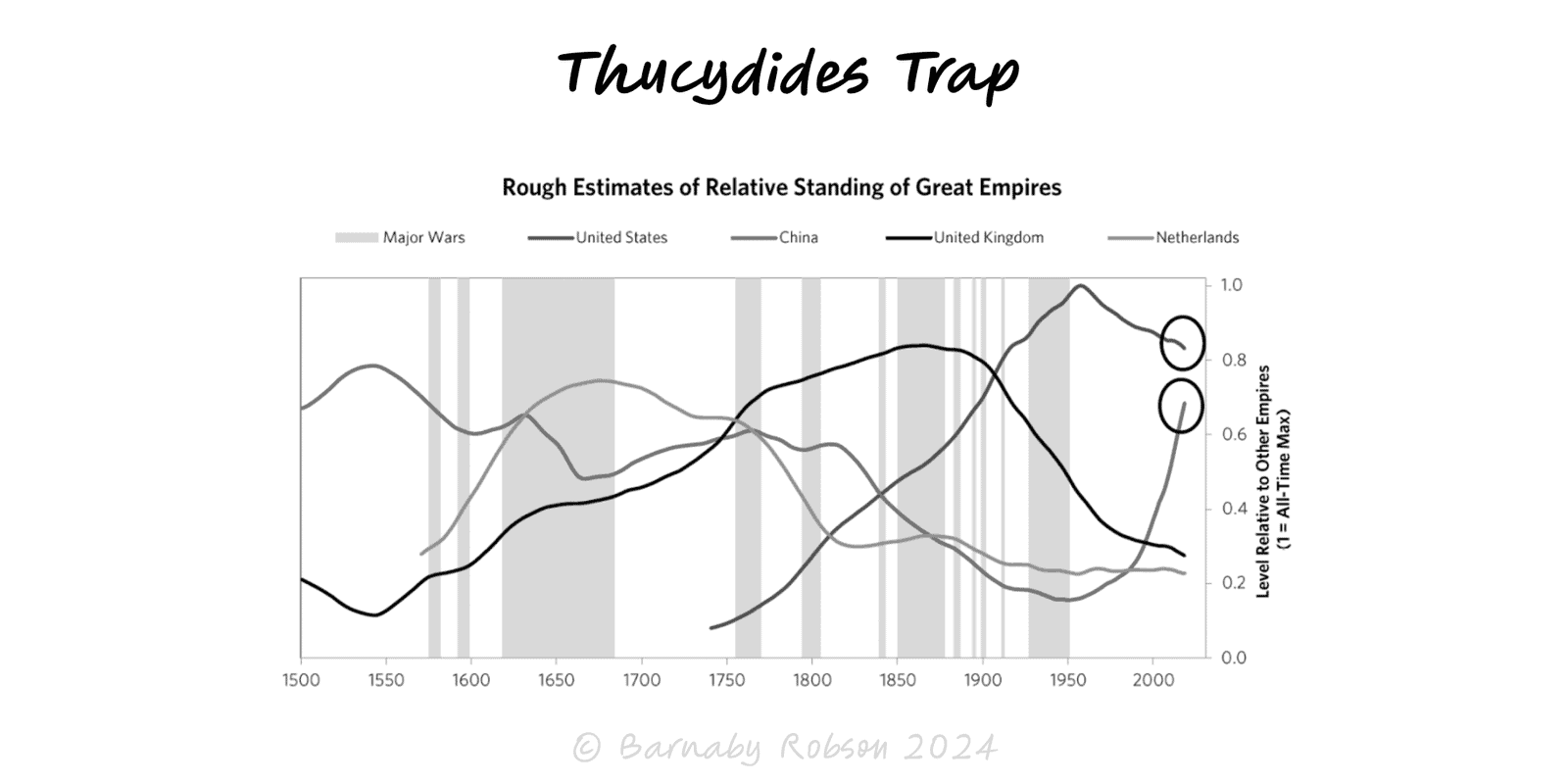
When a rising power threatens to displace a ruling power, fear and miscalculation can tip competition into conflict unless incentives and guardrails are redesigned.
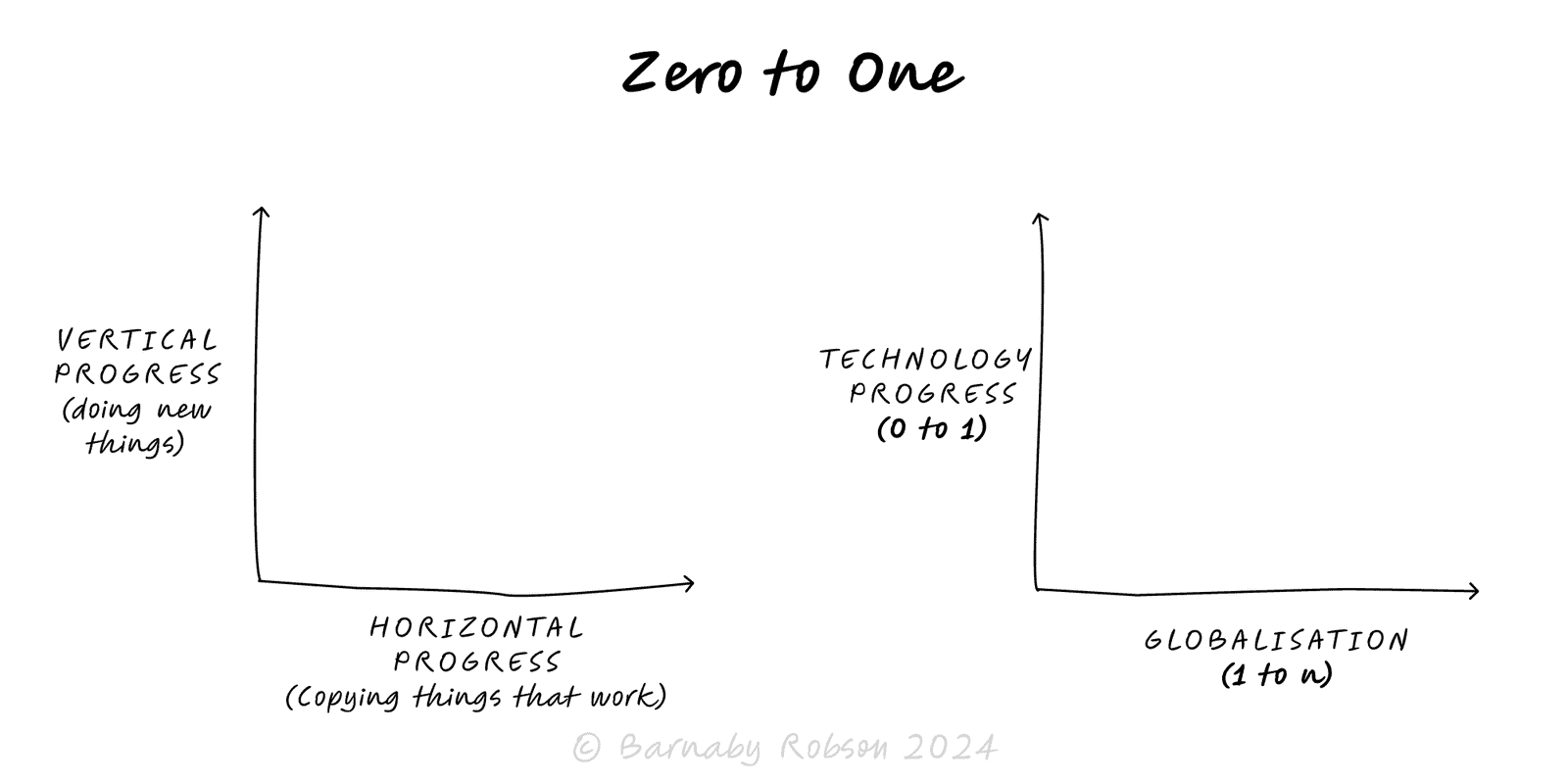
Aim for vertical progress—create something truly new (0 → 1), not just more of the same (1 → n). Win by building a monopoly on a focused niche and compounding from there.