1000 True Fans
Kevin Kelly’s rule of thumb for creators and niche businesses: a direct base of ~1,000 true fans can sustain a venture if ARPU and retention are healthy.
Author
Kevin Kelly
Model type
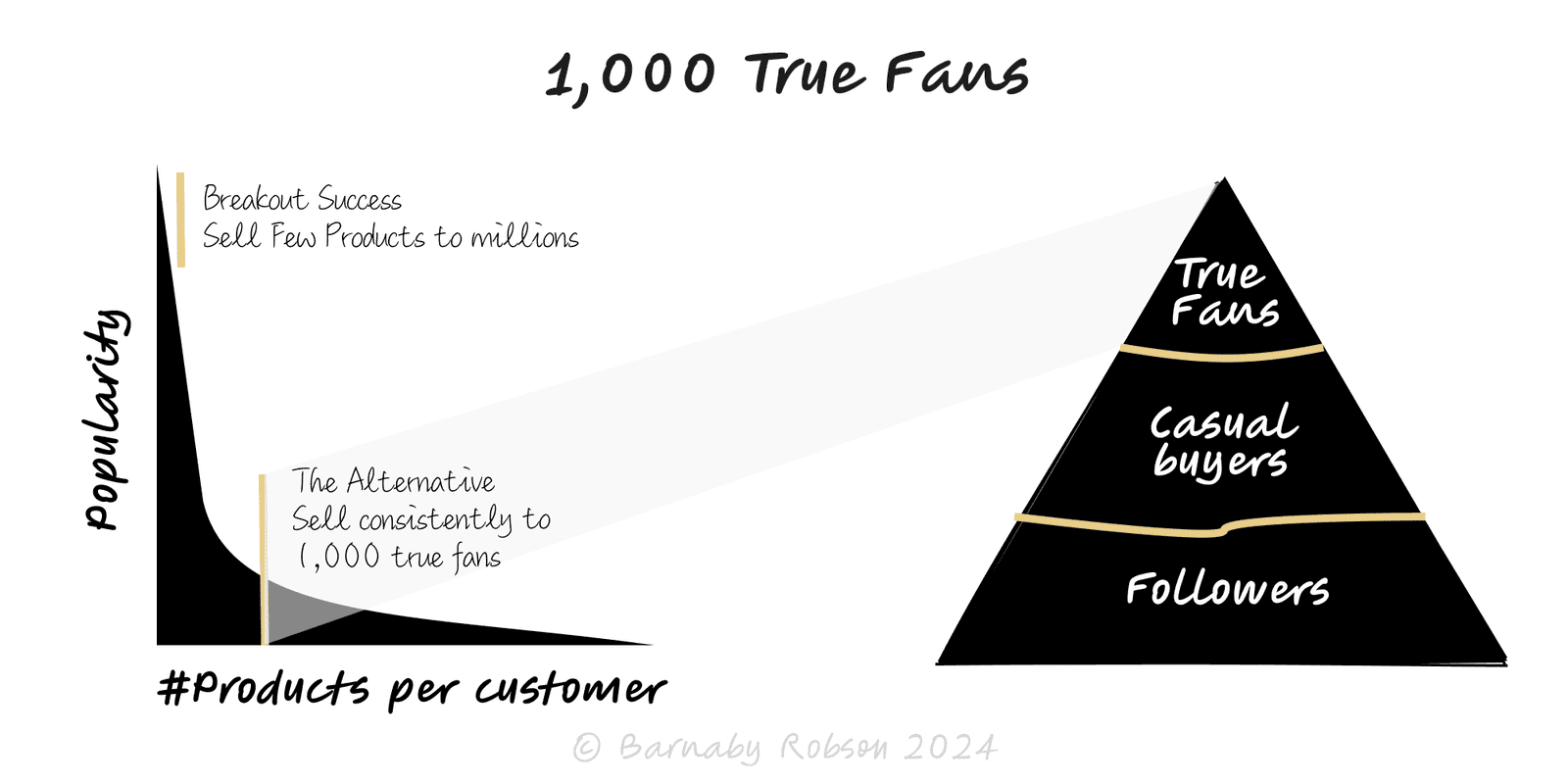

Kevin Kelly’s rule of thumb for creators and niche businesses: a direct base of ~1,000 true fans can sustain a venture if ARPU and retention are healthy.
Kevin Kelly
Coined by Kevin Kelly in 2008, 1000 True Fans argues you don’t need mass-market scale to sustain creative work. If roughly one thousand people buy most things you release each year, the income can fund a full-time practice.
The exact number flexes with your economics: what matters is a direct relationship, recurring offers, and low “platform tax” so more of the value flows to you.
True fan – someone who reliably buys what you make, renews memberships, shows up to events, and advocates for you.
Simple maths – Income ≈ number of true fans × ARPU (average revenue per user per year). Example: 1,000 × £120 = £120k gross before costs.
Funnel reality – if ~2–5% of reachable followers convert to true fans, you may only need 20–50k reachable followers, not millions.
Own the relationship – email list, community, and your shop/site reduce algorithm and fee risk.
Offer ladder – free flagship → low-ticket → core subscription/membership → premium/patron tiers → occasional high-ticket.
Retention engine – cadence, access, community interaction and surprise-and-delight keep churn low and LTV high.
Scale variants – “100 True Fans” (high ARPU) and “10,000 True Fans” (low ARPU) are the same mechanism with different unit economics.
Creators and experts – writers, designers, developers, musicians, educators, photographers.
Indie SaaS and plugins – 500–2,000 paying customers at £8–£20 per month.
Courses and communities – paid newsletters, cohorts, private forums (Circle/Discord/Slack).
Studios and small brands – limited editions, drops, patron clubs, experiences and events.
Define the niche – a specific audience you can serve repeatedly; write a one-paragraph “who/why/value” statement.
Set the target maths – choose an income target and ARPU; derive required true fans and rough top-of-funnel size.
Own your channel – start/strengthen email and a home base (site/shop). Make joining obvious and rewarding.
Design the offer ladder – free flagship content; a clear core membership/subscription; one or two premium tiers; occasional high-ticket offers.
Ship on a cadence – regular publishing rhythm, member-only moments, backstage access, Q&A, meetups.
Measure and tune – track sign-ups, free→paid conversion, ARPU, churn, referrals. Cut offers that don’t move ARPU or retention.
De-risk platforms – migrate social followers to owned channels; diversify payment processors and fulfilment.
Gross vs net – fees, fulfilment, VAT, refunds and your own time can halve gross; model costs honestly.
ARPU fantasy – price must match value and cadence; tiers without compelling benefits don’t retain.
Platform dependence – algorithms change; never build the base only on rented platforms.
Burnout risk – cadence and access promises are liabilities; set boundaries, batch, and automate.
Weak community design – if members don’t interact, retention suffers.
Single-offer ceiling – no ladder caps ARPU and leaves money on the table for superfans.
Click below to learn other mental models

Before building, map the space: the key forks, dead ends and dependencies—so you can choose a promising path and run smarter tests.
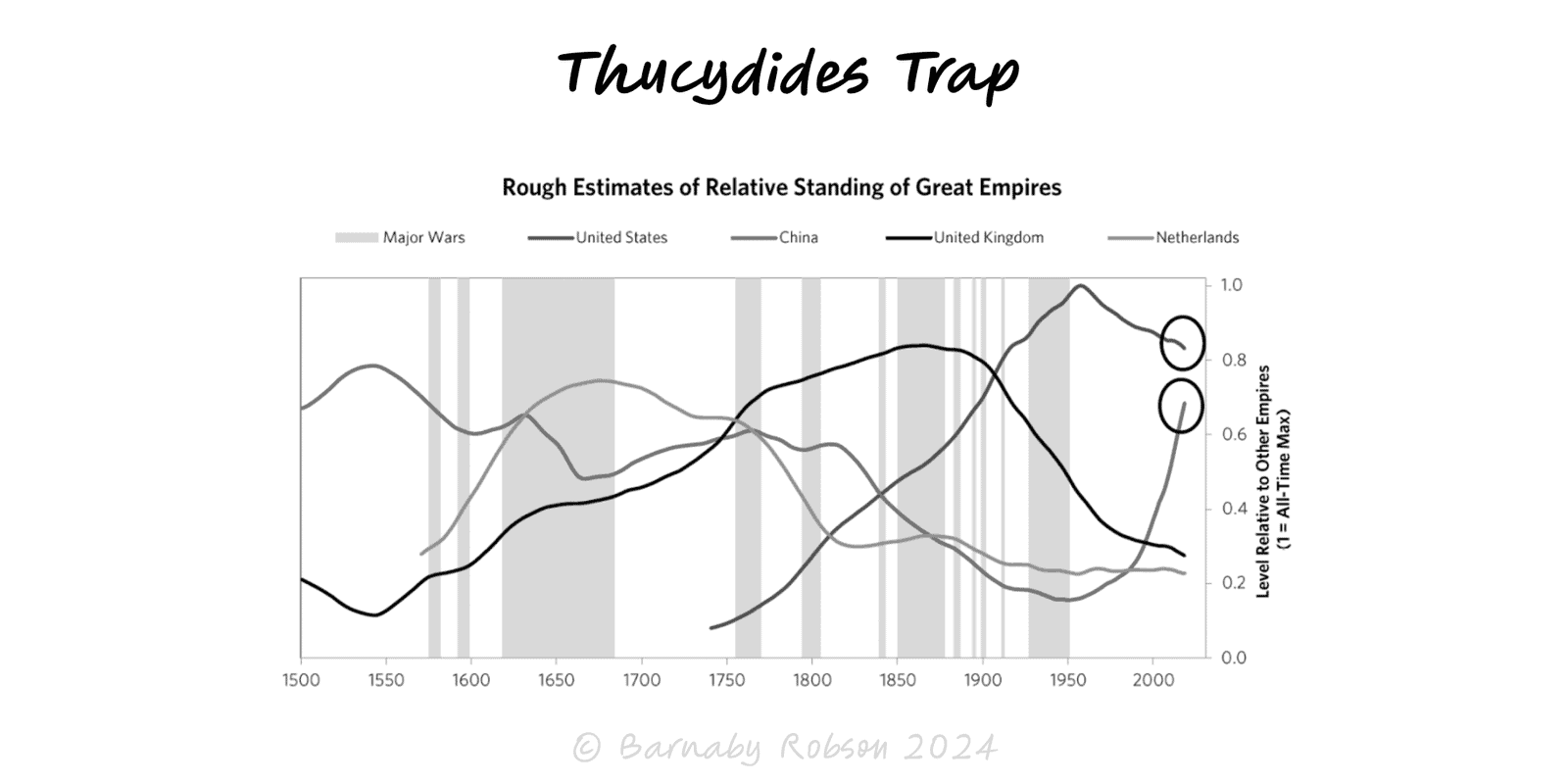
When a rising power threatens to displace a ruling power, fear and miscalculation can tip competition into conflict unless incentives and guardrails are redesigned.
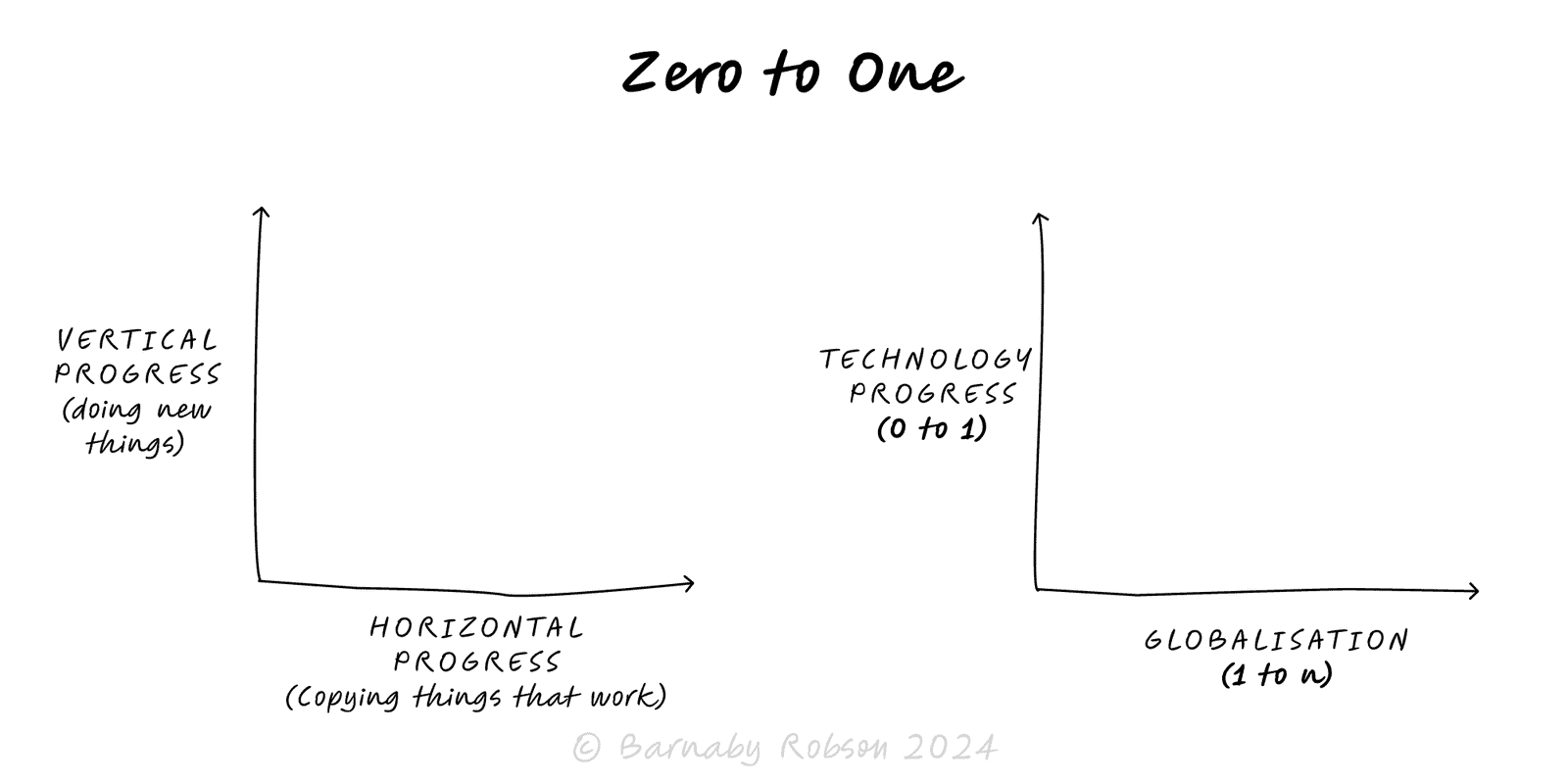
Aim for vertical progress—create something truly new (0 → 1), not just more of the same (1 → n). Win by building a monopoly on a focused niche and compounding from there.