

India has the unhappy distinction of being spoken about with great confidence by people who have never crossed its kerb – often because the kerb is missing – or as they only ever stepped from their 5-star hotel into their chauffeur driven car, to the office and back. After ten days driving cross-country and hopping in and out of Tuk Tuks in Delhi, Agra, Jaipur, Jodhpur and Udaipur, I’m going to bravely offer my unfiltered – and clearly expert.. – perspective. I found myself oscillating between admiration for its boundless energy and despair at its voluntary chaos and countless frustrations. On balance, it’s not bad.
The first surprise is linguistic. Everything is in English, and the spoken English is often excellent. This creates a strange inversion of the usual tourist hierarchy: in many places you are not the clever visitor decoding the locals, you are the slow reader being politely indulged. At The Oberoi, you ask once and things happen – with attentive competence.
Then you step outside and the street reminds you that individual competence is not the same thing as societal order.
The traffic has the feeling of a contact sport. Think Indonesia, but faster and closer together, with a higher proportion of bodywork that has already lost an argument. Horns are used instead of brakes and indicators. Indicators appear to be regarded as decorative. It seems to be the norm to have the front windscreen fully cracked. And yet – it works, in the way that a crowded bazaar “works”: by improvisation, by instinct, by the absence of any expectation that the cops are coming to restore order.
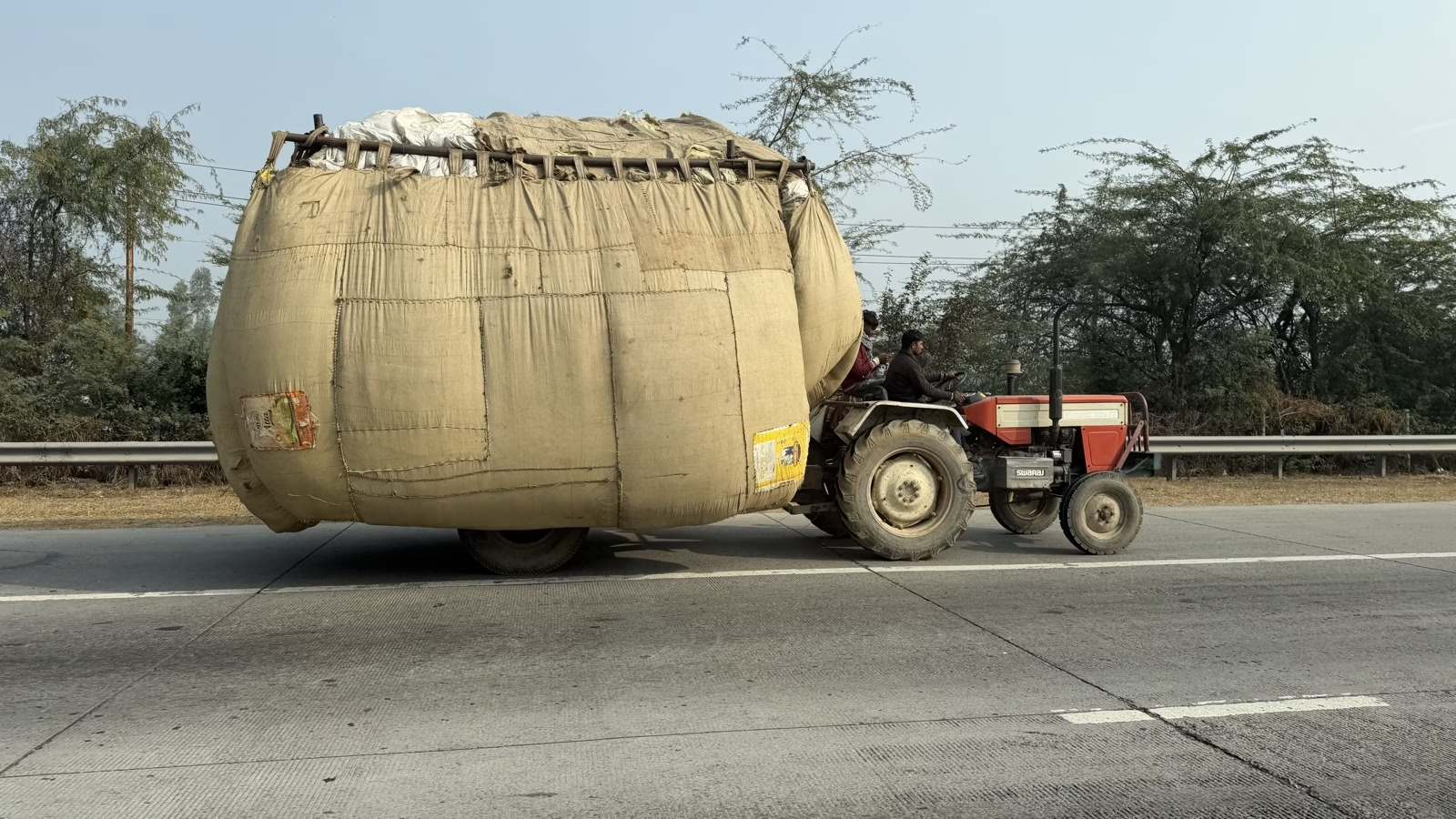
Delhi, at a glance, feels very much like Jakarta: skyscrapers next to slums, guarded wealth beside decrepitude, a noticeable absence of pavements, and an atmosphere of constant construction. Over it all, smog and fog combine into a grey blanket, reducing visibility to a few hundred metres.
And yet the countryside and smaller cities puncture the caricature. Jodhpur is calmer than Jaipur – less performative, more liveable – and the Jodhpur fort may be the most impressive single structure I saw.
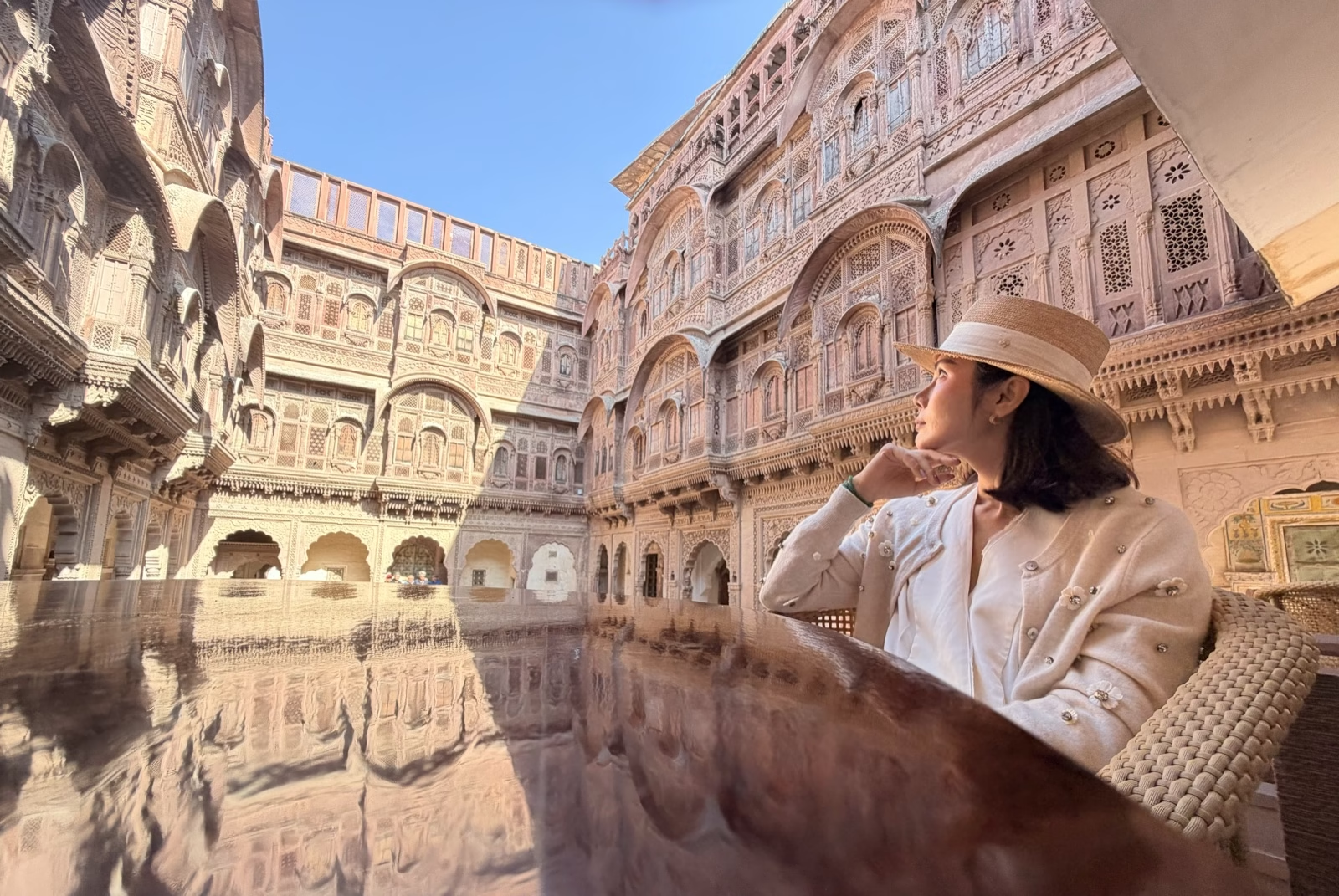
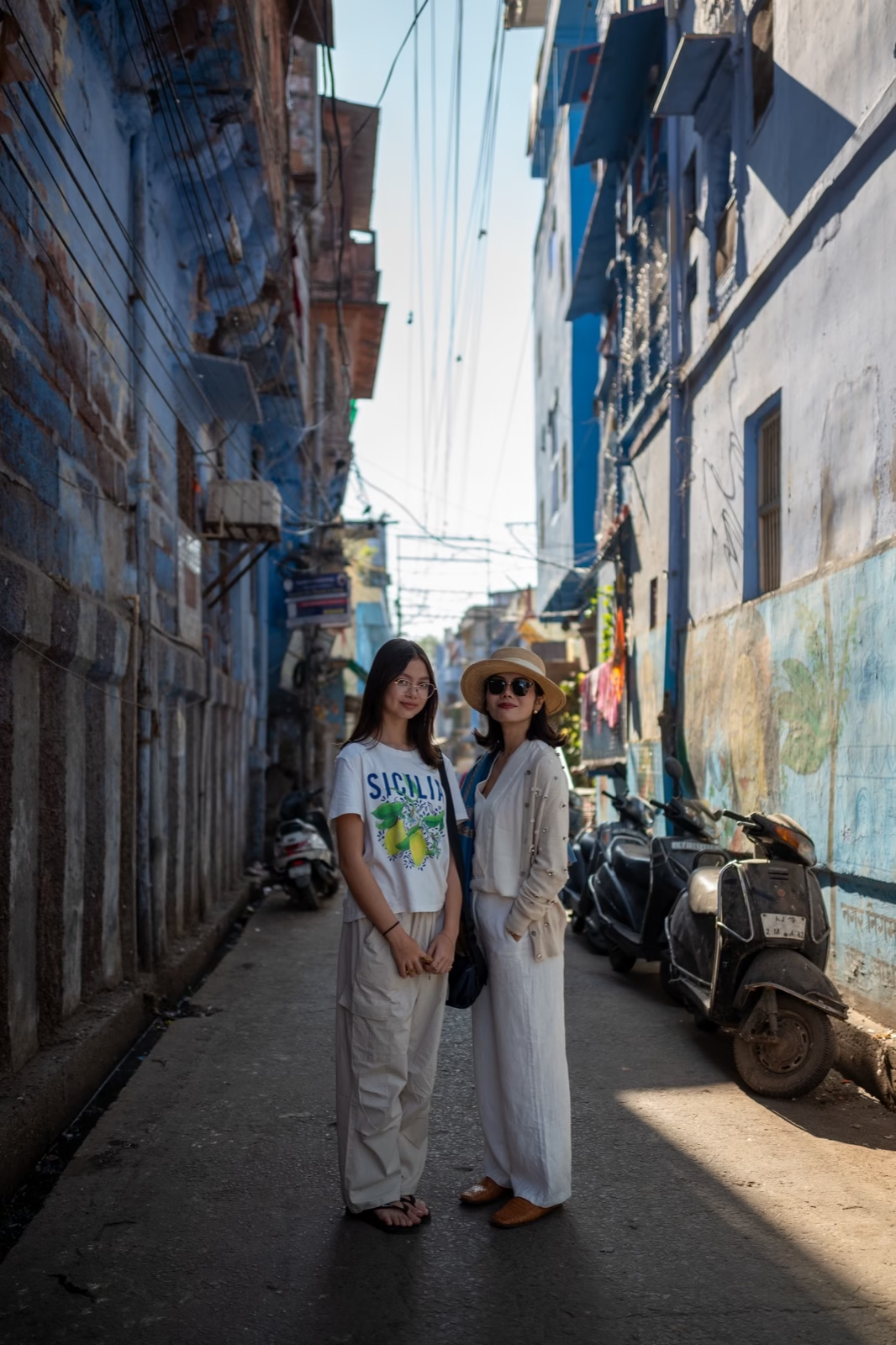
I was not impressed by the Taj Mahal and couldn’t have been happier to leave Agra. The blue city streets of Jodhpur are, for me – from a street photography perspective – a dream: you could spend hours there, not looking for “India”, but simply capturing faces, light, colour, geometry, and the busy choreography of ordinary life.
The aesthetic contradiction is relentless: rustic beauty surrounded by filth.
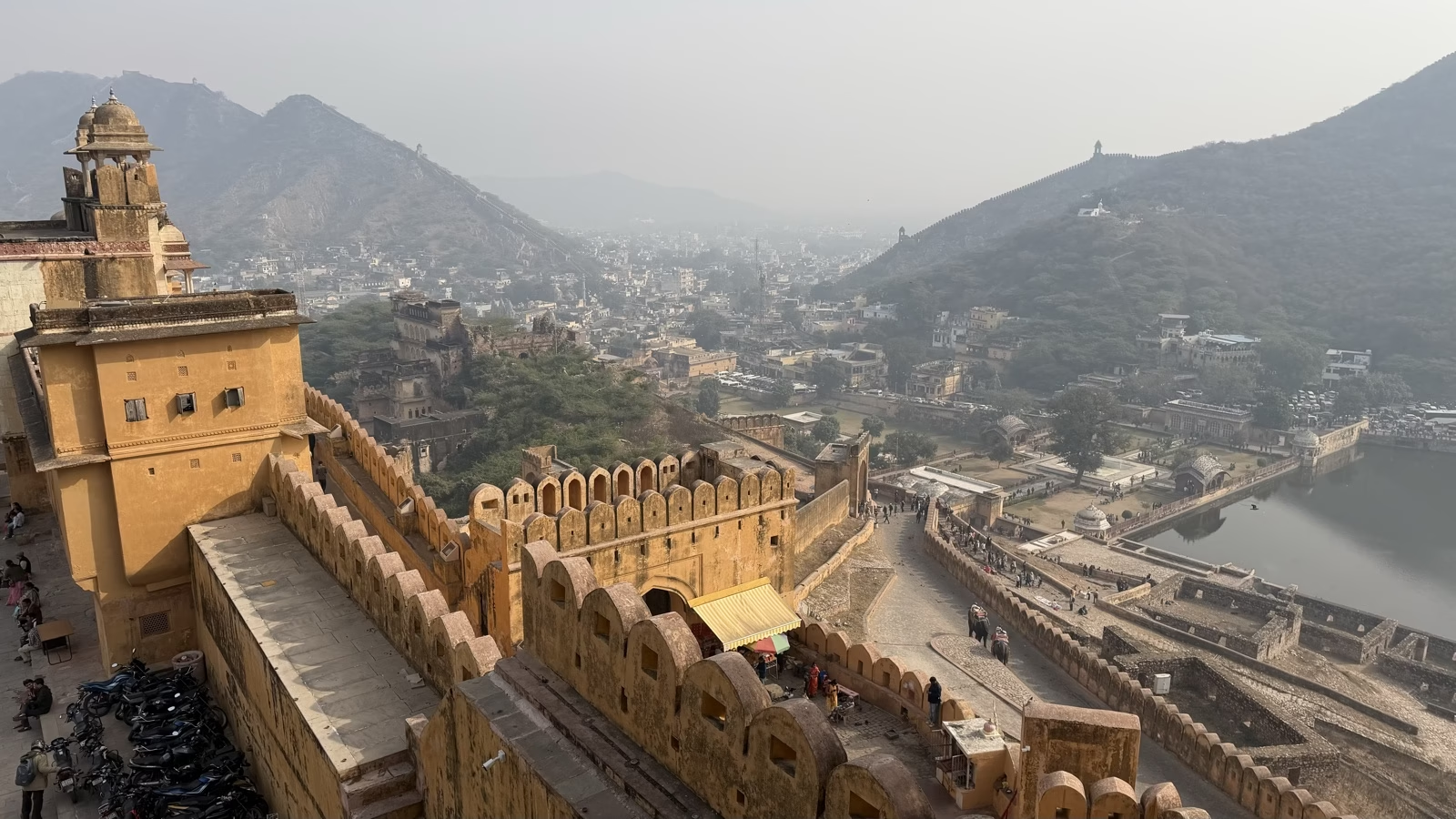
You would have thought it wouldn’t take much – given the immense manpower available – to clean a great deal of it up. Which leads to the more uncomfortable question: if it wouldn’t take much, why doesn’t it happen? Perhaps because India isn’t short of labour; it’s short of coordination and trust.
Trust is the recurring tax. Every pashmina shop will tell you the pashmina from the shop you visited five minutes ago is fake. Gems provoke a kind of learned paranoia: constant yelling that yours is glass injected, or coloured and generally not real, only theirs is legit, and you have almost no way of knowing. “Guides” steer you towards pricier shops and restaurants with the same inevitability as encountering bad smells in public spaces. Even online reviews feel compromised – a low-trust society produces a high need for reviews, which are then gamed, which lowers trust further. The snake eats its own tail and charges commission for the meal.
Meanwhile, the nation’s symbols are curiously unembarrassed. Pictures of Modi seemingly omnipresent, like a demigod on billboards. Cricket on construction sites and in the middle of roundabouts. Cattle everywhere, particularly cows, lounging in towns without grass as if they own the place – which, in a sense, they do. It makes you wonder about motor accidents and insurance claims: in many countries a cow on the road is a shock event; here they cruise along the fast lane in first gear and are seemingly immune to the angry blasts of horns.
Socially, the disparities jar – sometimes amusingly. Male egos abound. “Husband chairs” outside mall shops offer a comical concession to universal male boredom,
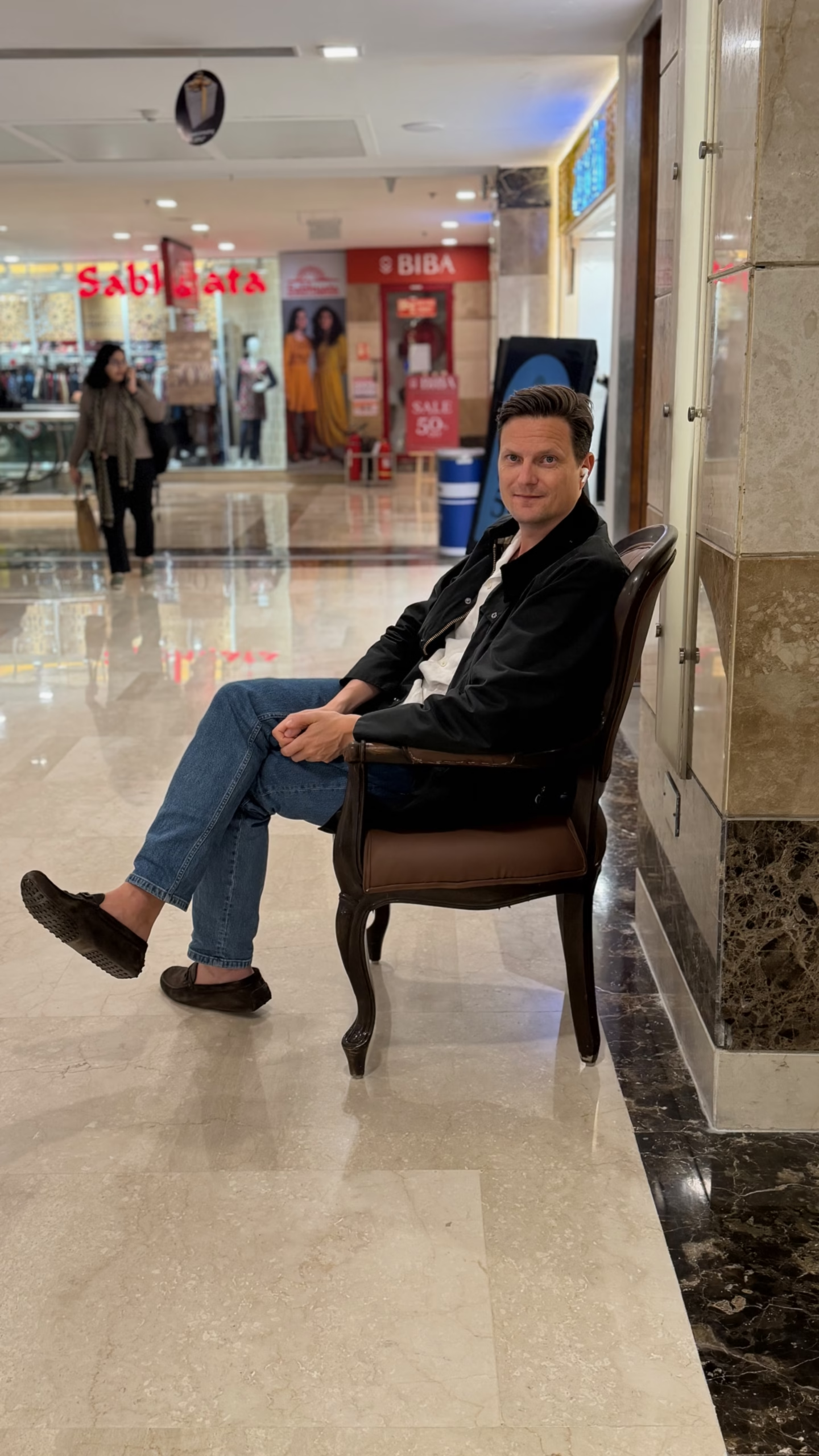
yet in restaurants and hotels, waiters address the man even when the reservation bears his wife’s name. In the countryside, women in vibrant saris balance gallons of milk on their heads while men drive tractors with their eyes fixed firmly on smartphones. Turban colours carry social meaning. Married women: hair covered; unmarried: hair out. The head wobble remains the finest ambiguous gesture on earth: it can mean yes, no, maybe, I hear you, go ahead, or I refuse to acknowledge your question without being rude. If I’m being honest, I had no idea what was meant by the wobble half the time.
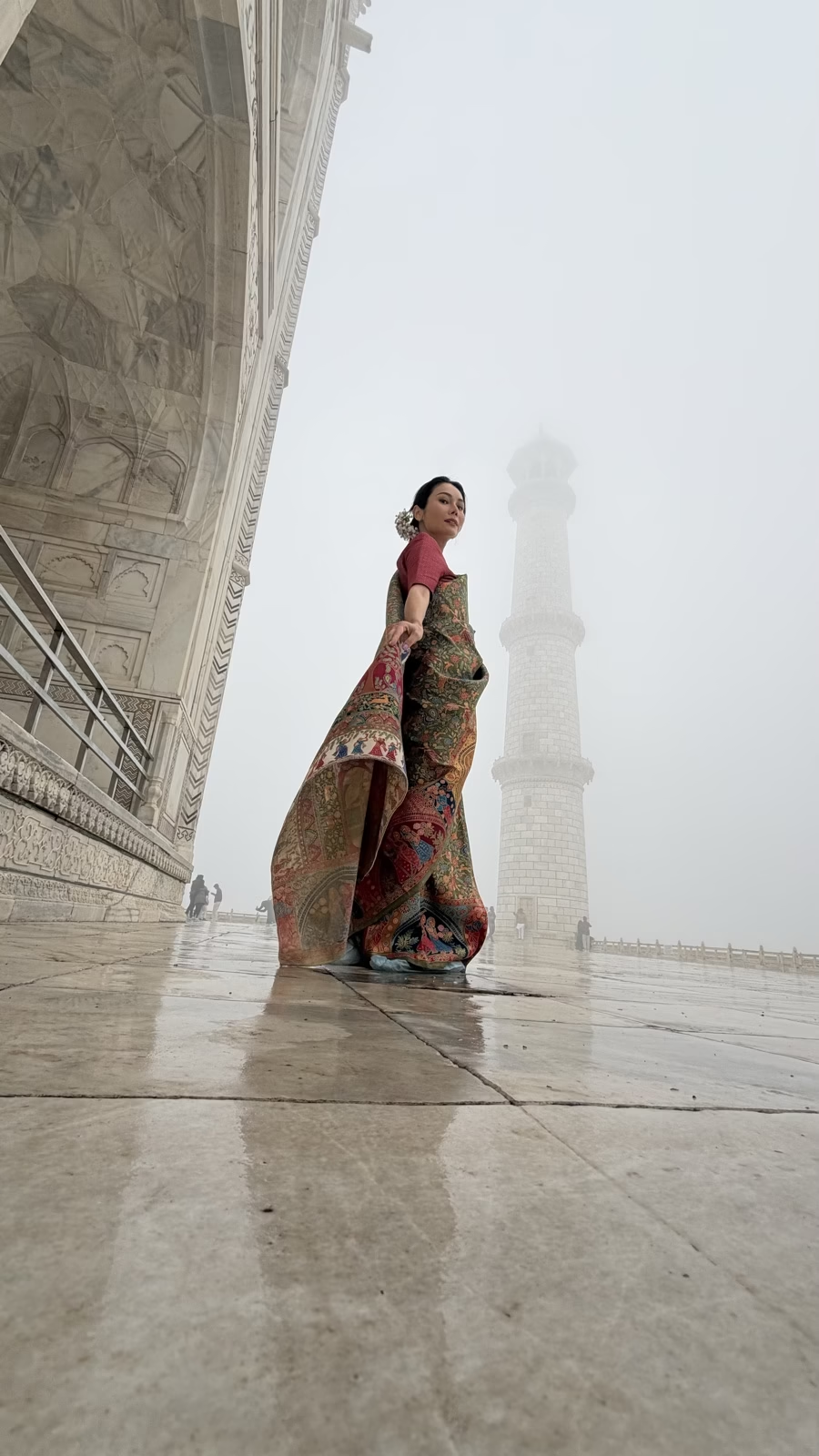
Does the so-called “white privilege” exist? Yes – in a very specific, transactional sense. In a country where hierarchy is still socially legible, being visibly foreign and white can buy you extra politeness, faster service, and a presumption of status. The sting is that this “privilege” is inseparable from suspicion: outside fixed-price, binary transactions you are also marked as the walking margin, and every open-ended negotiation comes with the low-grade anxiety of being charmingly overcharged.
On the consumer side, Toyotas and Suzukis dominate the roads, alongside two-wheelers of all sorts, with Royal Enfields surprisingly everywhere. EVs are not yet the story. There’s less ostentatious brand showing-off than China (where it can feel like every other woman is carrying an LV bag). There are wine shops in surprisingly remote places – literally in the middle of fields with no other shops for miles – easier to get booze in rural India than rural Australia, which is not a sentence I expected to write. On-demand delivery, by contrast, hasn’t swallowed everything the way it has in much of emerging Asia. At least not in Rajasthan. And there is a curious absence of chain convenience stores and supermarkets.
India also seems to be gaining weight early in its development cycle – a phenomenon I’ve seen in Indonesia too – with women particularly affected. Beneath the sari often pops the belly. The cycle seems to be this: prosperity arrives, nutrition changes, sedentary habits spread, and the waistline becomes a leading indicator.
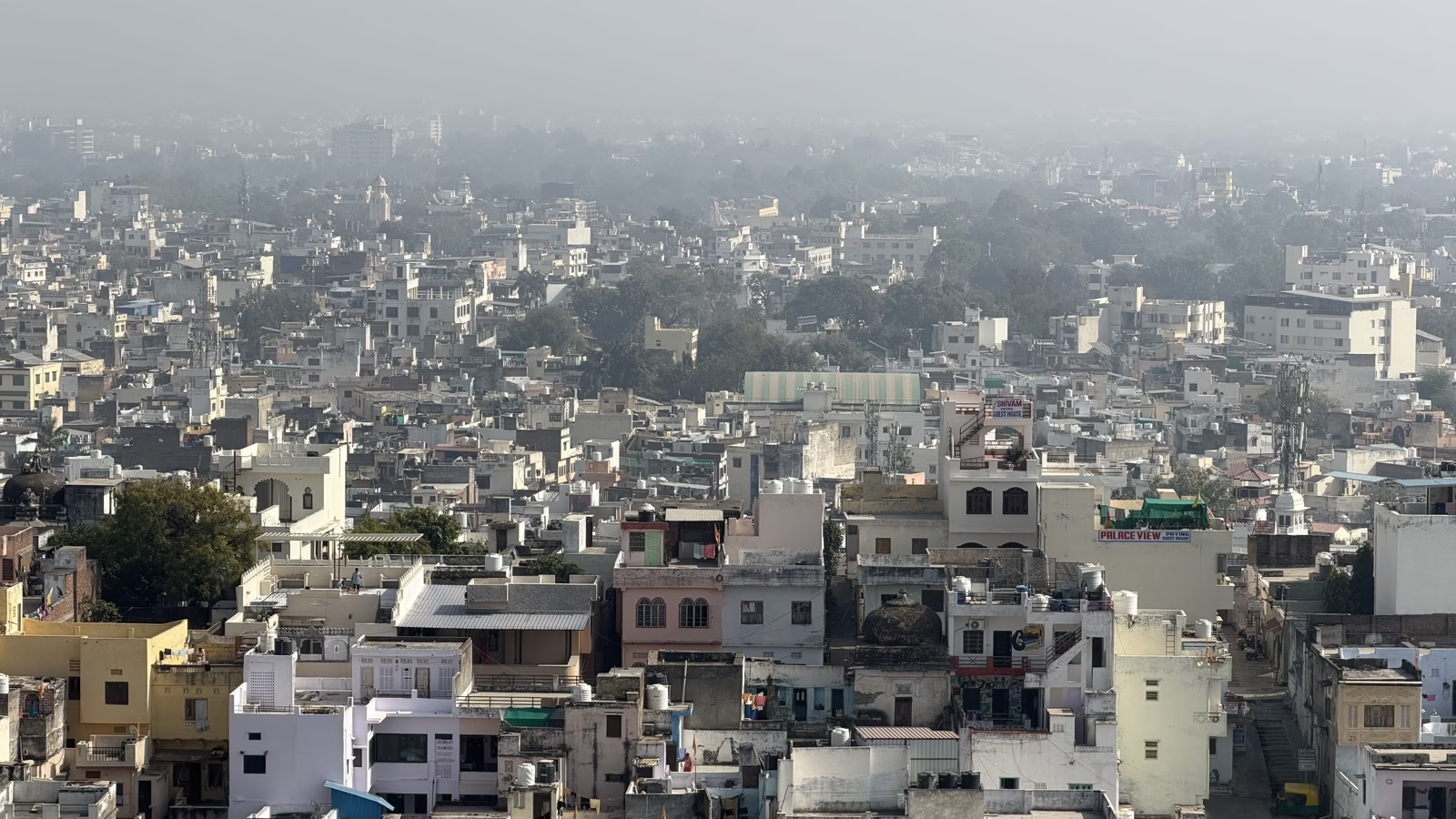
The final lesson is the simplest: you cannot think of India as one country. Behaviours, languages, productivity, and even the “feel” of trust and friction vary sharply by state and city. This shouldn’t be surprising as until the arrival of the British, India was a series of principalities or at best semi-autonomous states under the Mughals. Travel at peak domestic times and you’ll be crushed by its own internal tourism – Udaipur in December felt like being trapped inside Selfridges on Boxing Day.
And despite everything – despite the horns, the litter, the scams, the chaos, the demigod billboards – it’s not bad. The place is alive in a way that sanitised countries forget how to be. It is the antithesis of minimalism: maximal colour, maximal noise, maximal contradiction.
Footnote
If I go back – it won’t be for the curated tourist sites. It will be for rural India, for the less-performed parts, where the country stops trying to sell to you, and simply gets out of the way, to let you get on and enjoy its cultural and natural beauty.