The phrase that kept returning during my recent trip to China was this: Singapore at scale. Both are authoritarian capitalist societies, but China has proven the model works for 1.4 billion people. The trains run on time. The streets are clean. The products are better than yours. And someone is always watching.
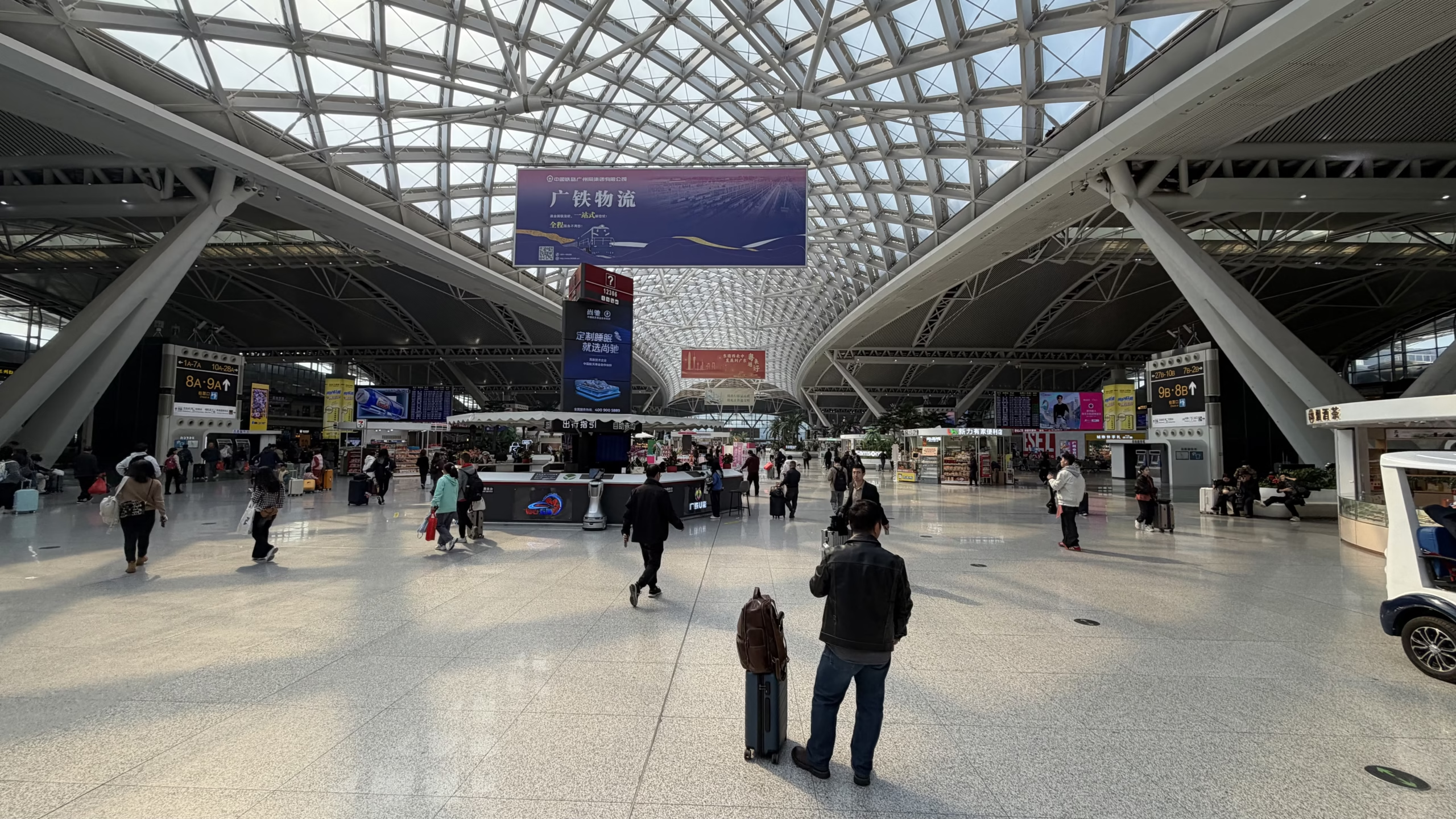
The transport infrastructure is insanely good – probably better than anywhere in the world. High-speed rail that is comfortable, cheap, and punctual. Perfect uncontested highways with hundreds of miles of tunnels, bridges, and overpasses that have made the interior genuinely accessible. The railway stations alone are a statement of intent: massive, efficient, clean, and well-ordered. If infrastructure is a proxy for state capacity, China is sending a message.
The quality of consumer products has flipped. In terms of bags, clothes, shoes, and especially cars, the average in China is now above the United States and Europe. This is not about luxury outliers – it’s about the median. The Chinese middle class is better dressed, better equipped, and driving better vehicles than their Western counterparts. BYD, Xiaomi, and a dozen brands you’ve never heard of are producing cars with design and build quality that make European marques look complacent. The only foreign cars still selling are the ultra-premium status symbols – G-Wagons and Range Rovers are everywhere, more so than in London – but below that tier, locals are buying local. The perception has shifted: Chinese brands are now seen as the better product.
Electric vehicles are ubiquitous. Silent, slick, and exhaust-free. Cars and motorcycles hum through cities that used to choke on fumes. The air is cleaner than I remember. The smog that once defined Beijing and Shanghai has lifted – not entirely, but noticeably. Solar panels and hydropower installations dot the landscape. The EV charging infrastructure, however, is comically fragmented: each brand seems to have its own proprietary system, requiring multiple apps and accounts. It’s the one area where the famous Chinese efficiency has failed to consolidate.
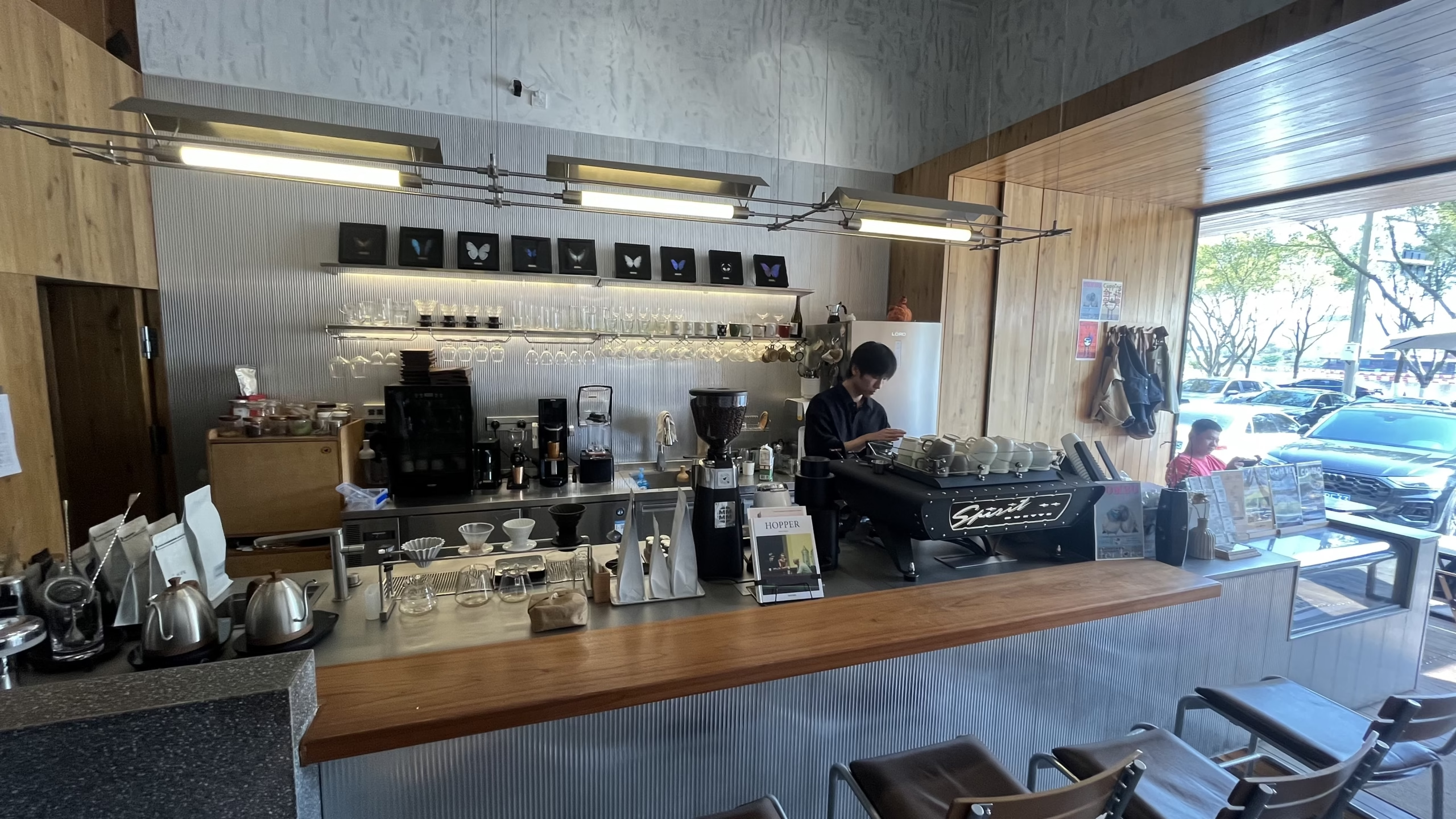
The cities themselves are a mixed verdict. Architecturally, they feel impersonal – too built around the car, too harsh, too Bauhaus in the brutalist sense. Concrete jungles in need of a new aesthetic movement. And yet the interior design has improved dramatically. Hair salons, cafés, restaurants – there’s a modern minimalism that rivals anything in Tokyo or Copenhagen. Good lighting, thoughtful plant arrangements, attention to detail. Someone is clearly paying attention to how spaces feel, even if the skylines remain uninspiring.

For quality of life, you could make a serious argument that China is now the best country in the world – for the normal person. Eating out, getting a massage, having your nails done, a haircut, a proper coffee – all of it is easily within reach. Inflation has not hit China the way it has hit the West. A big bowl of noodles for 12 RMB. A kilogram of fat, juicy strawberries for 30 RMB. A boiler replacement including service and a six-year guarantee for 700 RMB – and they inspected, purchased, and installed it all on the same day. The intense competitiveness of the Chinese market has pushed corporate surplus into consumer surplus. Margins are wafer-thin; the beneficiary is the buyer.
On-demand delivery is everywhere – Meituan, Ele.me – far more embedded in daily life than anything in the West. Athleisure is the uniform. Western comforts are now easily accessible even in remote cities: coffee shops on every corner, croissants in supermarkets, reasonably priced Burgundy and Cloudy Bay on the shelves. I found a proper speciality coffee shop with an on-site roaster and single-origin selections in my wife’s hometown – a third-tier city that most Westerners couldn’t locate on a map.

The surveillance is the trade-off. CCTV is omnipresent. Face ID is required to enter apartment complexes. People follow the rules – indicating, staying in lane, waiting for pedestrian crossings – because the cameras see everything and automatically issue fines. It’s orderly in the way that a well-managed prison is orderly. The spitting and littering that used to characterise public spaces has largely disappeared. Whether this is cultural evolution or algorithmic enforcement is a question I cannot answer, though I suspect the latter.
The Great Firewall remains a gigantic pain. No WhatsApp, no YouTube, no X, no Instagram, no Google. For foreigners, it makes everything harder. The workaround is simple – foreign SIMs on roaming or eSIMs like Airalo bypass the restrictions entirely – but it’s a self-inflicted wound. If China opened the internet, it would be twice as liveable for foreigners overnight. Instead, the curious assumption persists among locals that life outside China must be better, precisely because they cannot see it clearly.
Sentiment towards foreigners has improved since the COVID years, which marked a low point. The “wolf warrior” diplomacy phase was too much too soon, and border controls still feel like something out of 1984. But curiosity is back. People are friendly, interested, willing to engage – at least if you’re not American. The class of foreigners has shifted too: in Guangzhou, what used to be Americans, Brits, and French is now increasingly Nigerian, Middle Eastern, and Russian. The word “foreigner” carries more baggage than it once did, but for a Western foreigner, scarcity has paradoxically increased status.
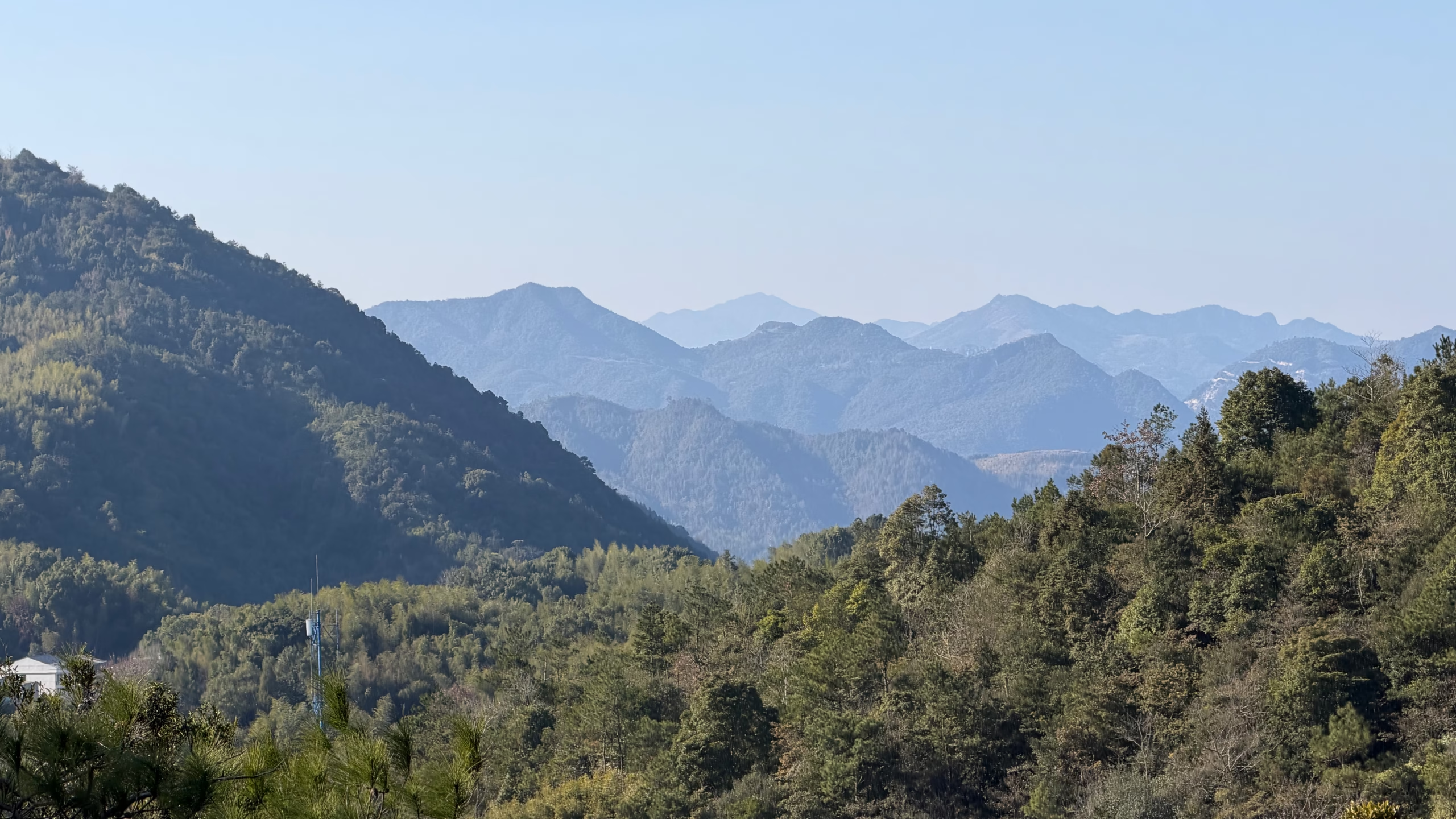
The interior of the country – away from the coastal megacities – is genuinely beautiful. Mediterranean climate in parts, pine trees, red earth.

A renewed focus on preserving natural habitats and ancient culture.
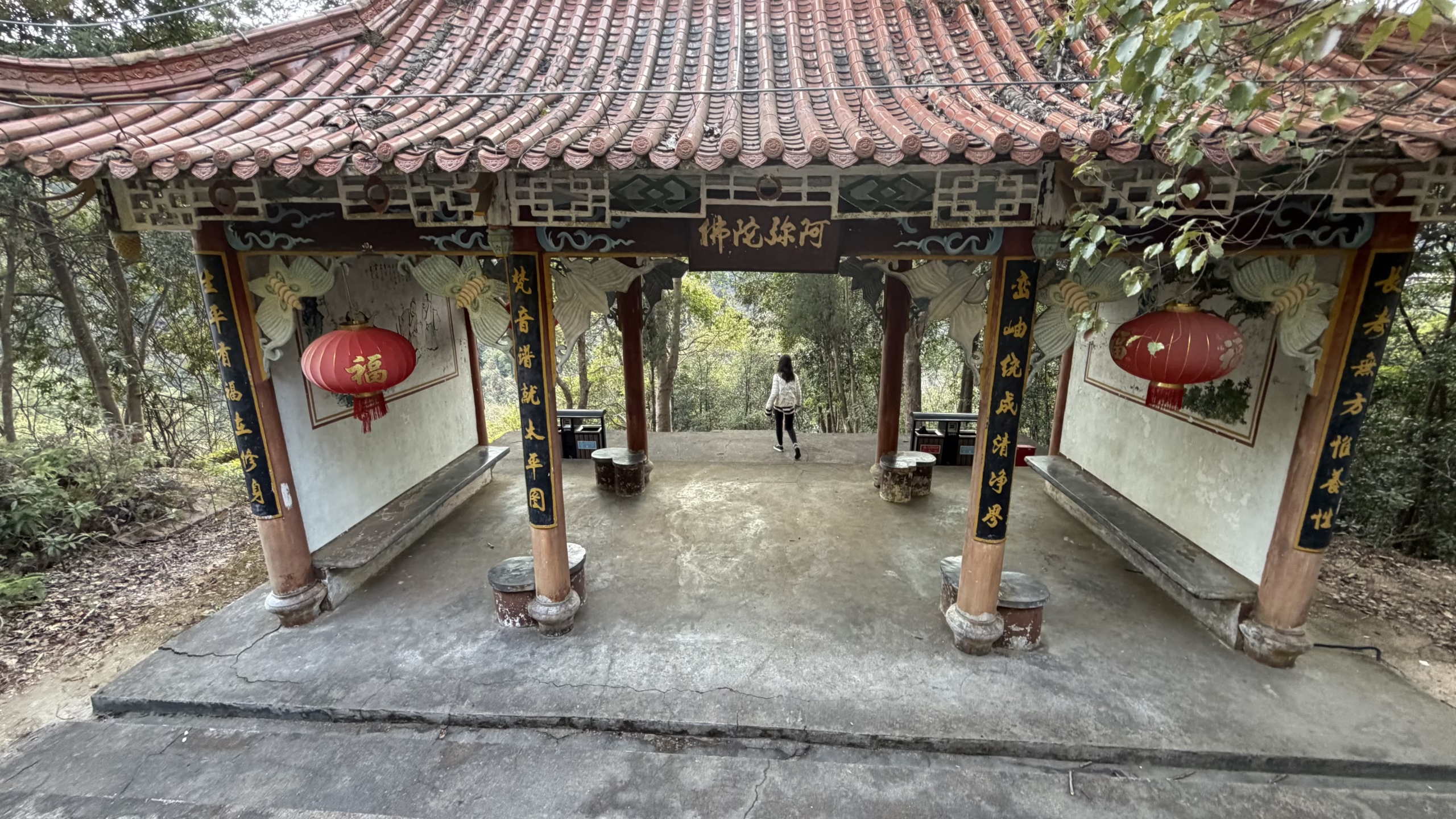


Agricultural labour remains strikingly manual – I saw no tractors or combine harvesters – and the workers in the fields are often in their 50s, 60s, or 70s. The same demographic sweeps the streets and staffs the construction sites. The young have moved to cities; the old remain to tend what’s left.
What strikes me most is the structural advantage China has built. The supply chains, the industrial automation, the infrastructure network – it’s hard to see how India or Vietnam can compete. The core input cost is shifting from labour hours to electricity joules, which means low-cost labour is no longer the advantage it once was. China’s industrial success is rooted in deep infrastructure: not just ports and rail, but data connectivity, electrification, and accumulated process knowledge. A self-reinforcing ecosystem that compounds over time. The tech achievements visible today were the fruits of investments made a decade ago. Given that China continues to invest massively, we should expect another decade of surprises.
The country has been remarkably dumb about PR. The wolf warrior phase alienated potential allies. The border experience – even now – leaves a sour last impression on every visitor. Everyone knows it’s the final moments that stick. They could be so much smarter about this. And yet, for all its flaws, the machine keeps running. Construction is picking up again after the property slump. Confidence remains high. People are still determined to climb the wealth ladder, even as the rungs get harder to reach.
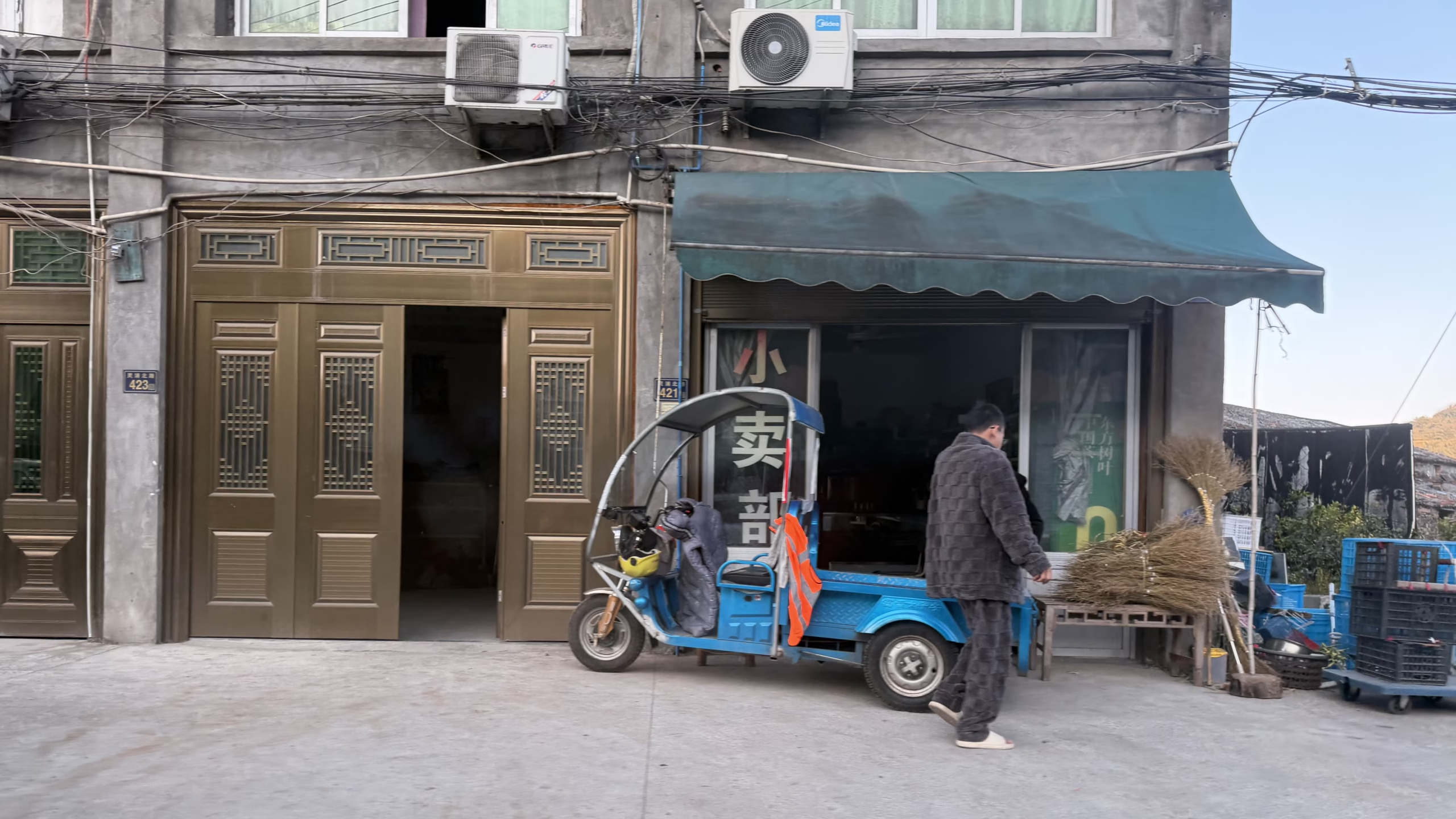
One final image: the thick, quilted Chinese pyjama that everyone wears in the cold months – indoors and out. It’s like walking around wrapped in a duvet. Practical, warm, gloriously unselfconscious. The ESG crowd haven’t caught on yet, but give it time. If there’s one Chinese export that deserves to go global, it might just be the winter pyjama.