
Gear: Cameras, Lenses, Drones, etc
The cameras and lenses I use today, and the principles that shape every upgrade: haptics, simplicity, portability, and pleasure.

Current Kit
This is the kit I use the most.
Film
Nikon FM3A
Contax T2
Drone
How I think about gear
My choices are increasingly shaped by a few principles.
01.
Haptics
The feel of the object influences how much I shoot. It’s incredibly important to try and camera in your hand before buying.
02.
Portability
A camera you carry beats a camera you leave at home.
03.
Simplicity
Menus need to be simple. You need rapid access on the camera body to the things that matter most – focus, aperture, exposure. And a good viewfinder.
04.
More time shooting. Less time processing.
I like analog as it forces consistency, restraint and a sense of play. I hate spending hours processing images.
05.
The form of the camera changes peoples reaction.
A compact and ‘vintage; looking body creates more natural portraits than a large digital setup.
06.
Sensor size and lens speed matter
I like shooting in low light without flash, so high dynamic range and ‘fast’ glass matter. As does the number of megapixels – more pixels allow more cropping which means you don’t need to carry so many lenses.
Digital Cameras
Dream set up as of end 2025 would be:
Leica M11 (for better sensor and USBC charging) + Sony FX3 (video)
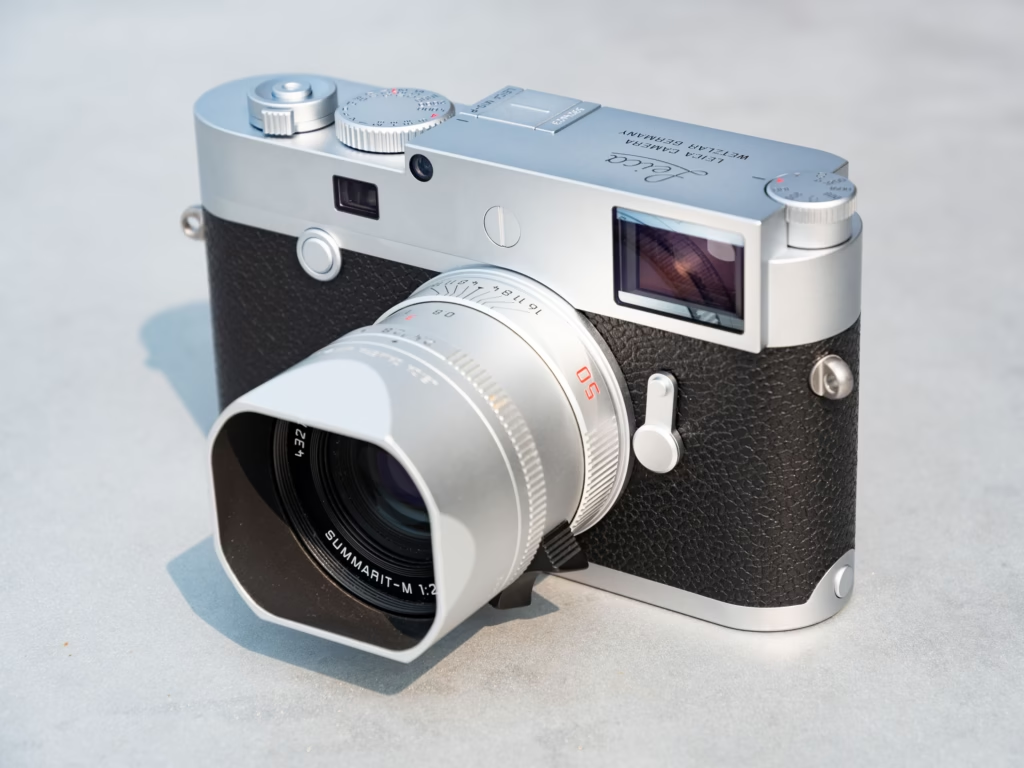
Leica M10p
A camera I enjoy using
On paper the M10-P is outdated: manual focus, limited features, 24MP.
In practice, nothing has made me want to carry a camera more.
What works for me:
- Haptics and design — it feels like a precision instrument
- Simplicity — almost no menus; the tool gets out of the way
- Portability — fast rangefinder lenses stay small
- Social dynamics — people are far more relaxed around it
This camera brought the joy of shooting back.
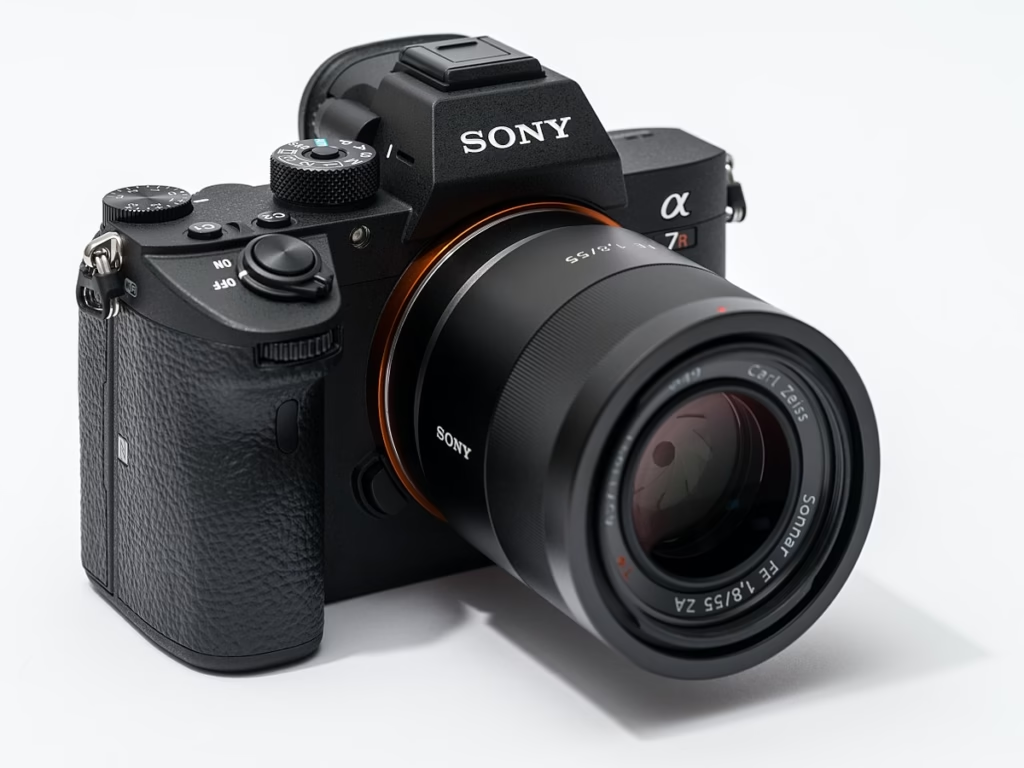
Sony A7RII
A digital workforce
Technically brilliant:
- 47MP resolution
- Excellent dynamic range
- Quick, accurate autofocus
- Relatively compact full-frame body
But I never bonded with it.
It feels like using a computer. The menus slow me down, and despite the output quality, I stopped carrying it.
If I ever need to shoot commercially, it still does the job — but creatively it’s on the bench.
Film Cameras
For a while film cameras could be had for peanuts on eBay and I snapped up those below – at c GBP 100 each. I mainly shoot with Kodak Portra 160 or 400 Film.
Film is not cheap (c. USD 15 per roll of 36 exposures), neither is developing and scanning (USD 60 – 80 per film) for me in Hong Kong. But the process is really fun. I love the surprise factor as usually when the images come back i have forgotten most of what i took. I also find there is a depth to analog images (even when digitally scanned) which i can’t seem to recreate with digital. I also enjoy the colour consistency it enforces.
Nikon FM3A
A near-perfect mechanical/ electronic hybrid.
Why I prefer it over the Pentax LX:
- Faster, quieter shutter (1/4000s vs 1/2000s)
- Better build quality
- Cleaner split-image focusing system
- Film window so I always know what’s loaded
It has the same design philosophy as a Leica — brass top/bottom plates, beautifully engineered internals, no excess.


Pentax LX
Strengths:
- Cheap body (versus FM3A)
- Excellent, affordable lenses
- Durable and compact
A strong system, just overshadowed by the FM3A for my needs.
Contax T2
An icon for a reason.
Solid build, crisp lens, one of the clearest viewfinders of any compact. Totally simple, withe all the controls you need. Also, feels amazing in the hand.
