1000 True Fans
Kevin Kelly’s rule of thumb for creators and niche businesses: a direct base of ~1,000 true fans can sustain a venture if ARPU and retention are healthy.
Author
Kevin Kelly
Model type
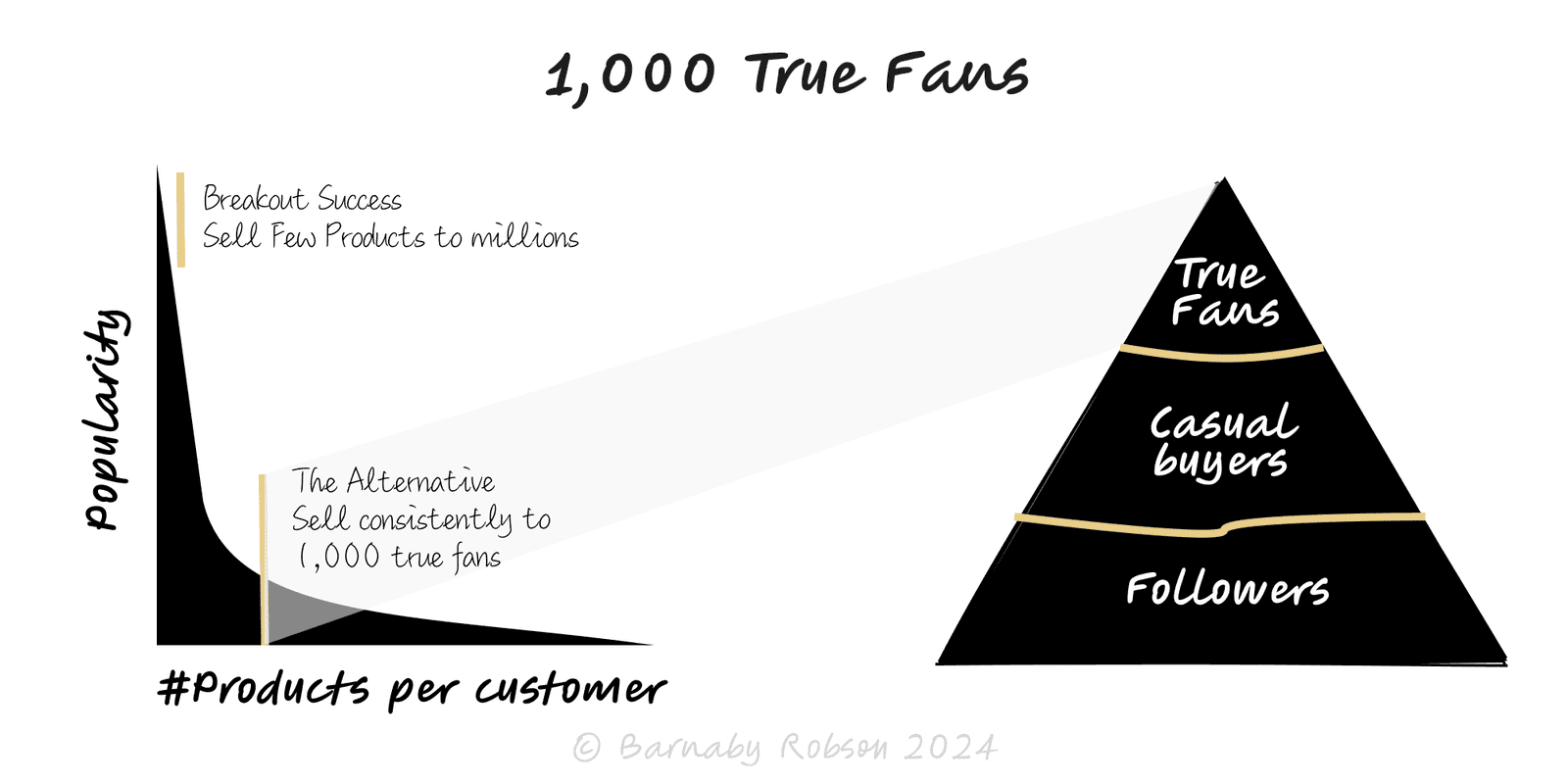
Kevin Kelly’s rule of thumb for creators and niche businesses: a direct base of ~1,000 true fans can sustain a venture if ARPU and retention are healthy.
Kevin Kelly
Coined by Kevin Kelly in 2008, 1000 True Fans argues you don’t need mass-market scale to sustain creative work. If roughly one thousand people buy most things you release each year, the income can fund a full-time practice.
The exact number flexes with your economics: what matters is a direct relationship, recurring offers, and low “platform tax” so more of the value flows to you.
True fan – someone who reliably buys what you make, renews memberships, shows up to events, and advocates for you.
Simple maths – Income ≈ number of true fans × ARPU (average revenue per user per year). Example: 1,000 × £120 = £120k gross before costs.
Funnel reality – if ~2–5% of reachable followers convert to true fans, you may only need 20–50k reachable followers, not millions.
Own the relationship – email list, community, and your shop/site reduce algorithm and fee risk.
Offer ladder – free flagship → low-ticket → core subscription/membership → premium/patron tiers → occasional high-ticket.
Retention engine – cadence, access, community interaction and surprise-and-delight keep churn low and LTV high.
Scale variants – “100 True Fans” (high ARPU) and “10,000 True Fans” (low ARPU) are the same mechanism with different unit economics.
Creators and experts – writers, designers, developers, musicians, educators, photographers.
Indie SaaS and plugins – 500–2,000 paying customers at £8–£20 per month.
Courses and communities – paid newsletters, cohorts, private forums (Circle/Discord/Slack).
Studios and small brands – limited editions, drops, patron clubs, experiences and events.
Define the niche – a specific audience you can serve repeatedly; write a one-paragraph “who/why/value” statement.
Set the target maths – choose an income target and ARPU; derive required true fans and rough top-of-funnel size.
Own your channel – start/strengthen email and a home base (site/shop). Make joining obvious and rewarding.
Design the offer ladder – free flagship content; a clear core membership/subscription; one or two premium tiers; occasional high-ticket offers.
Ship on a cadence – regular publishing rhythm, member-only moments, backstage access, Q&A, meetups.
Measure and tune – track sign-ups, free→paid conversion, ARPU, churn, referrals. Cut offers that don’t move ARPU or retention.
De-risk platforms – migrate social followers to owned channels; diversify payment processors and fulfilment.
Gross vs net – fees, fulfilment, VAT, refunds and your own time can halve gross; model costs honestly.
ARPU fantasy – price must match value and cadence; tiers without compelling benefits don’t retain.
Platform dependence – algorithms change; never build the base only on rented platforms.
Burnout risk – cadence and access promises are liabilities; set boundaries, batch, and automate.
Weak community design – if members don’t interact, retention suffers.
Single-offer ceiling – no ladder caps ARPU and leaves money on the table for superfans.
Click below to learn other mental models
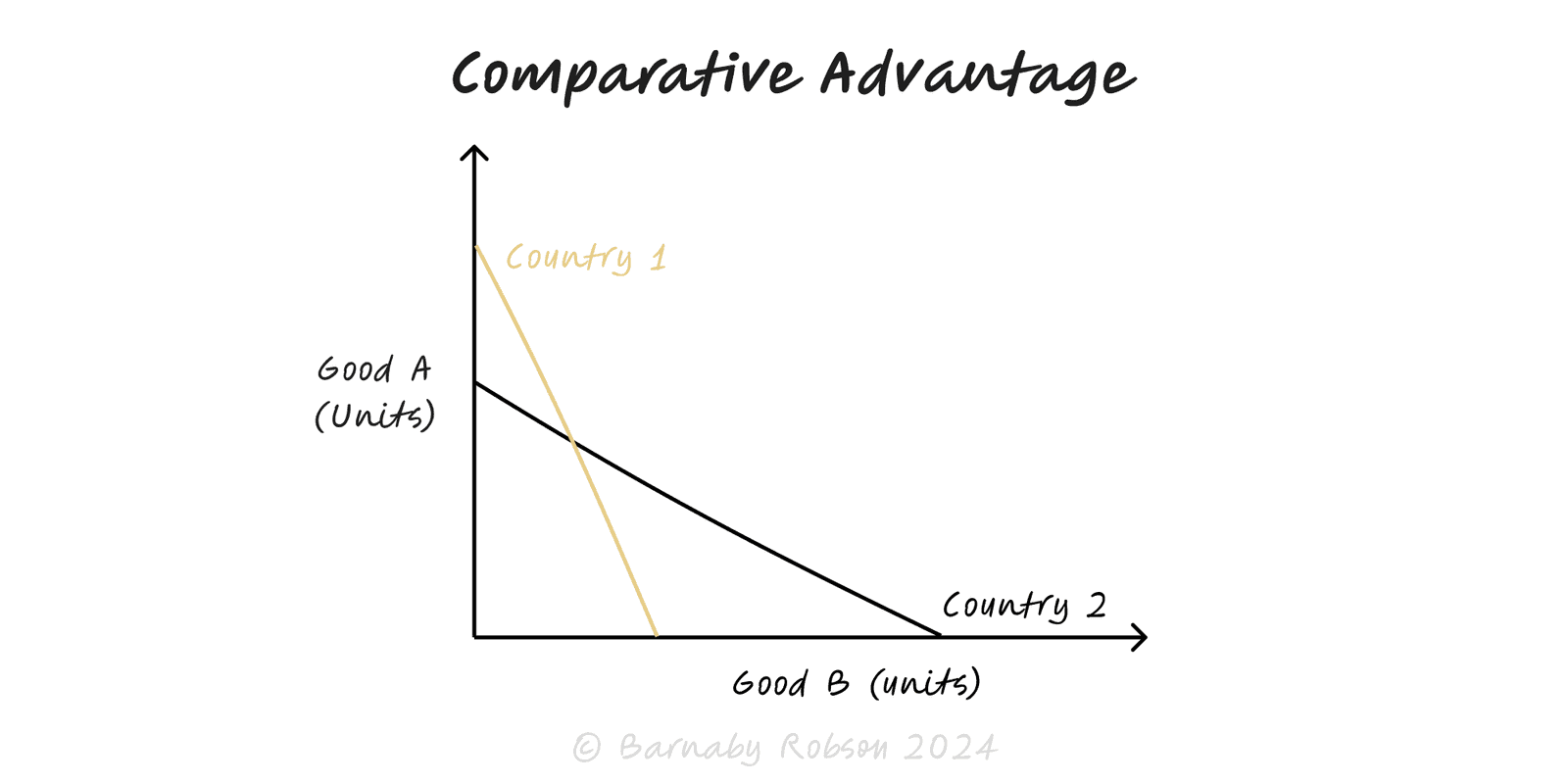
Specialise in what you produce at lower opportunity cost and trade the rest.
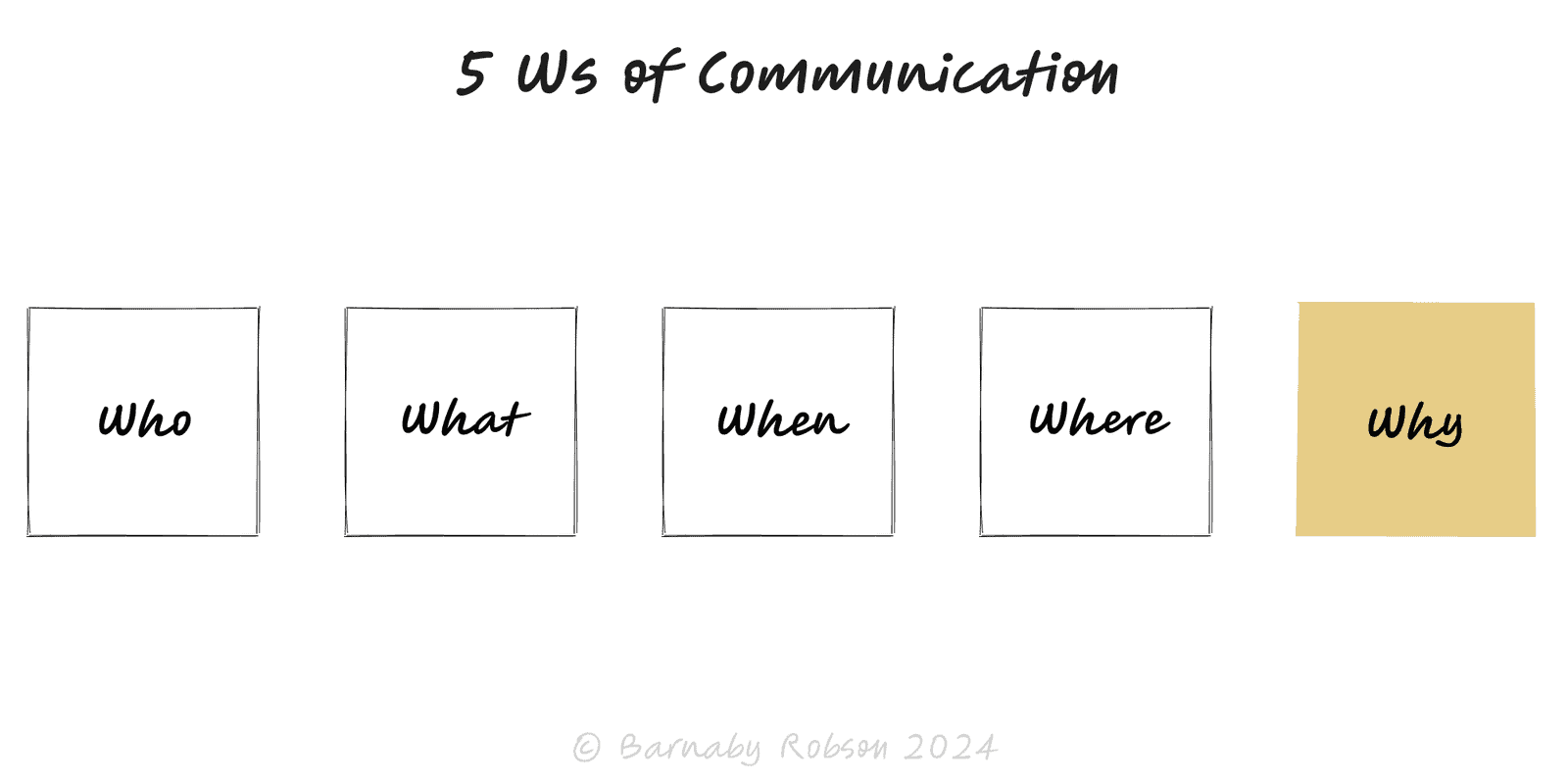
A compact briefing frame that forces concretes: Who, What, When, Where, Why (and How). Use it to make messages decision-ready and prevent gaps that derail execution.
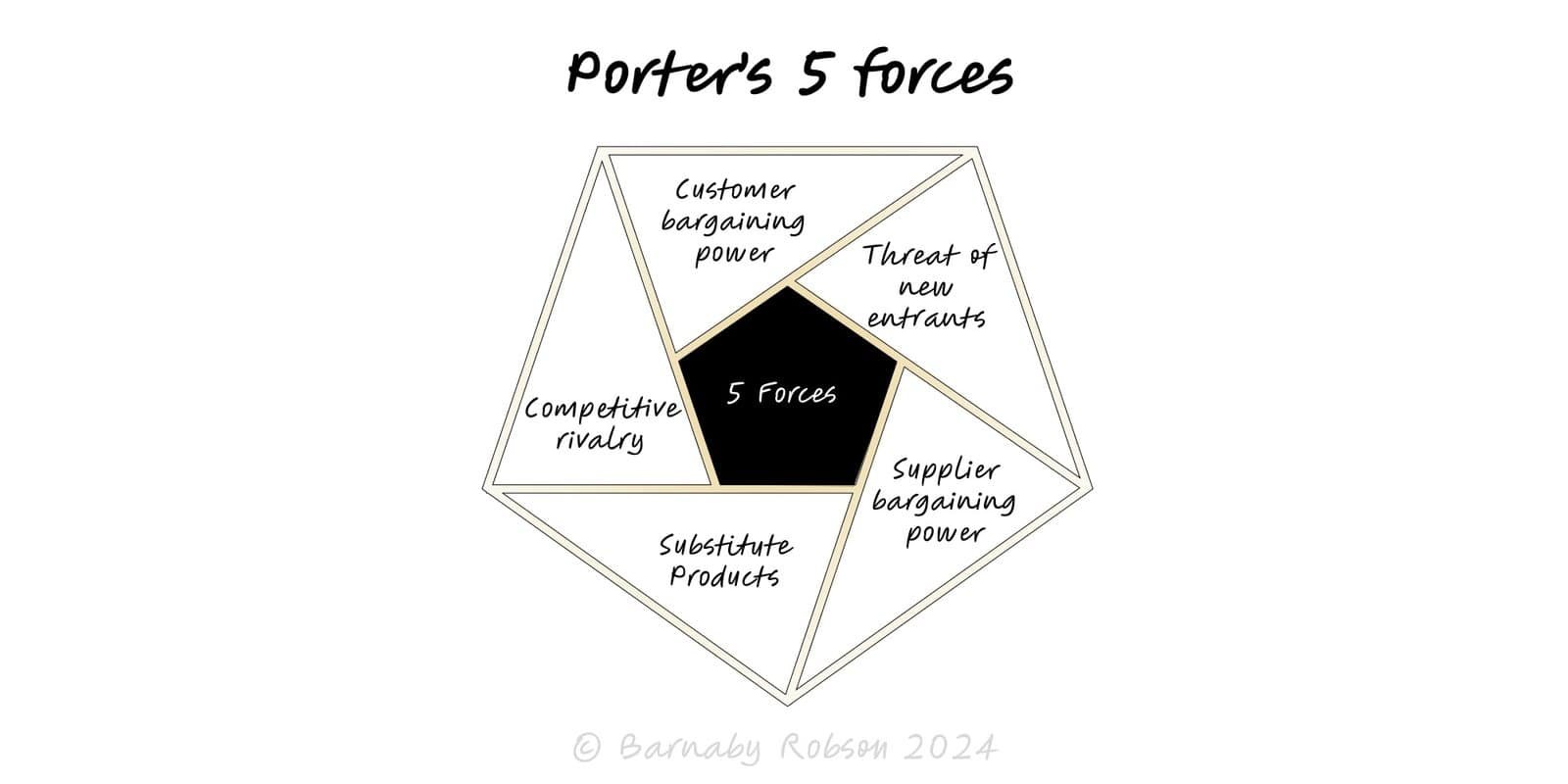
A framework to assess industry structure and profit pools by evaluating five competitive forces and their drivers.