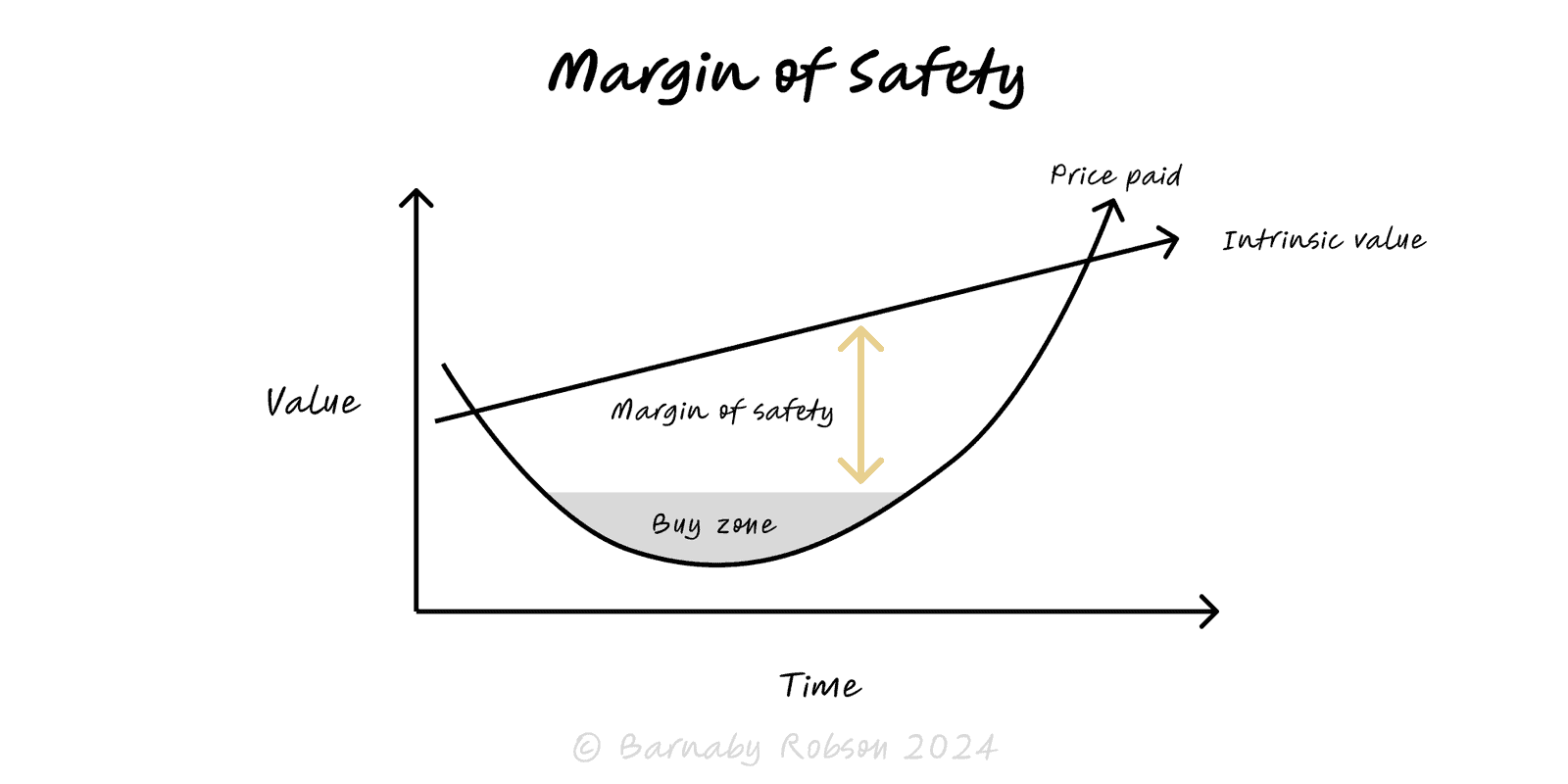
Margin of Safety

Deliberately leave room for error—buy below value, build above load, plan beyond the optimistic case—so mistakes and volatility don’t cause ruin.

Author

Benjamin Graham (investing); adopted by Warren Buffett & Charlie Munger. Engineering origin in safety factors.


A margin of safety (MoS) is a buffer between what you have and what you need.

  • In investing, pay a price well below intrinsic value so estimation errors and shocks don’t destroy capital.

  • In engineering/ops, design capacity above expected load (a safety factor) so systems stay safe under stress.

    It’s a universal rule for action under uncertainty: protect against model error, variance, and tails before chasing upside.

How it works


Investing version

  • Intrinsic value (IV) vs Price (P).
  • MoS (currency) = IV − P.
  • MoS (%) = (IV − P) ÷ IV. Use larger MoS when quality is uncertain or cyclicality/tail risk is high.

Engineering/ops version

  • Safety Factor (SF) = Capacity ÷ Expected Load.
  • Safety Margin (%) = (Capacity − Load) ÷ Capacity. Choose SF based on variability, consequences of failure, and detection/response time.

Portfolio & bets

  • Size exposure below theoretical optima (e.g., half-Kelly) to survive drawdowns and correlation spikes.

Planning

  • Add time/cost buffers where variance concentrates (bottlenecks, long lead items), not everywhere.

Use-cases


Public/private investing – cyclicals, turnarounds, illiquid assets; concentrate only when MoS is demonstrably large.

Product & capacity – headroom on servers, queues, and fulfilment; surge tolerance.

SRE & safety – rate limits, circuit breakers, redundancy (N+1/2N).

Liquidity management – cash runway, covenant headroom, diversified credit lines.

Project management – schedule buffers and scope guards around risky milestones.

Pitfalls & Cautions


False precision – tight buffers against shaky estimates; treat IV and loads as ranges.

Over-conservatism – MoS so large you never act; pair with small reversible tests.

Bloat – padding everywhere slows flow and raises cost; buffer at bottlenecks and high-impact risks only.

Hidden correlation – “diversified” bets fail together in stress; test for common shocks.

Leverage + thin MoS – operating or financial leverage can erase buffers quickly; watch covenants and utilisation.

Erosion over time – creep in costs or load quietly consumes headroom; monitor p95/p99 and drift.

Recent Mental Models

Click below to learn other mental models

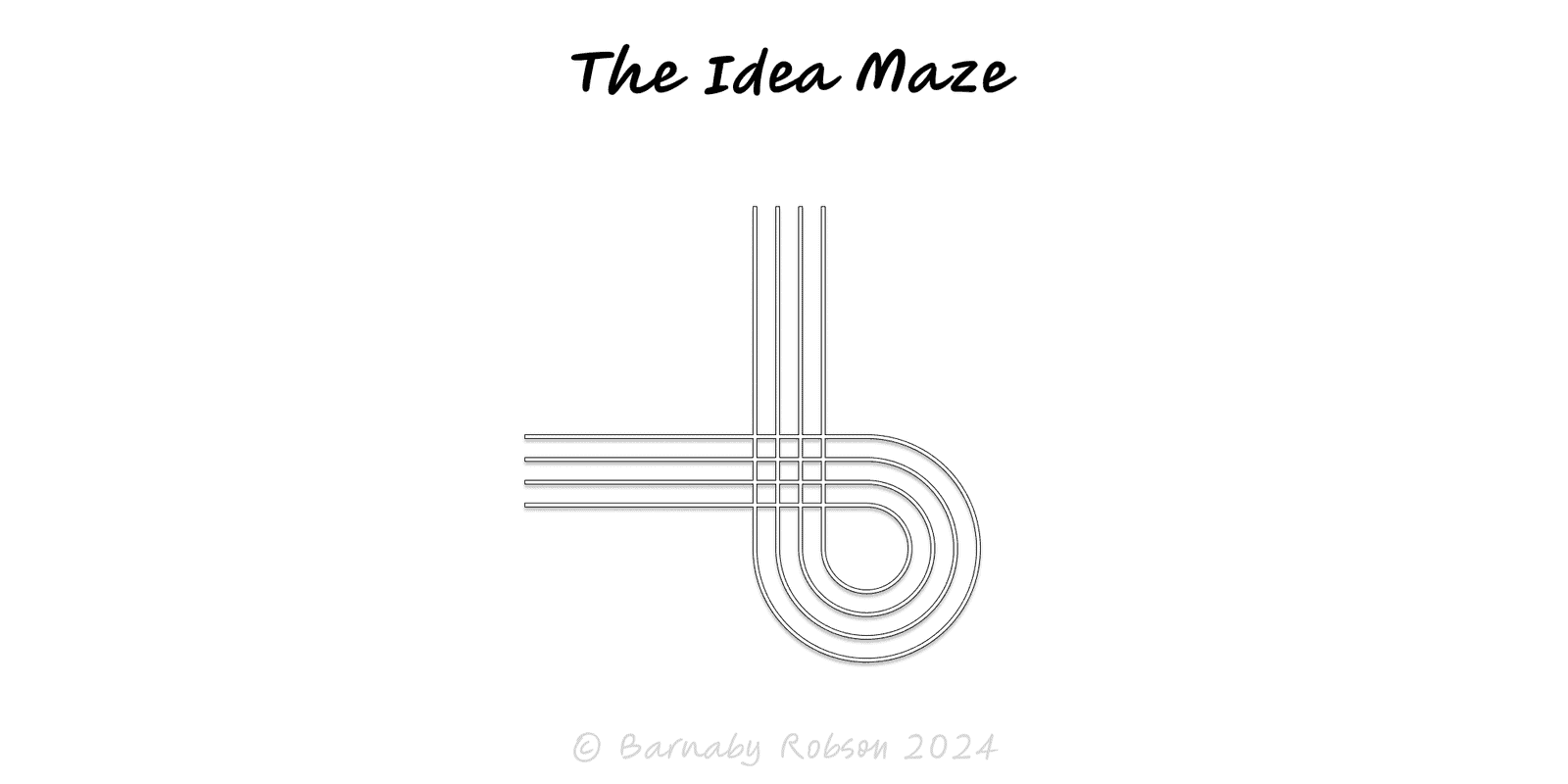
  • The Idea Maze

    The Idea Maze

    Before building, map the space: the key forks, dead ends and dependencies—so you can choose a promising path and run smarter tests.

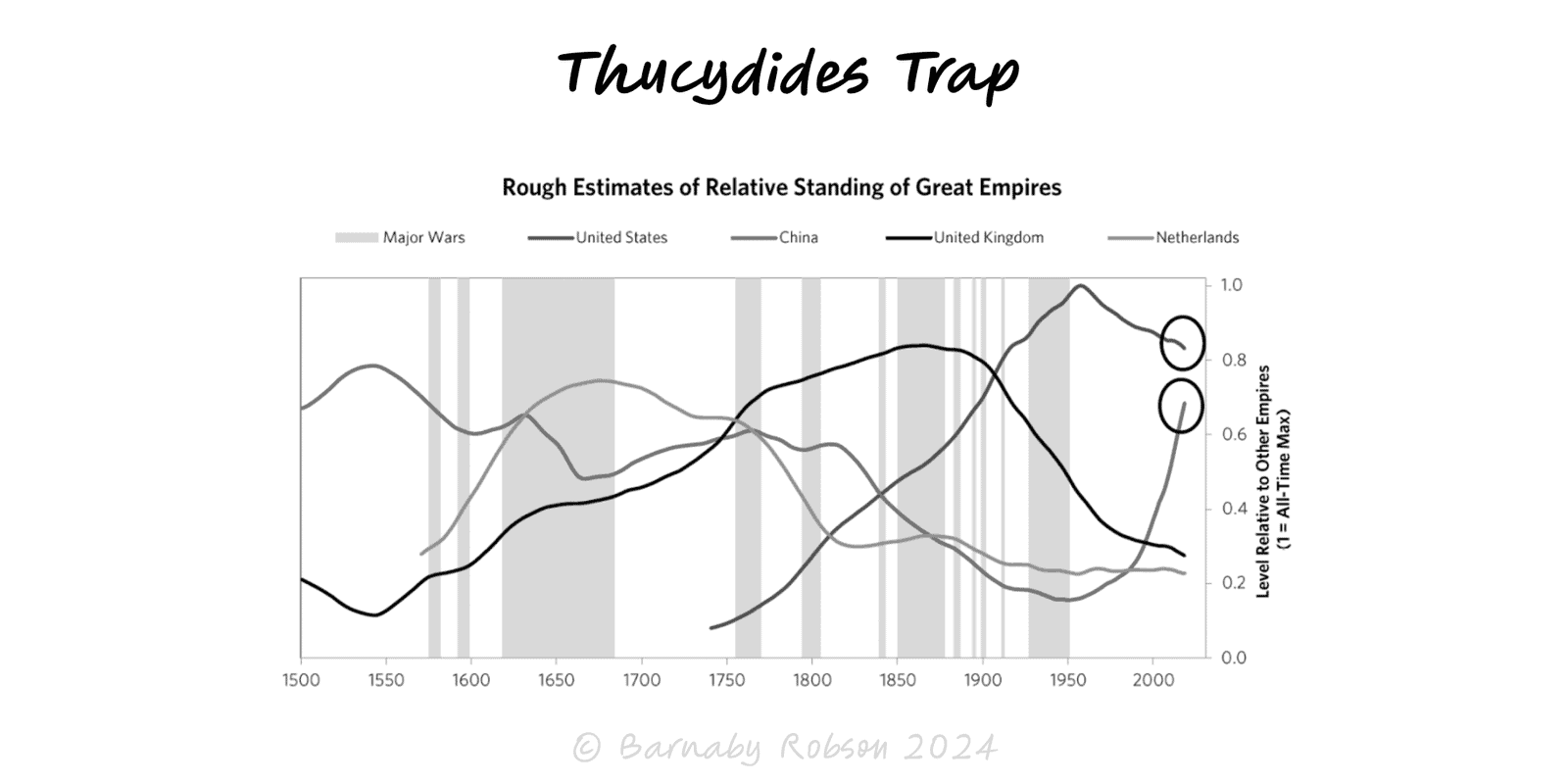
  • Thucydides Trap

    Thucydides Trap

    When a rising power threatens to displace a ruling power, fear and miscalculation can tip competition into conflict unless incentives and guardrails are redesigned.

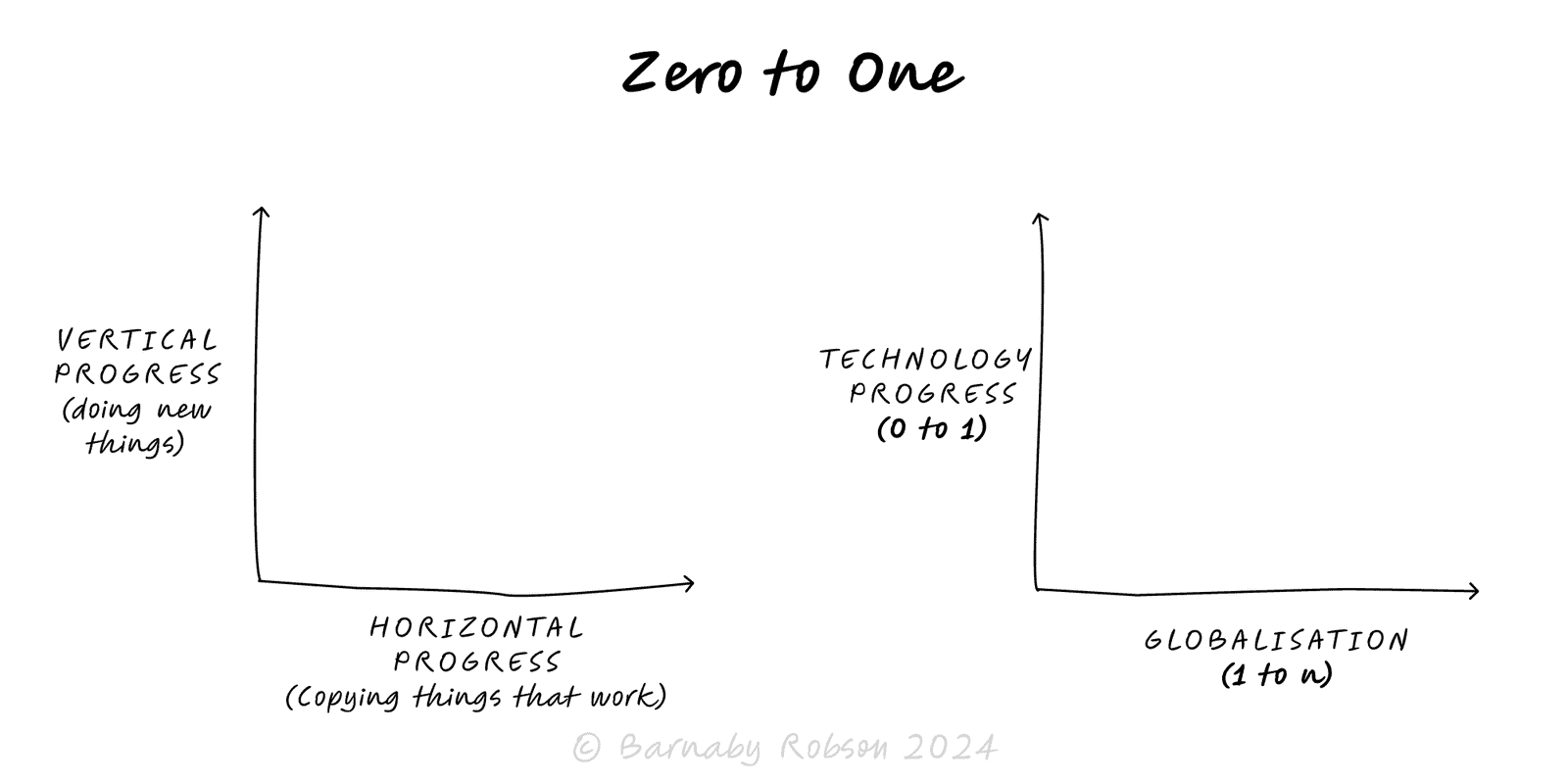
  • Zero to One

    Zero to One

    Aim for vertical progress—create something truly new (0 → 1), not just more of the same (1 → n). Win by building a monopoly on a focused niche and compounding from there.